
Thais concerned over energy price surge, want oil and LPG price freeze: Suan Dusit Poll
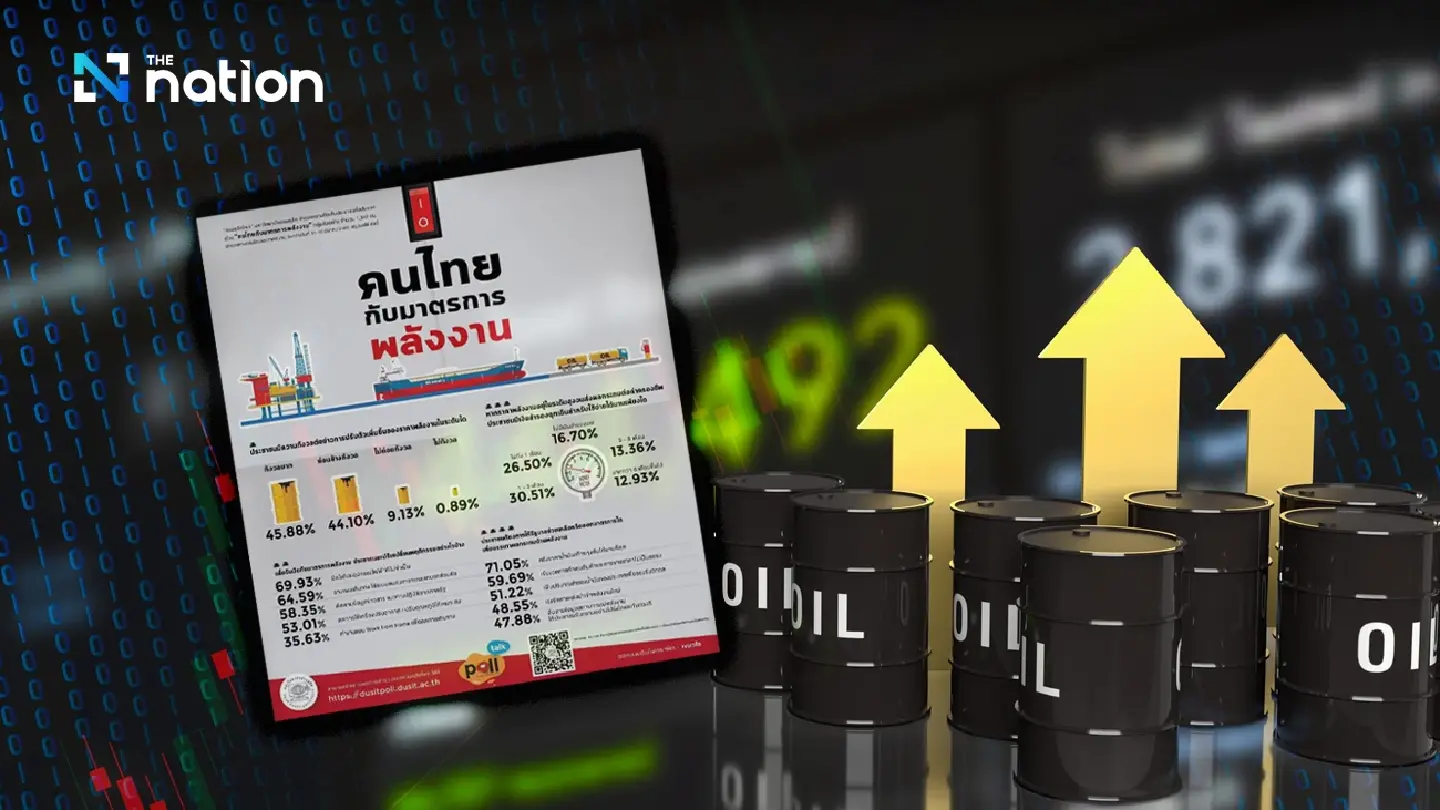


Nearly half of respondents said they were highly worried about rising energy costs, while more than 70 per cent want the government to keep oil and cooking gas prices under control.
- A Suan Dusit Poll reveals that approximately 90% of Thais are concerned about the surge in energy prices.
- The majority of respondents (71.05%) want the government to implement relief measures, specifically by freezing the prices of oil and cooking gas (LPG).
- This concern is heightened by the financial fragility of the public, as the poll found many have emergency savings sufficient for only one to three months.
“Suan Dusit Poll” at Suan Dusit University surveyed public opinion nationwide on “Thai People and Energy Measures”, based on a sample of 1,347 people (through online and field surveys) between March 11-13, 2026.
The survey found that 45.88 per cent of respondents felt very concerned by reports of rising energy prices, followed by 44.10 per cent who said they were somewhat concerned.
To cope, 69.93 per cent said they would adjust their behaviour, particularly by switching off unnecessary lights and electrical appliances.
If energy prices rose to the point of affecting living costs, 30.51 per cent said they would have emergency savings to cover around one to three months. Respondents also wanted the government to help by keeping oil and cooking gas prices fixed for as long as possible, cited by 71.05 per cent.
Dr Pornpan Buathong, President of Suan Dusit Poll, said the findings reflected how “energy” had become a major public concern amid volatility in global oil prices caused by the situation in the Middle East.
Although people were prepared to change their behaviour to save energy, their financial reserves remained limited.
If energy prices continue to rise, this could affect the cost of living.
The government, therefore, needs to manage both the pricing mechanism and energy reserves, while also communicating clearly to build public confidence, she said.
Assistant Professor Anchalee Rattana, a lecturer in the Political Science programme at the School of Law and Politics, Suan Dusit University, explained that the escalating conflict in the Middle East had affected transport costs and the economies of countries around the world.
With oil and gas prices set to rise, most Thais were increasingly concerned about living costs and the prices of goods, which would be adjusted in line with higher energy costs.
People, therefore, expected relief measures from the government, particularly the freezing of energy and cooking gas prices to ease hardship.
However, the poll also found a worrying issue: the financial fragility of the public.
Most respondents had emergency savings sufficient for only one to three months of spending, while some had no savings at all.
The government’s task, therefore, is not only to control energy prices, which are a major production cost, but also to prevent price increases in goods and services to help sustain people’s purchasing power.
That would allow overall economic stability to continue moving forward.
At the same time, it must also be mindful of the fiscal burden and public debt that may result from price-freezing measures, and transparent communication to keep the public informed is equally necessary.
