
Education system not producing qualified journos


THAILAND'S EDUCATION system in the field of journalism and mass communication is lacking the capability to produce qualified journalists to supply the current market situation and changes in the media landscape, according to experts.
Many graduates do not have the multidisciplinary skills required to support their professions in dealing with many different media, both in mass and new digital media.
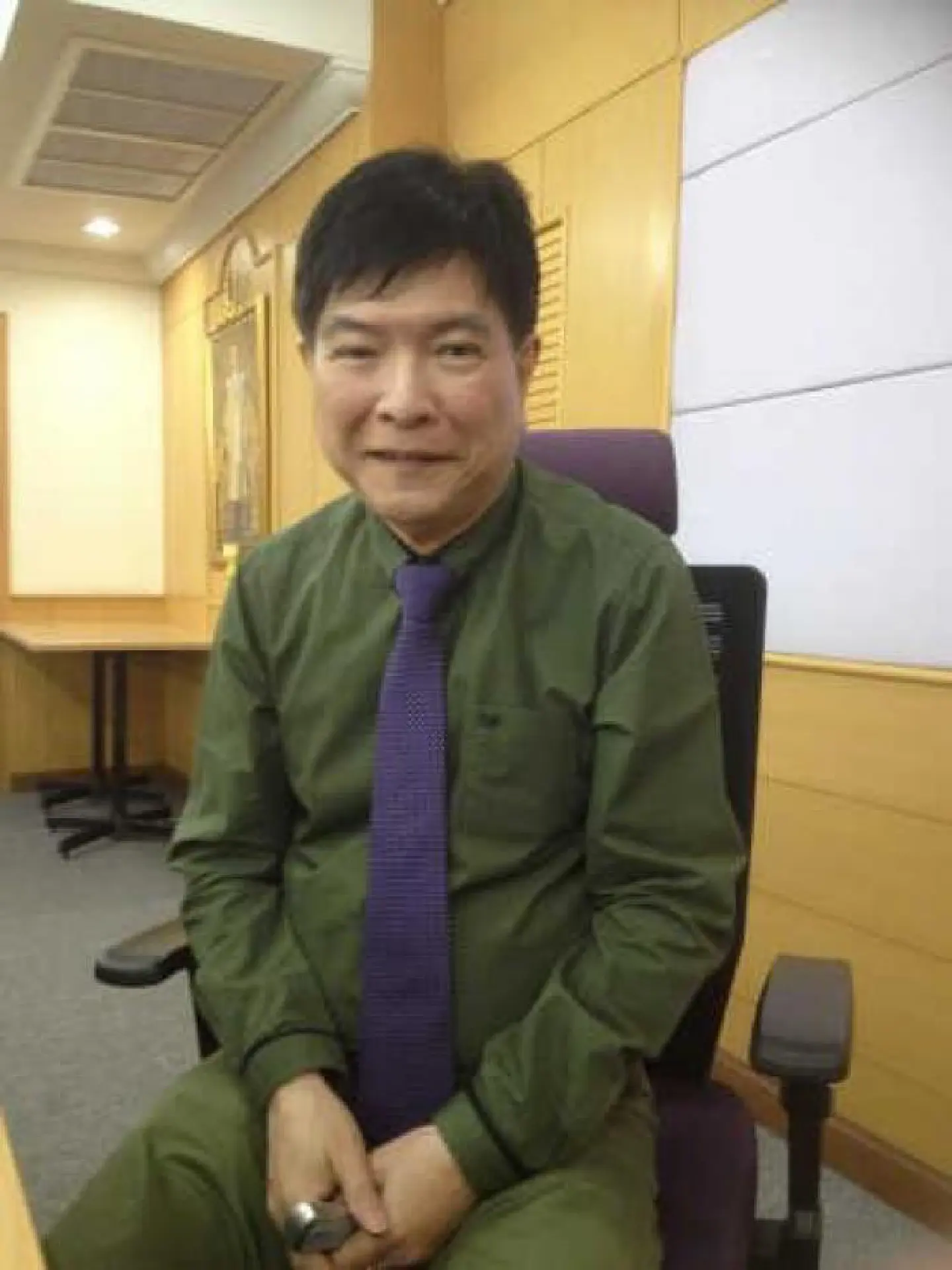
Professor Surapongse Sotanasathien, lecturer at Thammasat University’s Faculty of Journalism and Mass Communication, said that in Thailand, many universities had defined journalism as media studies and categorised it into a number of professional fields – film, broadcasting, newspapers, magazines, journals and advertising. “I myself believe in media convergence. Any study programme being created by the universities based on different media studies will obstruct development in the science of journalism,” he said.
While local universities produce many graduates in journalism annually, they are not able to apply themselves immediately to the current market situation, he added.
In Thailand, many educational institutes in journalism produce graduates just to be reporters and photographers, said the academic.
“We see many interviews that Thai reporters conduct with the prime minister. At such interviews, many reporters often ask common-sense questions, but they do not apply journalism by posing interesting and sophisticated questions to the premier,” he pointed out.
Surapongse said some educational programmes at the bachelor degree level, such as public relations, should be eliminated and replaced with organisational communication.
“PR is already a death science, as it focuses only on limited communication activities, like media planning,” he explained.
The professor added that if they were to replace PR studies with programmes in organisational communication, universities would be able to broaden their education programmes by covering more communication fields.
“Meanwhile, for the master’s degree in journalism, I would like to see a multidisciplinary educational system rather than individual media studies. I also would like to see senior officers as well as executives in both private and public organisations with the ability to apply the principles of communication as tools to bring success to their organisations,” he said.
Surapongse said that for the PhD programme in journalism and mass communication, he wanted to see the emergence of ‘communicology’, which covered all sciences and knowledge concerning communications.
Any educational programmes should combine all knowledge regarding to academic, professional and interdisciplinary studies, he suggested.
“For me, journalism and mass communication can cover only second-wave media, which are mass media, but not cover third-wave media, such as websites and social networks,” he said.
Suwichit Chaidaroon, lecturer in marketing communications at London’s University of Westminster, said the educational system for journalism in the US had strong roots in communication sciences, as well as in empirical studies and quantitative research from interpersonal to mass communications.
Students in the US also have good freedom and flexibility in choosing their study programmes, enabling them to go for something they are really interested in and that will be useful for their future careers, he said.
Meanwhile, in England and Australia, universities are quite strong in cultural and critical studies, he said.
They have also rotated PR and advertising to be under the busi-ness-administration faculty, as |neither fits properly into media |and journalism, he added.
Piya Pongsapitaksanti, associate professor in the Department of Information and Media Studies, Faculty of Global Communication, at the University of Nagasaki, said that at quality universities in Japan, students were provided with the chance to discuss in project-based learning and field-work studies.
Worapron Chanthapan, lecturer at the Communication Arts Faculty of Stamford International University in Bangkok, said that in contrast with western students, Thai students were still scared of expressing ideas during classes.
“In the West, lecturers are just facilitators, and there are essentially no right or wrong answers. If |an answer is wrong, but the student offers a strong justification, |then they will still get points,” she said.
The educational system in |the West also has strong academic freedom, not only for lecturers but also for students, she added.
