
900MHz auction set to be major windfall for govt
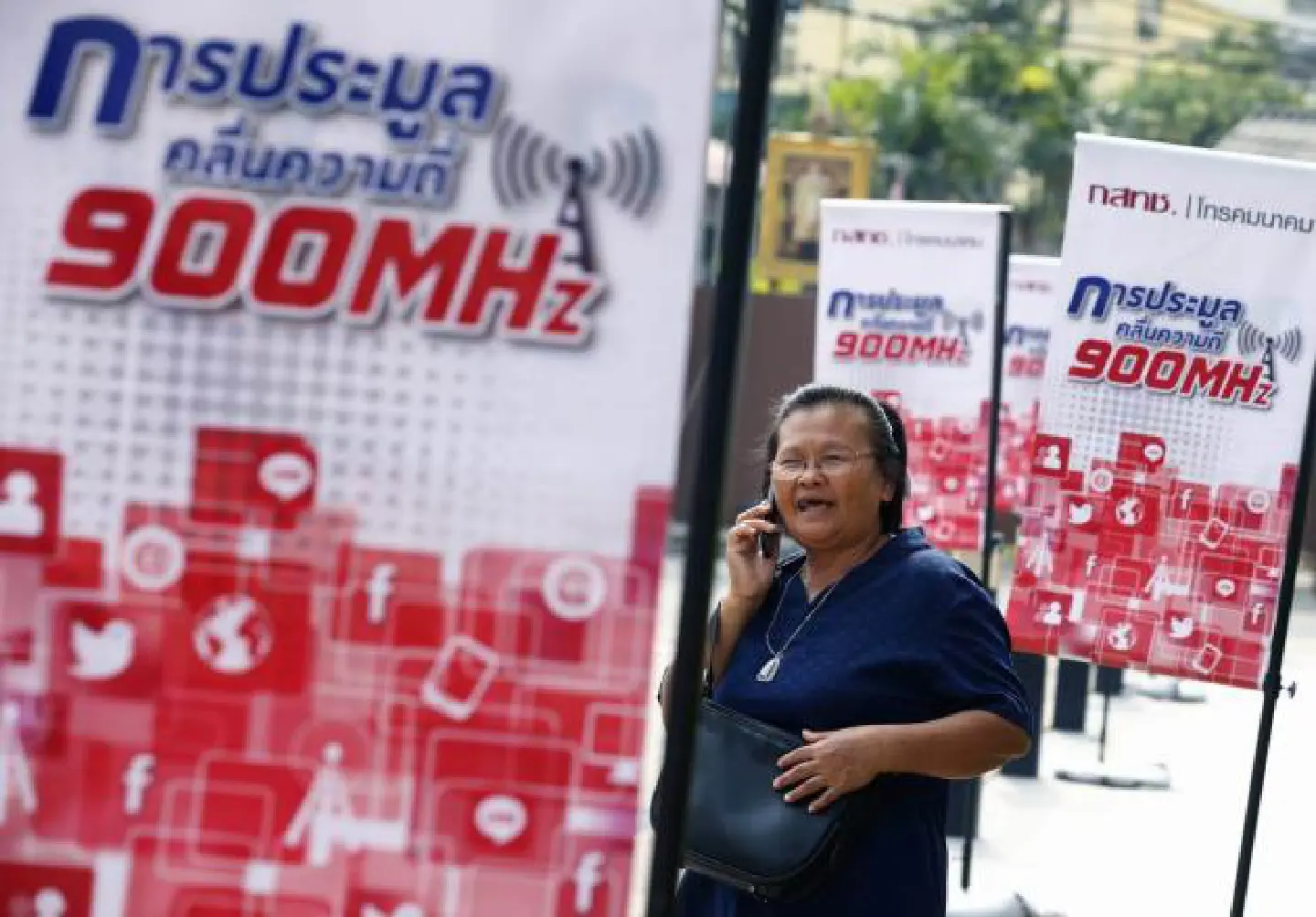


THE AUCTION prices for two 900MHz spectrum licences for 4G cellular services had already surged to Bt81.112 billion combined at press time yesterday, exceeding the combined price of Bt80.778 billion fetched for two 1800 MHz licences at auction last month.
Based on the latest prices, the government will get at least Bt161.9 billion in total from this licensing round.
As of press time, the 900MHz auction was still under way, after starting at 9am on Tuesday.
After the 81st round of bidding, the prices of the first and second 900MHz licence blocks were identical at Bt40.556 billion each – some 215 per cent higher than the Bt12.864-billion starting price.
The four bidders are Advanced Wireless Network, a subsidiary of Advanced Info Service (AIS); DTAC TriNet, a unit of Total Access Communication (DTAC); True Corp’s True Move H Universal Communication; and Jas Mobile Broadband, a subsidiary of Jasmine International.
A telecom analyst said the most likely scenario was that AIS and DTAC would each win one block of the spectrum, given that they have stronger balance sheets than the other participating groups.
The analyst predicted a final price of Bt40 billion per block, with every additional Bt10 billion that AIS and DTAC had to pay for a licence meaning it could reduce 2016 and 2017 earnings by about 2 per cent for AIS, and 10 per cent for DTAC.
A less likely scenario is that AIS and True emerge as the auction winners. Since 900MHz is crucial for DTAC, True might try to obtain part of the spectrum in order to weaken DTAC’s position.
If DTAC loses out, it will have to continue mainly using its existing 1800MHz and 850MHz bandwidth under concession, besides its 2.1GHz bandwidth under a National Broadcasting and Telecommunications Commission licence, in order to serve customers.
This could result in a sharp rise in its regulatory fee and depreciation expenses.
