
Caution urged on privileges for EEC
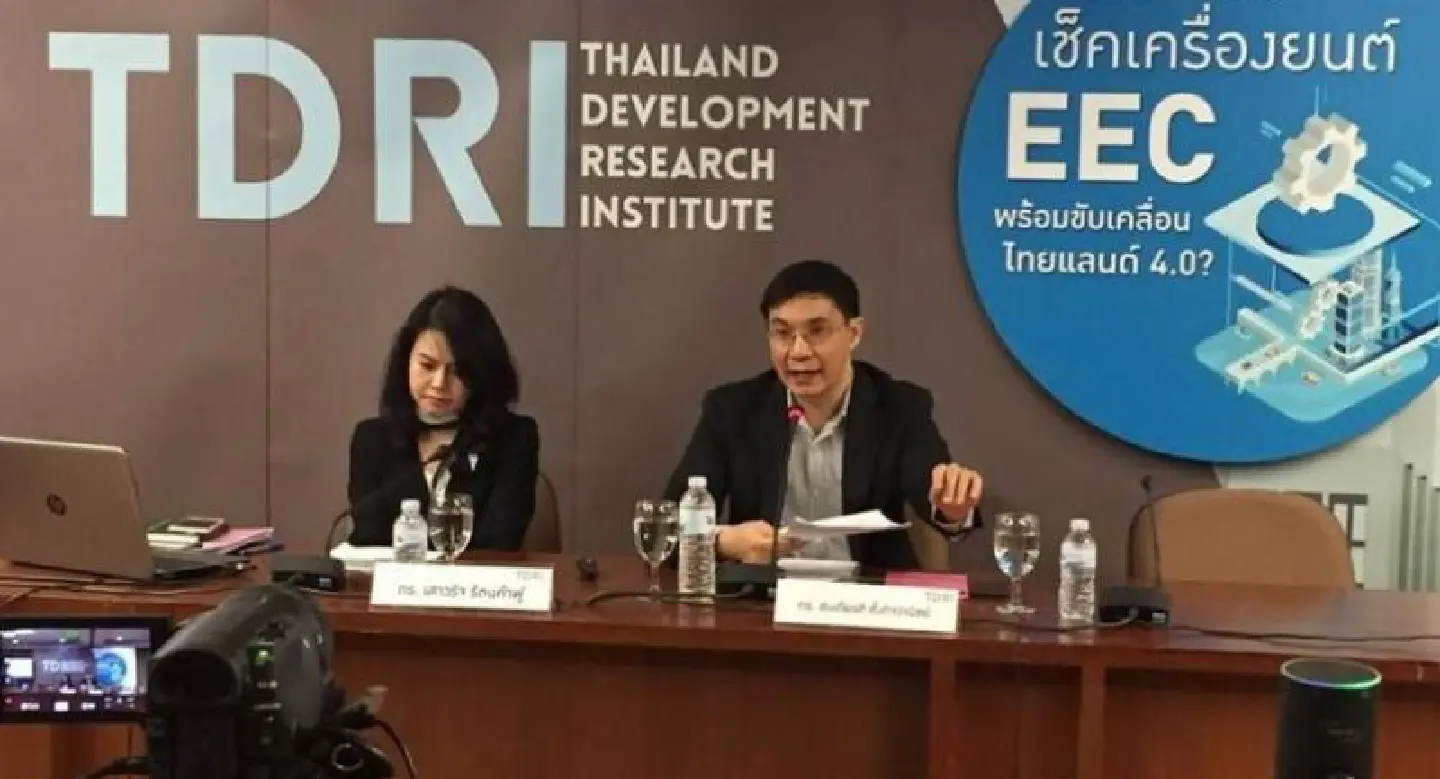


THE THAILAND Development Research Institute (TDRI) has warned the government about providing too many privileges for investors in the Eastern Economic Corridor (EEC) development and urged them to adjust plans to better enhance the country’s industrial competitiveness.
Academics at yesterday’s TDRI seminar, meanwhile argued that the government had failed to ensure trust among local communities.
They said the government’s measures and laws to push forward investment in the EEC lacked accountability, strong environmental impact prevention, and clear benefits to local people from the project.
TDRI’s trade and investment expert Somkiat Tangkitvanich said that considering the generous tax and other incentives the government was offering investors in EEC, it could be said that the government was effectively staging a “Thailand Grand Sale”.
However, he warned, the outcome might not be as good as the government expected.
“The EEC is the most suitable project for pursuing the goal of Thailand 4.0 compared with previous special economic zone projects,” Somkiat acknowledged. But the large benefits being offered investors will not attract their attention to the programme as much as is hoped “and will cost the country a lot,” Somkiat said.
Economic researcher Saowaruj Rattanakhamfu, also from TDRI, said investors in EEC would benefit not only from large tax breaks, but also receive non-tax benefits such as the right to lease more than 100 rai (16 hectares) of land for 99 years, use foreign currency within EEC and fast-tracked Environmental Impact Assessment (EIA) reports.
“Not only is our government providing extremely large tax |benefits for investors, making us the country with the lowest juristic persons tax in Asean, but the investors are also getting the highest non-tax benefit in history, |sending Thailand to among the top of the list of Asean countries that provide the longest land lease periods to foreign investors,” Saowaruj said.
However, when compared with investment forecasts, research found that investors in the EEC would be mostly attracted by S-Curve industries that Thailand already has. Investment in new S-Curve industries would come from infrastructure development, while special privileges were not the main reason for the investors to invest in the EEC.
“Measures to attract investors with tax benefits had already caused Thailand to lose tax profits valued at up to Bt220 billion in 2016. Therefore, it should be cautioned that even though tax benefits can attract some investors, it is also costly and not so effective,” she said.
Somkiat also suggested that the government should prioritise industries that already has expertise in, such as tourism, automobile parts, healthcare and the new S-Curve industries like aviation and logistics.
He also urged the government to come out with comprehensive benefits packages, for instance supporting research, labour skills improvement and regulation adjustment to further attract investors.
Meanwhile, he stressed Thailand should also be ready to learn from overseas investors to help the country develop its own technology in the long term.
An economic slecturer from Kasetsart University, Decharut Sukkumnoed, suggested that the EEC development should also consider local people and how they will benefit from the project.
Decharut said local people still needed convincing that the EEC development plan and EEC Bill would not harm the environment but instead would boost their quality of life.
