
Thailand's Energy Regulator: Clean Power Will Decide AI's Future
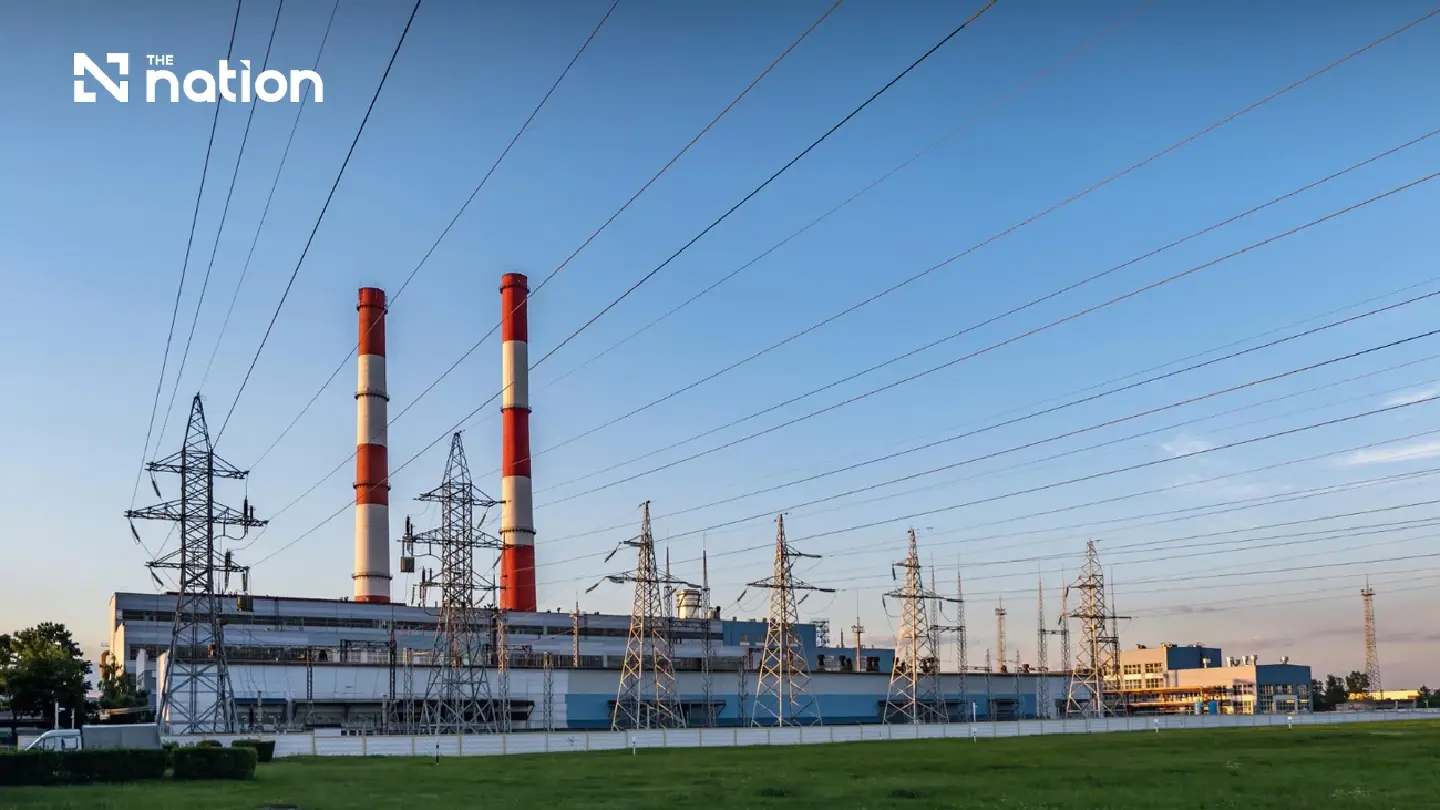


Dr Poonpat Leesombatpaiboon says Thailand's AI ambitions hinge on secure, affordable clean energy, as data-centre demand nears 30,000 megawatts
- Thailand's ambition to become a regional AI hub is directly dependent on its ability to provide a secure, affordable, and clean energy supply, which the energy regulator likens to the "heart" powering the AI "brain".
- The surge in AI is creating massive energy demand, with data centers alone approaching 30,000 megawatts, which must be balanced with Thailand's goals to cut emissions and achieve carbon neutrality by 2050.
- To meet this challenge, the Energy Regulatory Commission (ERC) is implementing reforms like allowing direct power purchase agreements (Direct PPAs) and third-party grid access to help data centers and other industries secure clean energy.
- The country's competitive advantage is shifting from historically cheap electricity to the ability to offer reliable, high-quality clean power, which is essential for the sensitive infrastructure required by AI.
Dr Poonpat Leesombatpaiboon says Thailand's AI ambitions hinge on secure, affordable, clean energy as data-centre demand nears 30,000 megawatts.
If Thursday morning’s opening speeches at the Huawei Thailand Digital & AI Summit 2026 in Bangkok were about ambition, the address that followed was about plumbing. Dr Poonpat Leesombatpaiboon, secretary-general of Thailand's Energy Regulatory Commission (ERC), used his keynote — titled "Green Technology for AI Thailand: Powering the Foundation of the AI Era" — to argue that Thailand's AI future will be decided as much in power plants and transmission lines as in data centres.
"Every era of human civilisation has been defined by a critical piece of infrastructure," Poonpat told delegates.
In the industrial revolution, he said, it was the steam engine; in the internet age, it was mobile networks running from 3G through to 6G.
"In this AI era, we have two: intelligence, and energy," he said. "AI is the brain that will drive the new economy. Energy is the heart that pumps the blood to keep that brain working, without interruption."
Two waves colliding
Poonpat framed Thailand's current moment as the collision of two separate trends: a fast-moving AI wave that arrived only recently but is already reshaping business and daily life, and a longer-running energy transition wave focused on cutting carbon emissions.
"Thailand today stands at an important turning point," he said, arguing the country is simultaneously trying to position itself as a regional AI hub while needing an energy system secure and clean enough to support it. "The key question today is: if we are to become the AI hub of the region, how ready are we really — and how do we supply enough electricity with sufficient reliability, quality and a reasonable price?"
That question is not abstract. Poonpat said demand from data centres alone is already approaching 30,000 megawatts — a figure he said needs careful management to keep investment sustainable — while Thailand has also committed to cutting greenhouse gas emissions by at least 47% by 2035 and reaching carbon neutrality by 2050.
Balancing that surge in demand against the emissions target, he said, will require leaning heavily on solar and wind power in the near term, with small modular nuclear reactors a possibility further out.
A regulator redefining its own role
Much of Poonpat's address focused on how the ERC itself is adapting.
"Our role as an energy regulator needs to change," he said, while stressing the commission would keep its core duty of overseeing the country's electricity and gas businesses.
"In our new role, we need to help keep Thailand ready for the future" — reducing volatility and addressing emerging challenges through new regulatory design, he added, rather than simply enforcing existing rules.
That shift, he said, has already produced concrete reforms: opening third-party access to national transmission infrastructure, allowing private companies to trade electricity directly with one another, and testing new mechanisms through what the ERC calls its regulatory sandbox, ahead of an eventual move toward peer-to-peer energy trading.
A smart grid, he said, is "unavoidable", as is a stronger role for battery energy storage systems to keep supply stable.
The ERC has also introduced a Utility Green Tariff — a dedicated green electricity rate for businesses that specifically want to run on clean power — alongside a "Thailand Power Map" tool designed to help investors identify the best locations for new projects based on available grid capacity.
Underpinning much of this, Poonpat said, is the direct power purchase agreement (Direct PPA), paired with third-party access to transmission lines still largely controlled by state utilities — a combination he called central to letting clean-energy buyers and sellers connect directly in the future.
He pointed to a concrete step taken just days earlier: on 15 July, Thailand's National Energy Policy Council resolved to unlock and expand this scheme to cover any industry seeking clean energy without capping the volume of electricity that can be traded — a decision explicitly designed to accommodate data-centre operators alongside other heavy users.
A caution on fairness
Poonpat was careful to frame the reforms as requiring care, not just speed. "We must proceed carefully and fairly," he said, pointing to the risk that ordinary consumers — who may have no choice over whether their electricity comes from clean or conventional sources — could end up bearing costs created by industrial demand for green power.
The ERC, he said, is designing grid service charges specifically to avoid shifting the cost of new infrastructure investment onto the public.
"A green economy must be a fair and inclusive economy," he said. "We must leave no one behind."
He also flagged that Thailand's forthcoming Power Development Plan is expected to lift the share of renewable energy in electricity generation towards nearly half of total output — a shift that, in turn, will require investment in technology to keep the grid stable, including grid-forming inverters and expanded storage capacity.
That stability matters especially for AI infrastructure, he noted, since "AI data centres are highly sensitive to power supply and power "quality"—meaning any reforms have to preserve, not undermine, reliability for hospitals, factories, local businesses and households alike.
Electricity as strategy, not commodity
Poonpat closed by arguing that third-party access and Direct PPAs are "not the final destination, but the starting point" for opening up and modernising Thailand's energy market.
"We will no longer see electricity simply as a commodity to be moved from producer to user," he said. "We see electricity as a strategic tool to drive the country's development."
Cheap electricity, he argued, was historically one of Thailand's competitive advantages. In the AI era, he said, that advantage will instead depend on whether the country can offer secure, reliable, clean power at a reasonable price — a test, he suggested, that will determine not just how fast Thailand's AI ambitions can grow, but whether the country can escape what he called the "middle-income trap" altogether.
