
10 associations press state to tighten IF steel factory scrutiny
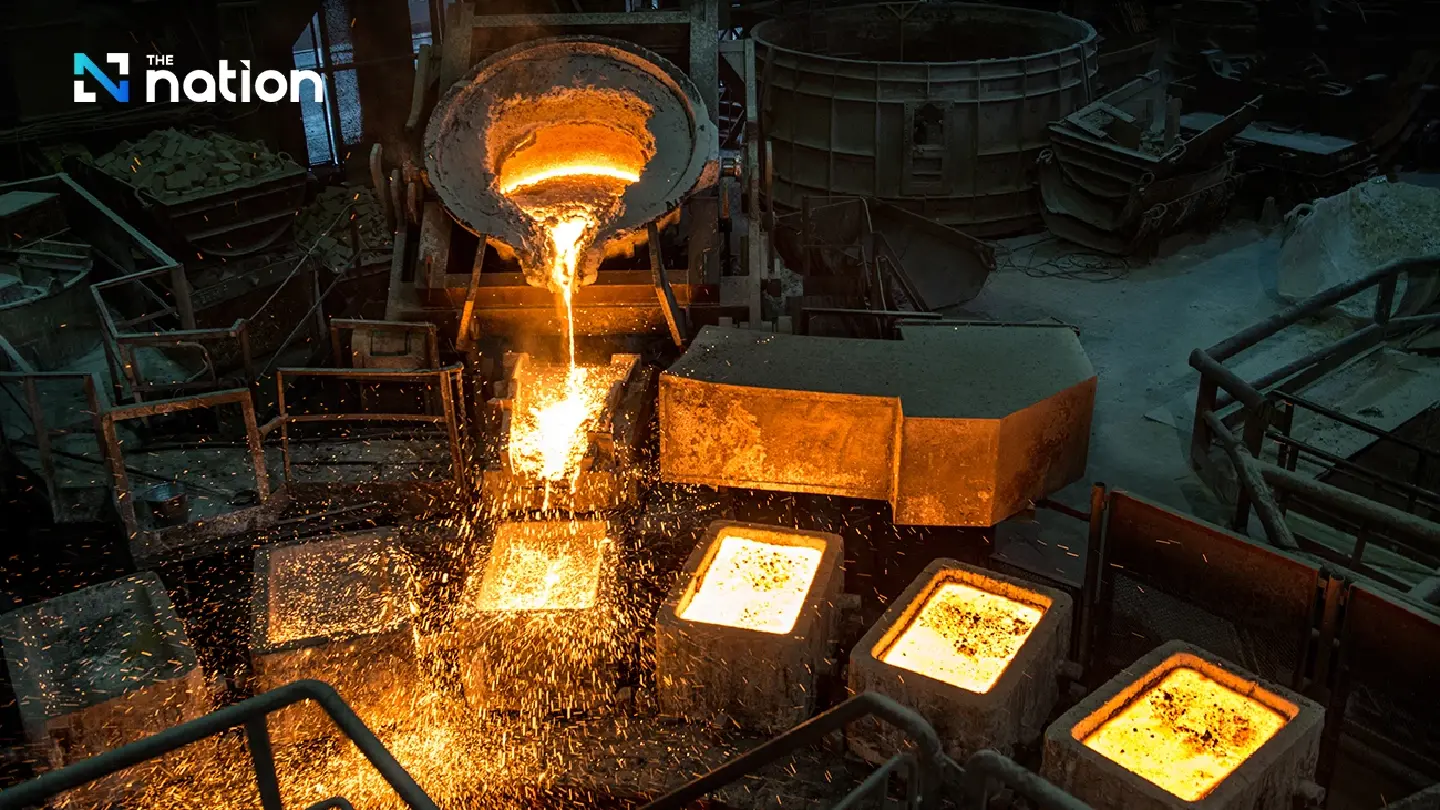


Ten Thai steel associations are urging tighter TISI and environmental checks before any induction furnace steel mills are allowed to resume production
Ten Thai steel associations have called on the government to impose far tougher scrutiny before allowing any steel producer using induction furnace, or IF, technology to resume operations, warning that weak oversight could put both the construction sector and public safety at risk.
Pravit Horungruang, adviser to the Standard Long Steel Product Trade Association, said the group had been closely monitoring developments involving steelmakers that use IF melting technology, some of which were suspended last year.
With signs that production could restart, he said the associations want the Ministry of Industry and the Thai Industrial Standards Institute, or TISI, to apply much stricter approval criteria.
On April 9, representatives of 10 Thai steel industry groups submitted a letter to the Industry Ministry calling for tighter checks on IF steel plants before any restart is approved.
Their demands focus on product standards, testing procedures and environmental controls.
Quality and TISI compliance under the spotlight
The industry groups argue that the core issue lies in steel quality and compliance with TISI 20-2559 for plain round bars and TISI 24-2559 for deformed bars.
They say the key to producing safe reinforcing steel is tight control over chemical composition and the removal of impurities.
In their view, many IF-based producers do not have a proper steel refining system, or ladle furnace, making it difficult to stabilise chemical elements at the level required by the standards.
Without that process, they warn, controlling phosphorus and sulphur consistently is far more difficult, raising the risk that the finished steel may become brittle or fail to meet required mechanical properties.
They also argue that steel not refined through a ladle furnace tends to contain higher levels of non-metallic inclusions, which can become weak points when the material is placed under tensile stress or bent.
Call for stricter restart conditions
The associations are asking TISI and the Department of Industrial Works to set a tougher new benchmark before any suspended IF plant is allowed back into production.
One of their main proposals is to require any steel mill seeking to resume operations to install a ladle furnace as a basic condition.
If a producer claims to use another technology instead, the groups say it should be reviewed and approved only by TISI’s technical committee to confirm that it can genuinely control impurities, rather than relying solely on random finished-product testing.
They argue that checking only the final product is not enough if the production process itself still lacks consistency and control.
Steel Institute lab results urged as benchmark
The associations also want test results from the Iron and Steel Institute of Thailand, or ISIT, to remain the main reference point for comparing product quality before and after any production changes.
They say this would create a fairer and more transparent benchmark, while also reducing the risk of producers trying to avoid earlier scientific findings by switching to different testing channels.
Environmental checks also demanded
Beyond product quality, the groups are also pressing for full environmental compliance before any restart.
They say air pollution control systems and industrial waste treatment must be inspected and confirmed to meet legal standards in full, especially given concerns over red dust and other pollution linked to melting contaminated scrap metal.
In their view, no factory should be allowed to restart machinery until its air pollution control system has passed strict checks under factory law.
