
Thai mobile attacks surge 127% despite high awareness



Thailand mobile cyberattacks, Kaspersky, cybercrime awareness, mobile security, Asia-Pacific cybersecurity, digital wallets, smartphone threats, embedded security
Mobile-device attacks in Thailand surged 127% year on year in the first quarter of 2026 despite Thai consumers recording the highest cybercrime-awareness level among the Asia-Pacific markets surveyed by Kaspersky, at 39%.
The findings point to a widening gap between awareness and the speed at which mobile threats are growing as smartphones become central to banking, digital payments, shopping, communications and other everyday services.
Kaspersky’s threat-monitoring data and B2C Pulse Survey showed that Thailand was among several Asia-Pacific markets recording sharp increases in mobile attacks, even as Thai consumers demonstrated comparatively high awareness of digital crime.

Mobile threats spread beyond largest markets
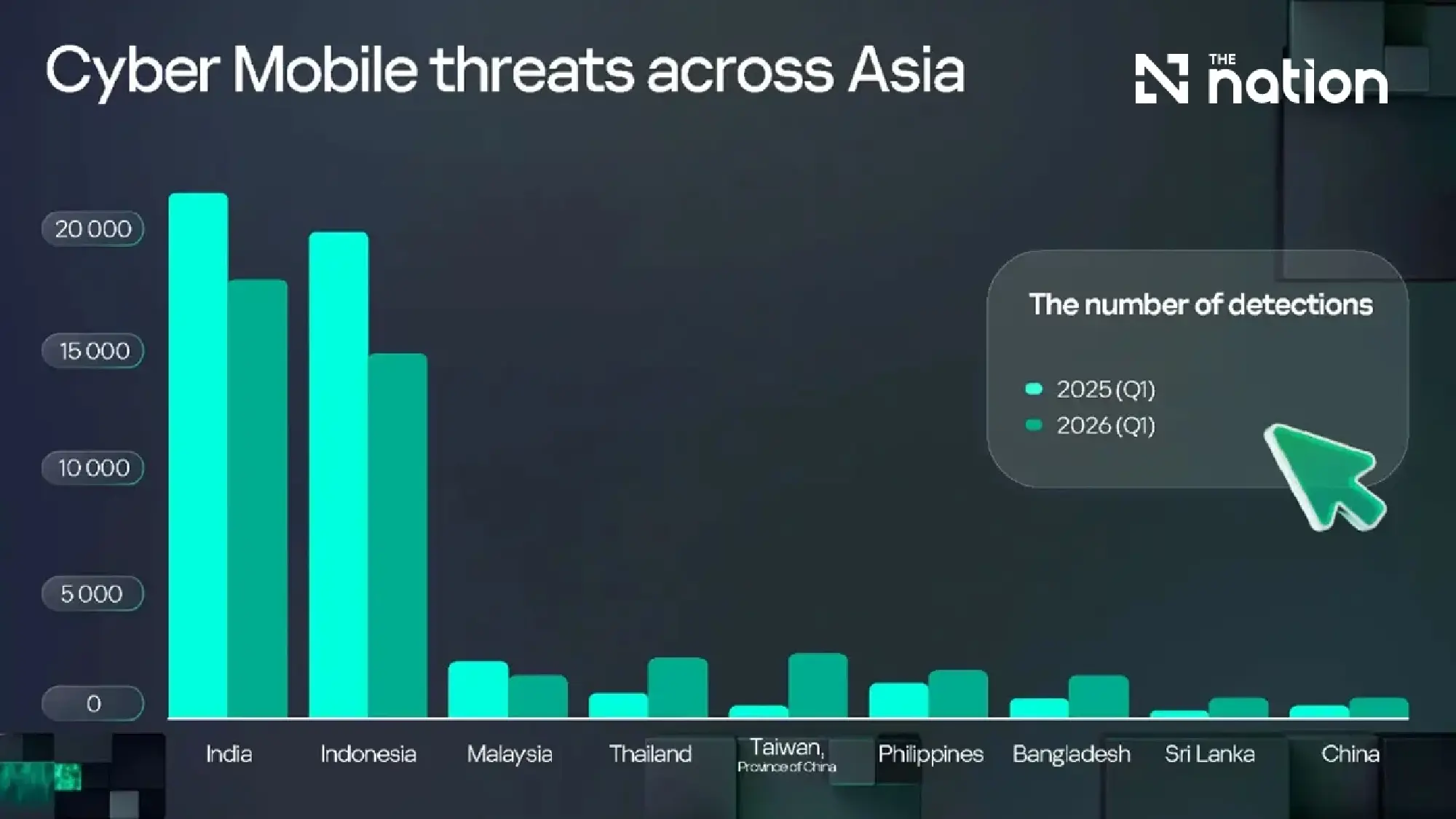
Taiwan recorded the sharpest year-on-year increase in mobile attacks among the markets listed by Kaspersky, at 373%, followed by Sri Lanka at 132%.
Thailand’s 127% increase was followed by Bangladesh at 108%, China at 69% and the Philippines at 28%.
India and Indonesia recorded the highest attack volumes, at 18,187 and 15,163 respectively. The sharp growth in other markets indicated that mobile threats were no longer concentrated solely in Asia-Pacific’s largest digital economies.
Choon Hong Chee, Kaspersky’s head of consumer channel for Asia-Pacific, noted that smartphones were often not protected to the same level as personal computers, despite becoming gateways to users’ financial, social and professional lives.
The challenge was to ensure that mobile security developed at the same pace as the region’s increasing reliance on smartphones, he added.
Thailand leads cybercrime-awareness ranking
Thailand recorded the highest cybercrime-awareness level among the Asia-Pacific markets in the survey, at 39%.
Malaysia followed at 38%, Indonesia at 35%, China at 34%, India at 32% and Vietnam at 31%.
Across Asia-Pacific, 35% of respondents demonstrated awareness or concern about the use of digital technology in relation to crime, compared with a global average of 32%.
The Thai result shows that relatively strong consumer awareness has not prevented the country from experiencing a rapid increase in mobile threats.
Awareness alone may not provide sufficient protection when users depend on smartphones for sensitive transactions and when security measures within devices and applications fail to keep pace with evolving risks.
Digital use exceeds global averages
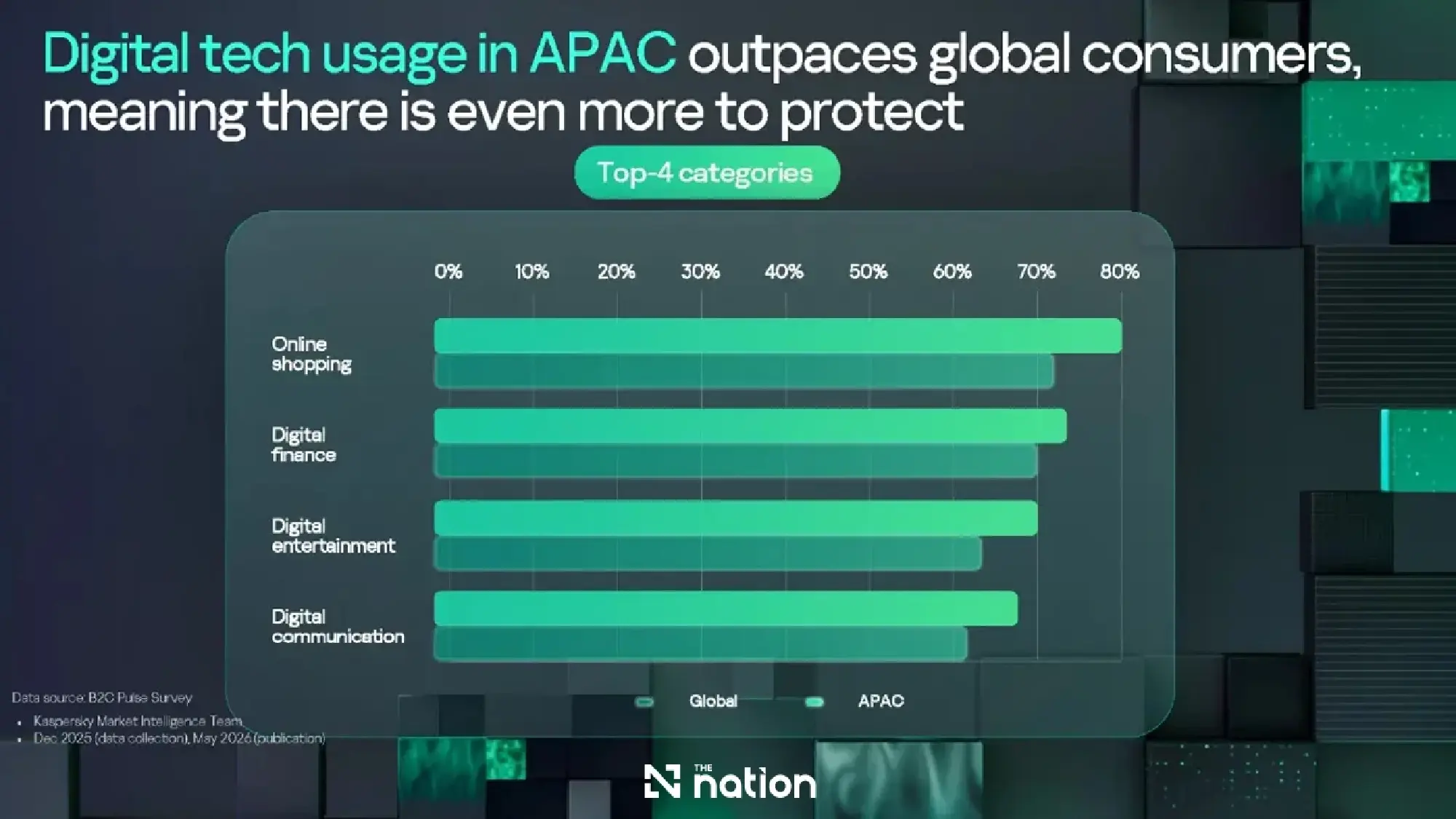
Kaspersky Market Intelligence’s B2C Pulse Survey found that Asia-Pacific consumers used several categories of digital services at rates above global averages.
Online shopping was used by 80% of respondents in the region, compared with 71% globally.
Digital financial services reached 72%, against a worldwide average of 70%, while digital entertainment stood at 70% compared with 62% globally.
Digital communications were used by 68% of Asia-Pacific consumers, compared with the global average of 61%.
About 77% of the Asia-Pacific population is online, while digital wallets account for roughly 70% of online payments in the region.
The number of mobile subscribers in Asia-Pacific is expected to reach 2.11 billion by 2030, increasing the importance of protecting personal information and financial transactions as the digital economy expands.
Kaspersky calls for protection inside apps
Kaspersky recommended integrating security controls directly into mobile applications instead of relying entirely on consumers to install, configure and maintain separate security software.
The approach would allow banks, retailers, government services and application developers to place protection closer to the point where users conduct financial and other sensitive digital activities.
Building security into applications could also reduce the burden on consumers as threats become more sophisticated, while providing broader protection for personal data and digital transactions.
