
TH-AI Passport tops 1m sign-ups as minister defends data safeguards
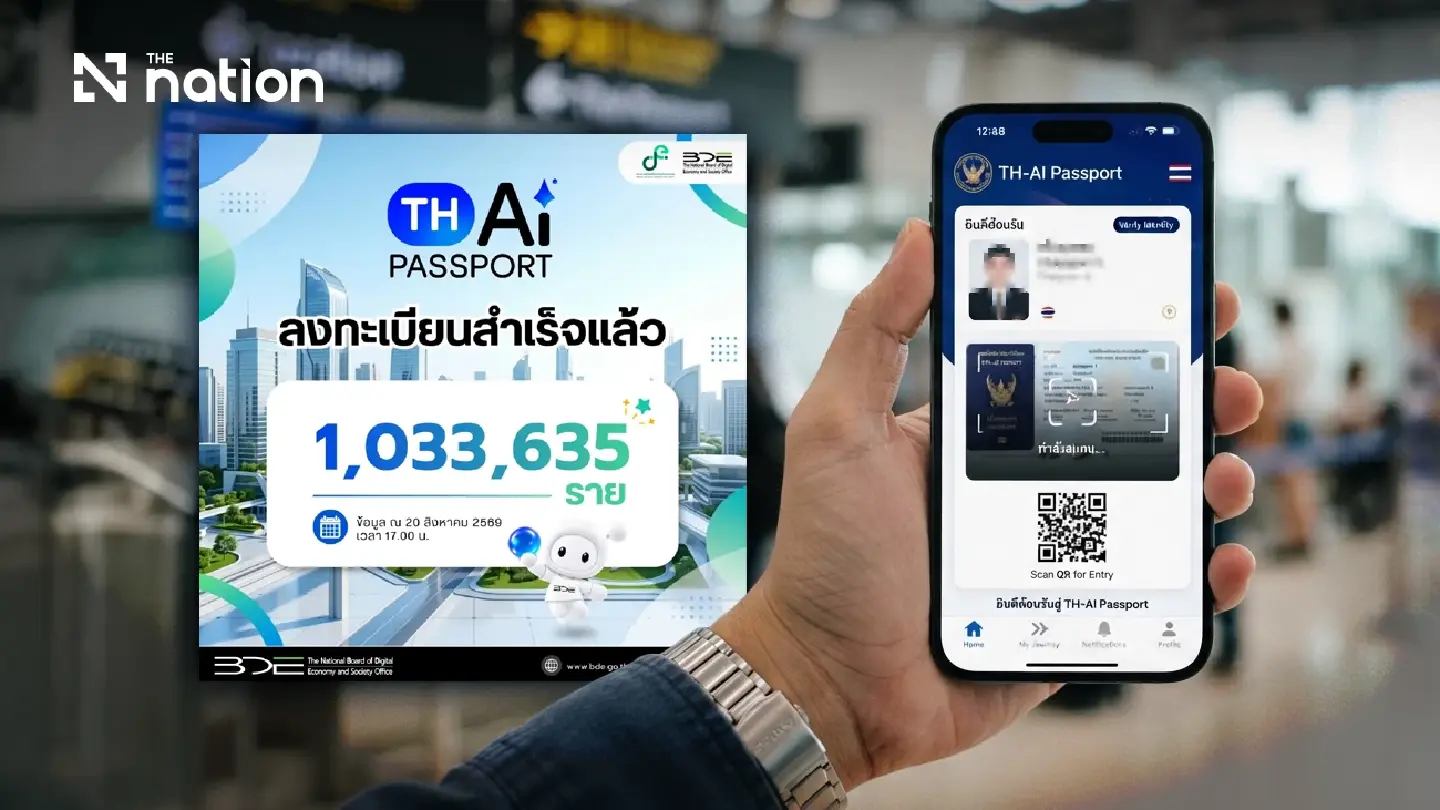


Thailand’s TH-AI Passport has surpassed 1 million registrations as Chaichanok Chidchob says contract terms bar providers from retaining user data for AI training.
- The TH-AI Passport project has surpassed 1 million advance registrations within its first two days.
- Thailand's Digital Economy and Society Minister defended the project's data security, claiming it is safer than general AI platforms.
- The minister stated that strict contractual restrictions prohibit service providers from retaining citizen data or using it to train AI models.
- The project aims to provide up to 5 million people with access to Pro-level AI tools to reduce the technology gap.
Digital Economy and Society Minister Chaichanok Chidchob has defended the data-security arrangements behind Thailand’s TH-AI Passport project, arguing that its contractual restrictions make the service safer than general AI platforms because providers are barred from retaining citizens’ data or reusing it to train or develop AI models.
Chaichanok explained on Friday (August 21) that data would continue to be handled in accordance with the systems and safeguards specified for the project.
He acknowledged that some AI processing could take place outside Thailand, as happens with general AI services, but stressed that the project’s contract places explicit restrictions on how providers may use the data.
Under those conditions, private contractors or service providers are not permitted to retain citizens’ data or carry out further processing for the purpose of training or developing AI models, he added.

“On concerns about data leaks, the project has a contract that prevents data from being further processed or stored for use in model learning,” Chaichanok explained.
He contrasted the arrangement with free or general AI services, where user information may be stored or transmitted overseas unless users disable the relevant settings.
For TH-AI Passport, however, the contract expressly restricts subsequent use of the data, leading Chaichanok to argue that the project offers stronger safeguards than ordinary AI services. The registration process is also carried out through government agency systems operating under established security standards.
“The intention of the project is to give people access to a variety of Pro-level AI models. Some people want to use Pro services but face budget constraints, so the project gives them an opportunity to try different options,” he noted.
“It is intended to reduce the technology gap and give people from all groups greater access to AI.”
TH-AI Passport registrations pass 1 million in two days
The Office of the National Digital Economy and Society Commission (BDE) reported that advance registrations for TH-AI Passport had reached 1,033,635 as of 5pm on Thursday (August 20), leaving nearly 4 million of the project’s 5 million places still available.
People aged 15 and over can register through de.aipass.net, complete identity verification and create an account for AiPASS, the project’s AI platform, ahead of its official launch on August 31, 2026.
BDE maintains that the project operates on a Pay Per Active User basis, meaning the government will pay only for Innovator-level users who actually use the service in accordance with the project’s conditions. The rate is 24.70 baht per active user per month, linking budget disbursement directly to actual usage.
The project is designed to accommodate up to 5 million people, including school and university students, government personnel, members of the public and entrepreneurs. It is intended to allow beginners and people with little or no previous AI experience to access tools, experiment with them and progressively develop their skills.
Chaichanok encouraged more people to register, with the ministry aiming for all 5 million available places to be taken up and used.
The broader objective, Chaichanok explained, is to give people—particularly those constrained by the cost of Pro-level services—the opportunity to experiment with different AI tools, identify those best suited to their needs and potentially build on those skills to generate income in the future.
