
Anti-gold mine groups submit 4 petitions


Play
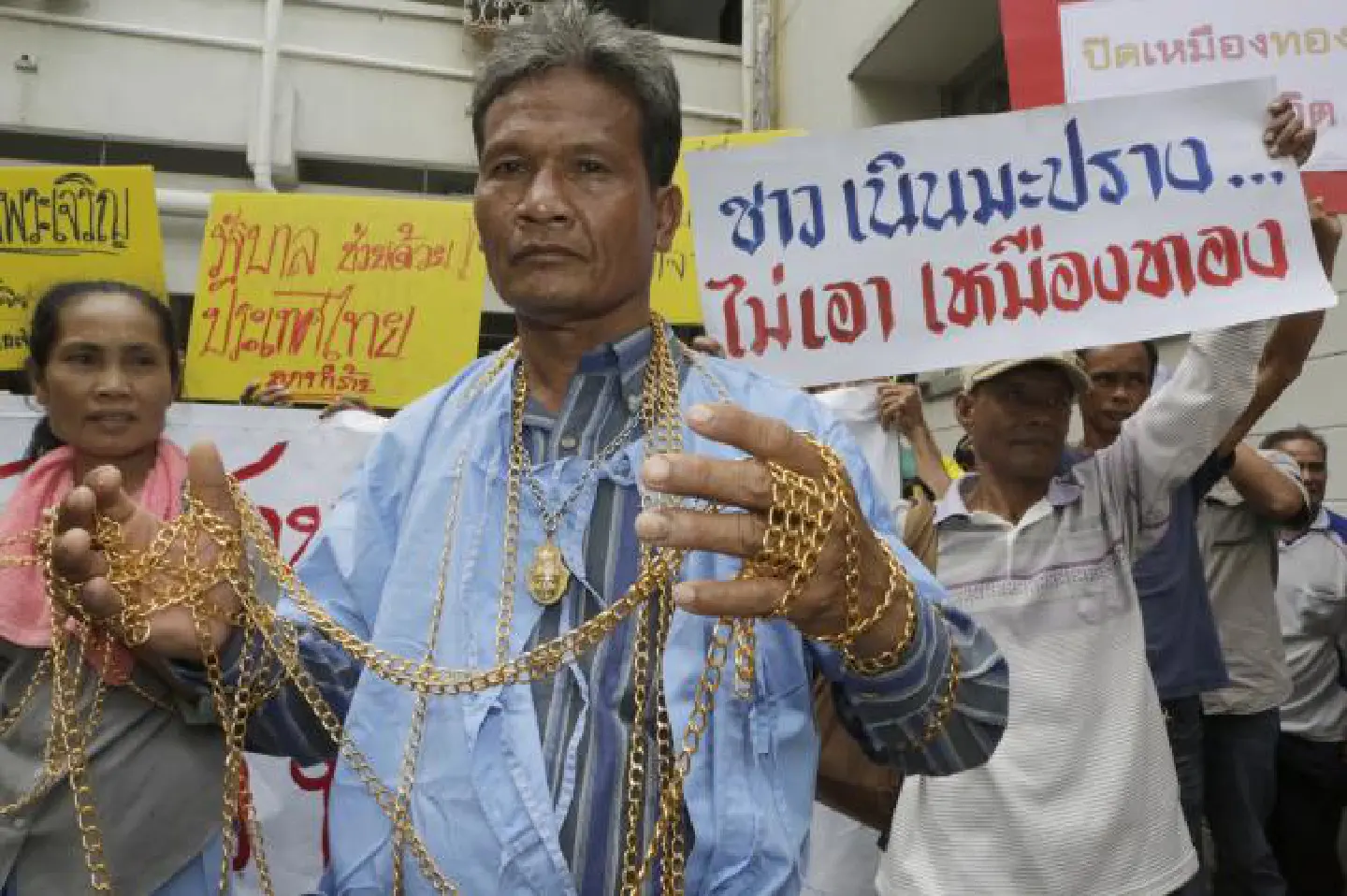
FOUR petitions to stop a new gold-mine concession, end existing gold-mining operations, scrap the minerals bill and evacuate people from pollution-affected areas were presented to the government yesterday by protesters from 12 provinces covered by the gol
Almost 1,000 protesters from Phichit, Phetchabun, Phitsanulok, Lop Buri, Loei, Nakhon Sawan, Sara Buri, Rayong, Chanthaburi, Surat Thani, Sa Kaew and Satun showed up at the Office of the Civil Service Commission yesterday morning to hand over petitions with 20,000 names to the prime minister.
Kamol Suksomboon, adviser to the PM’s Office minister, received the petitions.
Suekanya Teerachartdamrong, representative of the anti-gold mine group from Pichit, said they were demanding that the government reconsider the concession plan because new mines would only destroy the environment and livelihood of nearby communities, while problems arising from existing gold-mining operations remained unsolved.
“We have asked the prime minister to accept four demands: stop the concession for new gold mines in 12 provinces, cease the operation of existing gold mines, terminate the minerals bill and relocate people affected by gold-mine pollution to new areas,” she said.
She added that Kamol had promised to pass the four petitions on to Prime Minister Prayut Chan-o-cha as soon as possible.
Meanwhile, Prayut gave an assurance yesterday that new mines would not commence operations if current problems concerning gold-mining were not resolved.
Suraphong Chiengtong, director of the Primary Industries and Mines Department, said his agency would certainly consider the protesters’ demands and emphasised that the department considered people’s quality of life as the main priority.
“Currently, the plan for opening new gold-mine concessions in 12 provinces is postponed indefinitely because we realise that the local people are worried about the plan. However, it is certain that the delay will affect the confidence of investors,” he said.
Suekanya, who is from Khao Mor village in Phichit’s Tap Khlo district, which is situated next to Akara Resource’s gold mine, said more than 600 people had to move away because they could no longer stand the heavy-metal contamination from the mine, which has caused death and sickness.
“It is not only Uncle Somkid [Thampawet], who recently died from neurological disease, as many of the locals have become sick and died from the high level of heavy metal in their bodies. In just the last three months, 20 people have passed away,” she said.
