
Critics doubt PM's climate pledge


Play
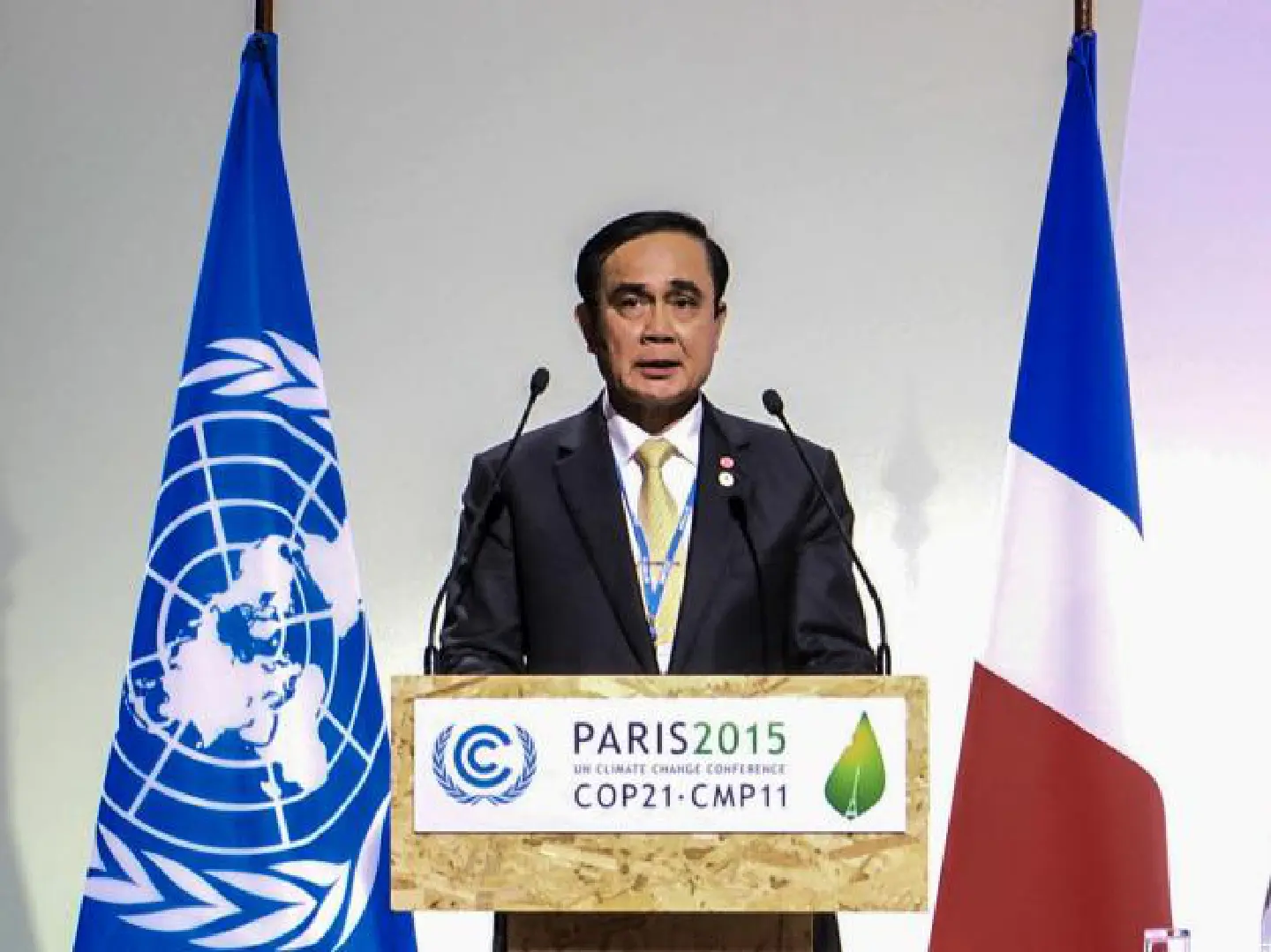
PRIME MINISTER Prayut Chan-o-cha yesterday declared in front of the world community that Thailand would slash greenhouse gases by 20-25 per cent within 15 years, but critics panned the plan, saying it was just for show, as it looked unrealistic.
Prayut told the two-week-long United Nations climate-change summit in Paris that the Thai government was committed to the target of lowering greenhouse gas emissions by 20-25 per cent by 2030, set as part of its national plan developed under a shared commitment among members of the UN Framework Convention on Climate Change to keep the world’s temperature rise below 1.5 degrees Celsius.
This would be done by reducing fossil-fuel consumption while promoting greater use of renewable energy, he said.
The emphasis would be on promoting green industries and adopting the royal sufficiency-economy model as major principles for the country to achieve its sustainable development plan in 2030.
Kasemsan Jinnawaso, permanent secretary of the Natural Resources and Environment Ministry, claimed that Prayut’s speech on Thailand’s intention to halt global warming was highly appreciated by the conference. However, critics viewed Prayut’s statement as just “window dressing” in front of the world leaders.
Srisuwan Janya, president of the Stop Global Warming Association, said the commitment was unrealistic and inconsistent with actual government policies.
“I see that our prime minister only used honey-coated words to please the global community, because what the government really does back home is totally contradictory to the goal that the PM announced,” he said. It is very clear that the government still supports some of the coal-fired power-plant projects included in the latest Power Development Plan, he said.
Several of them have actually been scheduled to be built in the near future, such as those in Krabi and in Songkhla’s Thepa, which will release a great deal of greenhouse gases into the atmosphere.
The policy of promoting industrial investment will also contribute to an increase in greenhouse-gas emissions, he said.
Penchom Saetang, director of Ecological Alert and Recovery-Thailand, remarking on the PM’s speech at COP21, said she saw that the government did not pay enough attention to developing renewable and clean energy. It still focused on coal-fired power plants.
“I think we can reach the goal of cutting greenhouse gases by 20-25 per cent within the designated time frame, but we need to control the industry and coal-fired power plants immediately and switch to renewable-energy development,” she said.
The Electricity Generating Authority of Thailand’s plan to use more coal should be stopped because burning coal to generate electricity was one of the activities that emit the most greenhouse gases, Penchom said.
“We should not wait for the government to change. People should come out to demand renewable energy,” she said.

