
EVERY SECOND COUNTS!


Thailand's most updated English news website, newspaper english, breaking news : The Nation
Life is precious so the more knowledge you have in how to save a life in an emergency situation the more able you are to respond and administer the right aide which is crucial.
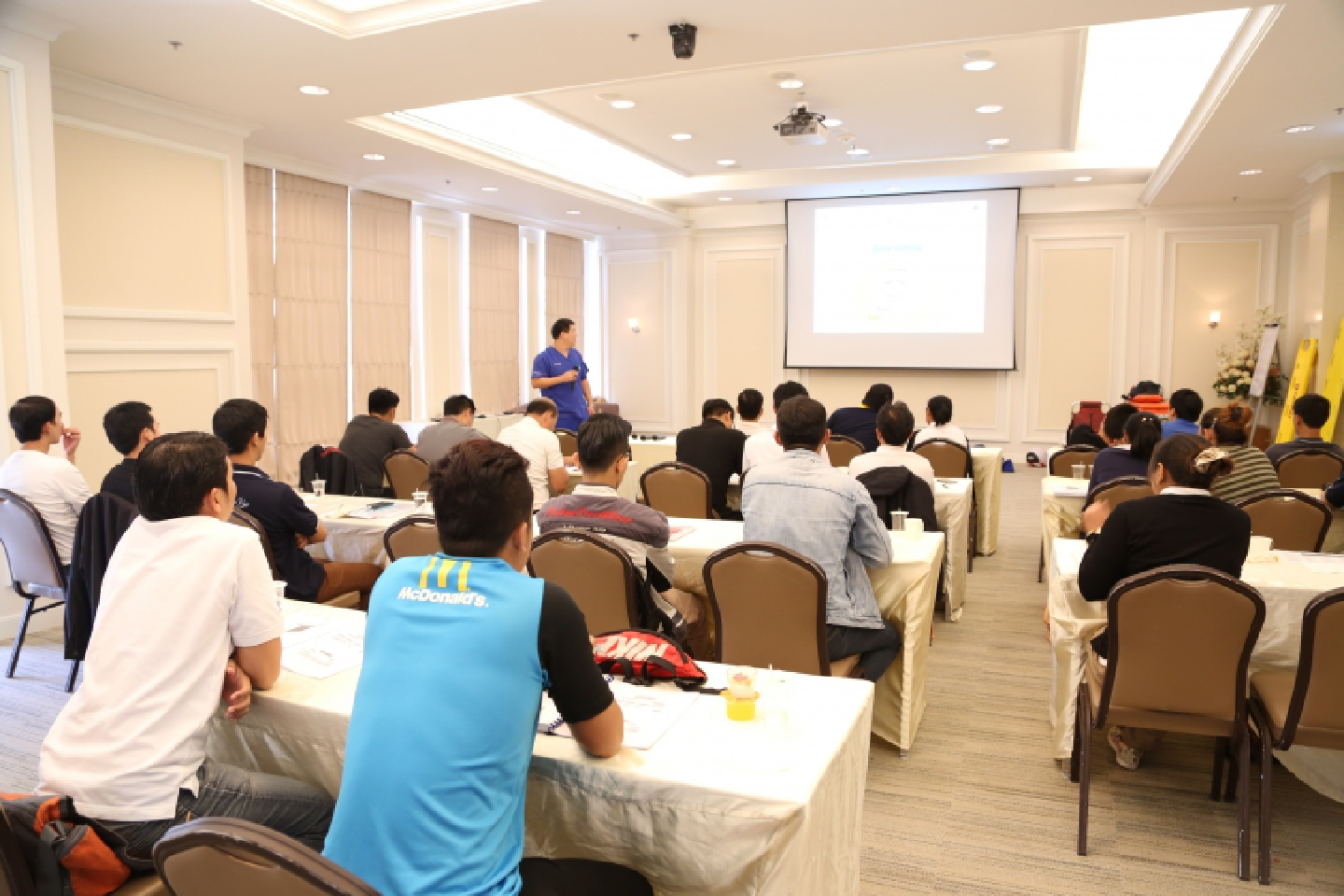
To this end, BNH Hospital has created the “Lifesaving Hero” project in partnership with hotel groups in Thailand, where hotel employees can attend the BNH SOS@Hotel training course. One of the hotels participating in this initiative is the Shangri-La Hotel in Bangkok.
Mr. Philip Couvaras, Area Manager and General Manager of the Shangri-La Hotel said that because the Shangri-La Hotel is a globally recognized brand and has many international tourists on a yearly basis; thus, the hotel philosophy is to provide the best possible service which means also giving priority to the best care as well as life safety and health to all tourists.
Mr. Philip added that he is only too aware that tourists visiting Thailand select the Shangri-La Hotel because they place their trust in us to not only ensure a wonderful 5 star stay but also placing utmost importance on safety and health.
“Some tourists visit Thailand for the first time. They have no ideas about local information. When the tourists have stayed here, the Hotel and every hotel employee have a duty of giving care and providing advice and useful information such as food, and health care.”
Meanwhile, to prepare for any unexpected incidents, the Shangri-La Hotel encourages most of its hotel employees to have a basic knowledge of first aid.
Previously, the Hotel has encountered many health problems from hotel guests; they had accidents, congenital diseases, and other diseases. Therefore, the Hotel has a policy that hotel employees must be trained to have basic first aid and be able to provide lifesaving procedures through CPR (Cardiopulmonary Resuscitation) under the Thai Red Cross Society training courses.
“Medical attention for our guests is a top priority. I always emphasize it with every hotel employee from management level to operation level. Everyone must be concerned about this matter. Especially, when a tourist encounters an unexpected incident, the prompt response must be given.”
The Shangri-La Hotel, Bangkok is the first hotel participating in BNH SOS@hotel project which demonstrated its concern for health and safety.
“BNH SOS@hotel allows medical personnel to use their knowledge about lifesaving to save tourists. We consider that the Hotel will be more valued and the project facilitates our guests staying at Shangri-La.”
From his work experience in 12 countries across the world, Mr. Philip insisted that he had no concern about medical standards in Thailand as they met the international standards. The big problem was the traffic congestion. He further stated that it was lucky that BHN Hospital was located close to the Hotel. In every emergency case, BNH Hospital has always responded quickly.

Mr. Philip said that every disease had a golden hour. For some diseases or conditions, immediate treatment is crucial, and takes effect on the patient’s life. For example, the golden period of a heart attack is 4 minutes. After this, the patient faces risk of brain damage or a stroke. This patient must be cared for within 3.5 hours; otherwise he or she will have paralysis. Each patient needs first aid knowledge about medicine for each disease. Employees’ knowledge can save hotel guests’ lives.
As he recognized and appreciated the benefits of the project, Mr. Philip considered to develop this project by organizing every foreign hotel employee at management level to be trained in this course in the near future.
“I think that every hotel should participate in this project. It is so beneficial to have more personnel with the same knowledge like us.”

One project participant, Nuchjaree Wangchai, Service Manager-Health Club, Shangri-La Hotel, Bangkok, said that the opportunity to attend SOS@hotel project with another 124 hotel employees of this hotel and other hotels last year was a great source of pride for her because this knowledge not only benefited herself but other people as well.
She was able to obtain more knowledge about first aid procedures and she learnt new and updated techniques and methods from real situations. In this 5-day training course, she studied both the theory and the practical.
“In the past, we had basic knowledge and theory, but we have never had any practice. This training helps us to familiarize ourselves with real situations. We also had the opportunity to use some equipment to help save a patient’s life. We took part in simulations several real, e.g. in the swimming pool, in the health club or on the street. The end result is that now we have so much more confidence in saving lives in real situations.”
Nuchjaree said that, after the training course, she felt more confident to give help in case she found a patient facing an accident or acute illness. She was aware that this knowledge could save lives. Help could be administered straight away whilst waiting for emergency services. Nuchjaree also shared this knowledge to her colleagues.
“Sometimes, when a problem occurs, our minds go blank, but, now, we feel more confident due to our knowledge. We also have a network in the volunteer team participating in SOS@hotel project via application created by BNH Hotel.”
Nuchjaree explained that SOS@hotel App was a simple application to be downloaded free of charge. It is convenient for every foreign tourist. SOS@hotel volunteer team, lifesaving team or anyone downloading this application can use this service by pressing the button from the application to get help. Apart from directly linking the telephone number to BNH Hospital, this application also indicates the location or position of the patient so that any member opening the application or anyone close to the incident will receive the alert and give first aid immediately.
“SOS@hotel Application is friendly for tourists because of terrible traffic in Thailand. When a patient requests for help, the volunteer closest to the incident will receive an alert as well, and he or she will be able to give help immediately.”
In addition, after the training, the training members have established SOS@hotel Club with the aim of getting involved in other projects. The first project was to develop what they learnt trained such as being the lecturer transferring knowledge about first aid.
These members believed that they were still a small group in society, but by expanding the project, they would become a strong network. SOS@hotel would be able to save more lives in the future.
