
BTMU to focus on human resources
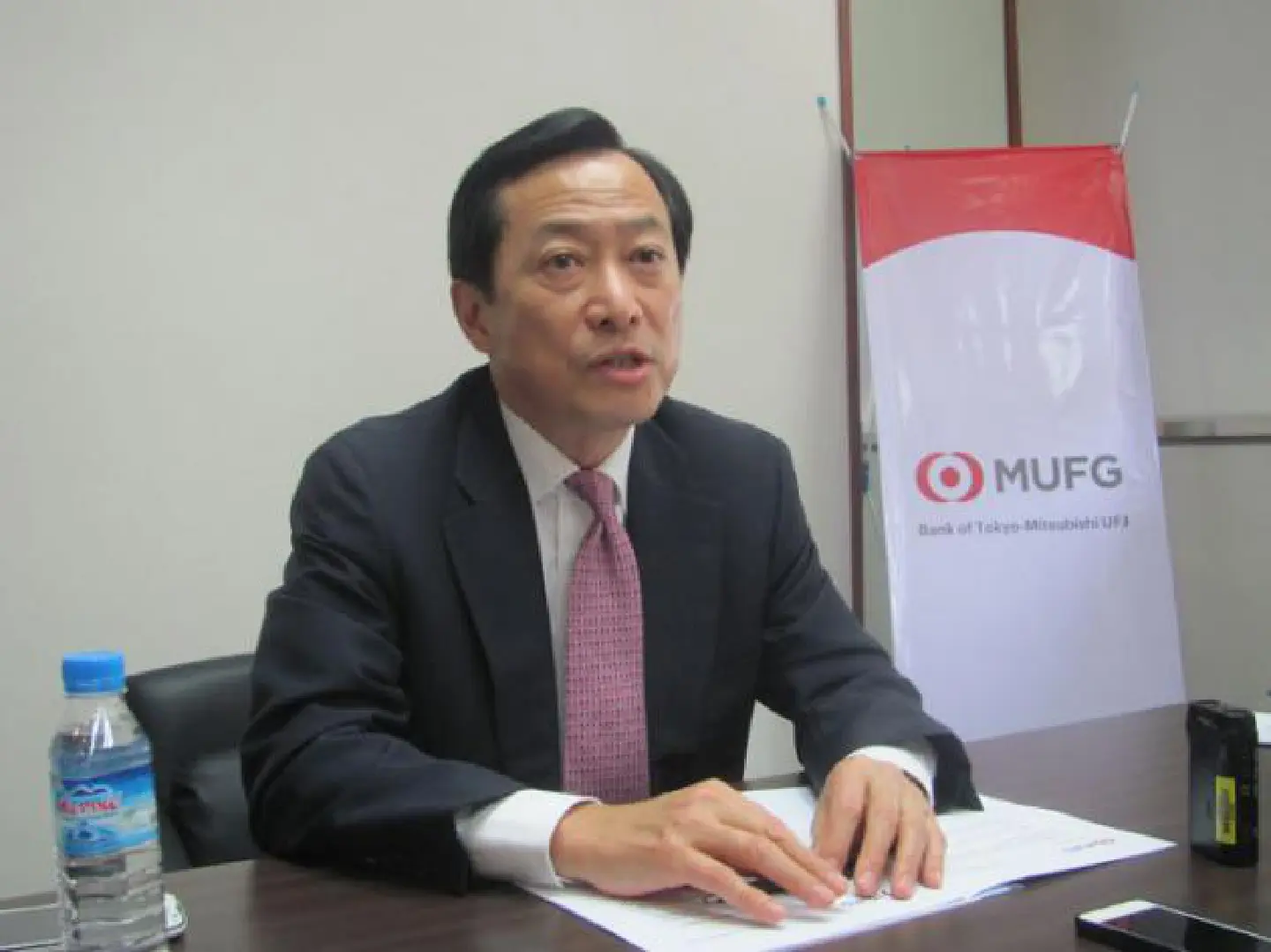


The development of human resources will be a core policy at the Bank of Tokyo-Mitsubishi UFJ (BTMU), the first foreign bank to open a branch in the country in decades, as part of its long-term commitment to help develop Myanmar's financial sector.
“In Myanmar the financial infrastructure is at an infant stage. So it is one of our big missions to support and develop the financial market. We will continue to dedicate valuable financial and human capital resources towards development,” said Go Watanabe, BTMU’s CEO for Asia and Oceania.
As part of the programme, BTMU will fund the development of a learning centre at the Myanmar Institute of Banking (MIB), which is the training arm of the Myanmar Banks Association (MBA). Equipped with the latest IT and training resources, the centre will be used to provide computer literacy and language training to the staff from the MBA’s member banks. It is expected to be launched by the second half of this year.
“This new learning centre marks the beginning of a mutually beneficial partnership between BTMU and MBA in raising the overall competency of the workforce in the financial sector. I believe this will help Myanmar to build a solid foundation for a more sustainable future growth,” he said.
The bank signed a memorandum of understanding (MOU) with the MBA in June 2014 to help develop talent to develop a robust financial services industry. The MOU enables local banks to participate in an on-the-job training programme where staff can gain practical experience.
By 2013, BTMU formed business alliances and partnerships with Myanmar organisations and banks, including the Co-operative Bank (CB). Under this alliance, BTMU will provide technical support, internal training and staff secondment programmes to CB and will share knowledge and best practices on micro-finance, trading and banking systems.
The efforts to improve human capital in the financial sector emerged from BTMU’s long experience in Myanmar. Watanabe said poor infrastructure and skills shortages were the main hurdles to the development of the emerging industry.
“We were told that we should not hire or take the staff out from local banks. So we hired new faces who had no banking experience.
Our intensive training is all about the banking business: compliance, risks and business development.”
The branch employs 30 staff, five Japanese and 25 Myanmar members, five times more than when it operated a representative office. About 20 Myanmar staff are entirely new.
“The newly hired staff have confidence to start the business. The lack of experience is one of the biggest challenges. If we expand the business, we will increase the staff. We would not take out people from other banks. We will not compete against local banks,” he said.
Watanabe said the bank had to be patient.
“We should take the long-term view. That is why we do not have a strict budget or targets. First, we will try to get as much businesses from both Japanese and non-Japanese companies as we can,” he said.
While Singapore’s Oversea-Chinese Banking Corp (OCBC) opened more than 10 accounts for clients on the first day of business, BTMU hopes to get about 150 accounts within a year. While the OCBC expects to raise the paid-up capital from the minimum requirement of US$75 million within three years, BTMU brought in US$100 million for the new branch, as testament of its commitment to the emerging country.
“Eventually US$75 million won’t be enough. That is why we decided to invest US$100 million. We could not get such a big return in one or two years. We could not expect such a big return from that investment. Perhaps in five to 10 years, our initial investments will be fully covered thanks to the increase in business,” he said.
“Once we enter a market, BTMU never loses. We never exit from the country.”
The Yangon branch will provide full-banking services, including deposits, loans, and foreign exchange.
