
Property market stagnates
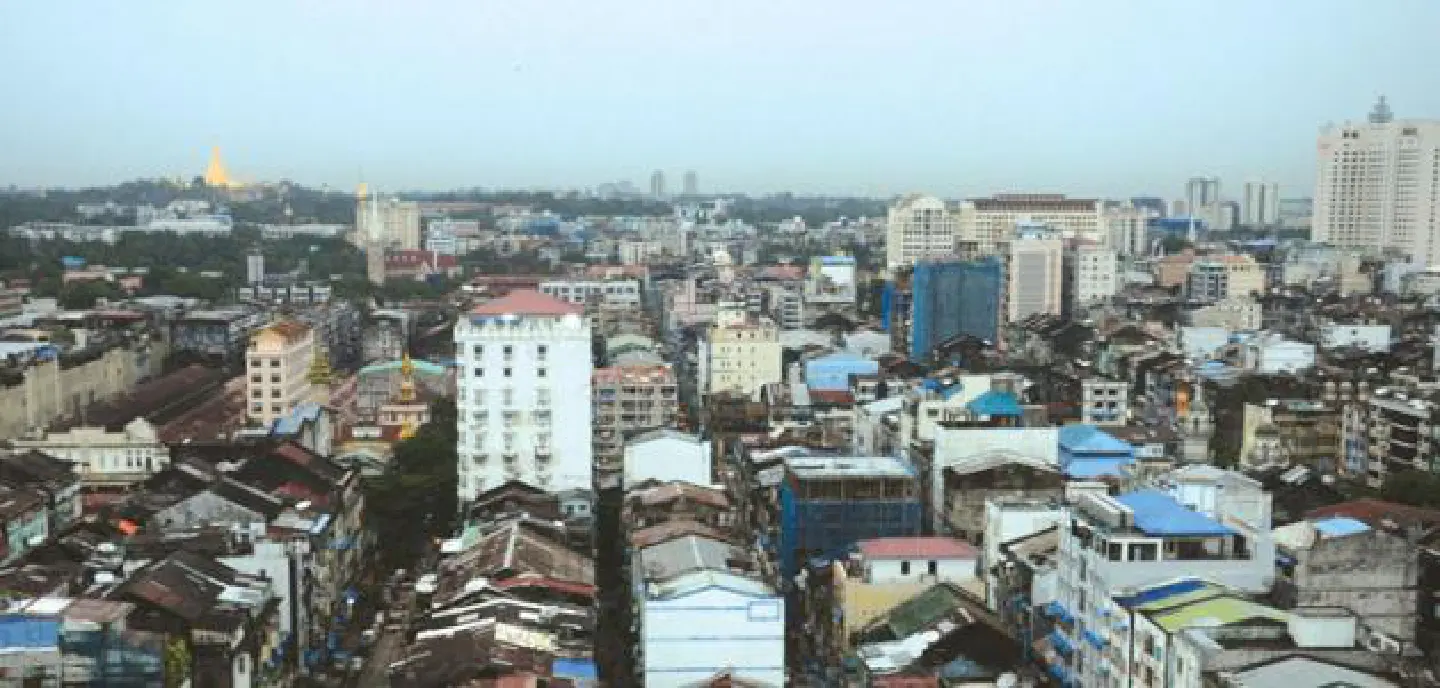


The property market has lost its shine in 2015 with almost no transactions at all, as a result of speculative buying in the past few years.
“When you look at the real estate market in Yangon, you will see that it’s spiralling downward. It is not profitable anymore. There is no transactions, and even then, the prices have not gone down to noticeable levels because buyers bought their properties for speculative purposes,” said Aung Thura, CEO of Thura Swiss, a local consultancy firm.
He added that some owners bought properties at high prices and cannot afford to sell them at lower rates, while buyers do not want to step in, expecting the prices to go down.
“The market has grown cold and property investment is stagnant,” he said.
The real estate market reached its peak in the 2013-2014 fiscal year and then began to substantially die down after September 2014. This affected properties within Yangon City as well as in the city’s periphery. One reason highlighted is that speculators have a new target – the foreign exchange rate. Before, some made quick profits from buying and selling properties. Now, they are hoarding the dollar, expecting the greenback to further appreciate against the kyat.
Another reason is investors adopt a wait-and-see attitude, pending the 2015 elections.
A retired director from the Department of Human Settlement and Housing Development said: “Right now, Myanmar’s economy is rather cold. Many investors are awaiting the results of the 2015 elections. Before that, there will not be a lot of buying and selling. The property market becomes dead… So everyone is waiting and observing the transitional period, which is holding Myanmar’s economy still.”
A real estate broker who asked not to be named admitted that the market no longer offers profits. Would-be buyers now expect the National League for Democracy to win the elections, which should cool down the market and lead to a drop in prices. They are also wary of the fact that if the election results are not satisfactory, foreign investors may deter their activities. Without foreign investment, the market would never recover.
“The market went up sharply in the first place because buyers expected quick gains on the back of rising demand for accommodation among expats,” he said.
Zaw Zaw from Unity Real Estate Services said that available apartment units call for 15 per cent below advertised prices. Last week, in Sanchaung Township, an apartment advertised at 95 million (US$86,000) was sold for around 80 million ($72,000).
In the rental market, only apartments charging around 200,000 ($180) per month are taken up.
Before, big houses fetched buyers despite the high prices of between 600 million ($540,000) and 1 billion ($900,000).
“The market stands still. The situation now is that the buyers are not interested in buying, and the sellers are also not selling,” said Zaw Zaw.
He said the number of transactions has dropped by at least 15 per cent from last year.
Transactions involved only projects in city areas, while no transaction is reported in the luxury segment.
Worsening the situation is the government’s attempt to ease housing demand. Before, a large number of potential buyers complained about high property prices.
The Department of Human Settlement and Housing Development recently released a statement saying that to meet public demand, the government has been building a total of 72,000 housing units each year since 2005. Within five years, a total of 36,000 units were built. Plus, the current government has built more than 4,000 buildings in Yangon.
Demand remains high in line with the urbanisation rate. Before the country opened its doors, the Construction Ministry was also slow in licensing housing projects.
A total of 1,878 buildings were permitted to be built in the 2011-2012 fiscal year, and a total of 3,046 buildings were constructed in the 2012-13 fiscal year. A total of 3,928 were built in the 2013-14 fiscal year, and at least 2,372 building were built in the first six months of this year.
Few people can afford the units as property transactions were mostly executed in cash.
“Construction and Housing Development Bank was launched last year to provide financing for the public. The bank is offering long-term home loans, which 264 people were granted. The bank is also working with the Mandalay City Development Committee to sell low-cost housing units in Mandalay Region,” said Min Htein, the director general for the Construction Ministry at a press conference in Nay Pyi Taw on May 26.
Despite the government’s efforts to supply more cheap units, people still cannot afford to buy their own units. Most are renting.
“The real estate market is slow. Only small and medium properties that range between Ks20-Ks30 million seem okay to buy and sell, especially property in Dala and New Dagon townships. The real estate market in central Yangon is still slow,” said Zaw Zaw.
“The market is slow because people have less trust in the presale system. Property prices go up when the dollar price is rising. And people are watching the activities of this year’ general election. The state of the real estate market beyond 2015 will depend on the election,” said Myint Swe, a retired deputy director of the Department of Human Settlement and Housing Development.
