
Slow progress in India's toilet mission


Play
NEW DELHI - The classrooms at the SDMC Primary School in Badarpur in Delhi have no furniture. Students sit on the floor on threadbare carpets.
The corridors of the government school, which is representative of state-aided schools in India where education is free, also doubles as the school cafeteria where free lunches are served to students.
There are few facilities for its 8,000 pupils.
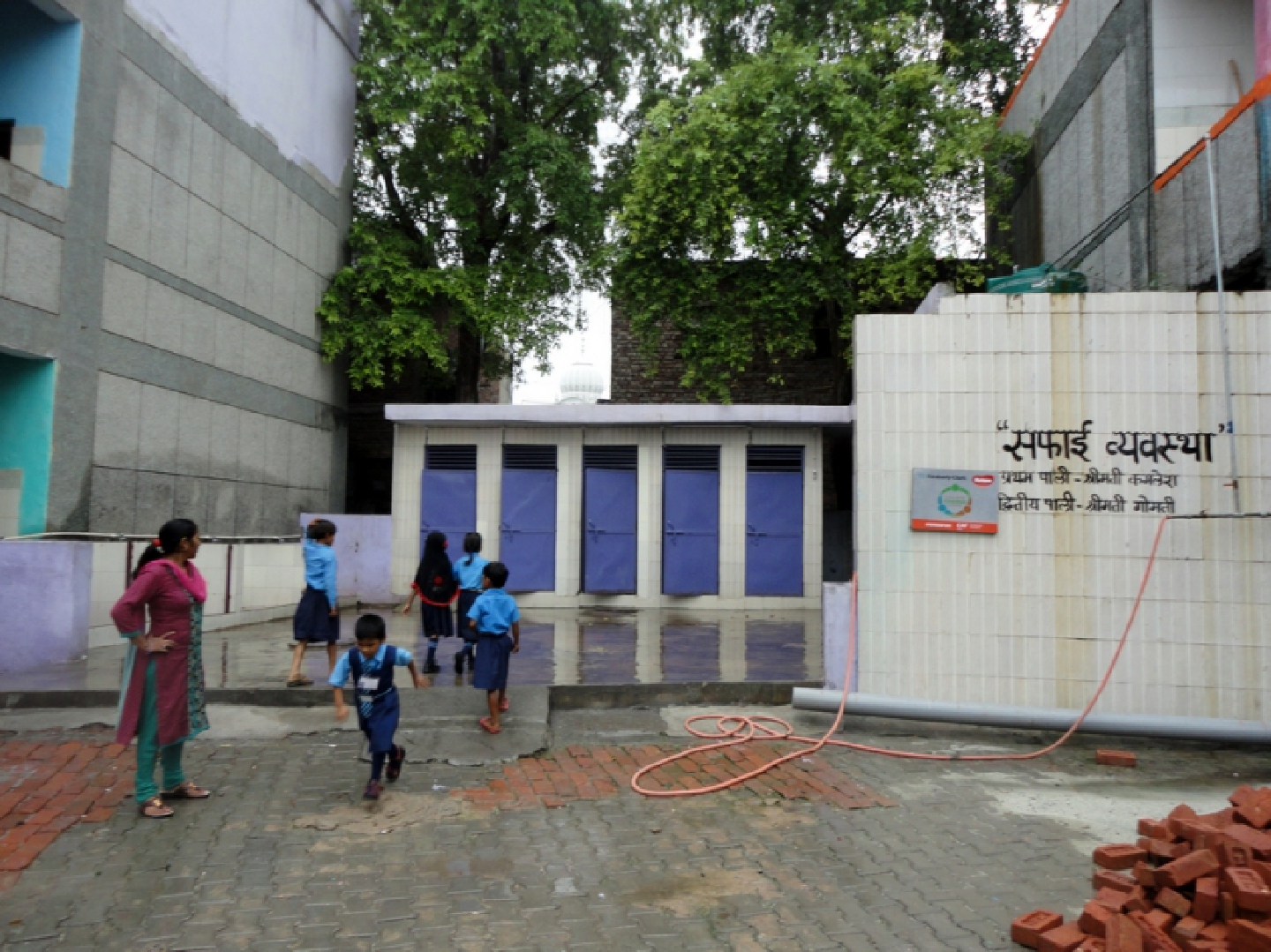
Yet, on either side of the school courtyard are refurbished toilets - the cubicles with bright purple doors for girls and those with cream-coloured ones for boys.
The toilets are a much-needed upgrade in a country where nearly half the population, according to Unicef, does not have or does not use toilets.
In fact, 69 per cent of rural Indian and 18 per cent of urban Indians defecate in the open. It is an unsanitary situation that is blamed for diseases such as diarrhoea and worm infections in children.
Over the last two years, Prime Minister Narendra Modi, who launched the Clean India campaign in 2014 to build toilets and improve sanitation, has sought to free India of open defecation.
One of his strategies was to get corporations to build and refurbish toilets, especially in government schools where over 70 per cent of India's children get an education.
"School sanitation is very critical to Swachh Bharat (Clean India) for many reasons," Parameswaran Iyer, Secretary of the Drinking Water and Sanitation Ministry, told The Straits Times. "We want to make sure kids practise safe hygiene and use toilets. Apart from that, they influence their parents. They are the change agents."
He added that private corporations are contributing in different ways. "Many are also working on their own or working directly with state governments," he said.
However, Iyer said there was scope to do more. For instance, the toilets at SDMC Primary School were renovated six months ago by US multinational Kimberly-Clark, in collaboration with non-profit group Charities Aid Foundation.
"Earlier, there was no light in the toilets, so I couldn't see," said Ayesha Parveen, nine. "I can see now."
Overall though, corporate interest has not been as robust as anticipated by the government, which has several toilet-related initiatives. According to a survey by the government's National Sample Survey Organisation on the clean school initiative by the Human Resource Development Ministry, private companies built 3,466 toilets, compared to 142,000 built by public sector units till March this year.
Coca-Cola, for instance, has constructed 14 toilets while Mercedes Benz has built only one under the scheme.
But a Coca-Cola representative noted that the company helped to revitalise 5,500 toilets in more than 600 schools till the end of last year under its own initiative. Kimberly-Clark too is renovating toilets in 100 schools in five states under other initiatives.
Said Achal Agarwal, president of Kimberly-Clark Asia Pacific Region: "Building toilets is fine, but if you can repair toilets, a massive number of school children can be impacted.
"A few toilets would benefit the entire school. We are also looking at putting in a system of audit."
There have been reports of toilets in government schools across India being locked up and used as storage rooms. In others, the lack of cleaners or water supply results in non-functioning toilets.
"They make the toilets, but then they are not functional. There is no maintenance," said Delhi-based lawyer Ashok Agarwal, who takes on education-related cases.
"This is a basic failure. If you can't even provide working toilets, then what education will you impart to these students?"
