
A symphony for the reborn


Sobered by jail, George Michael blossoms anew: "I should have been locked up years ago!"
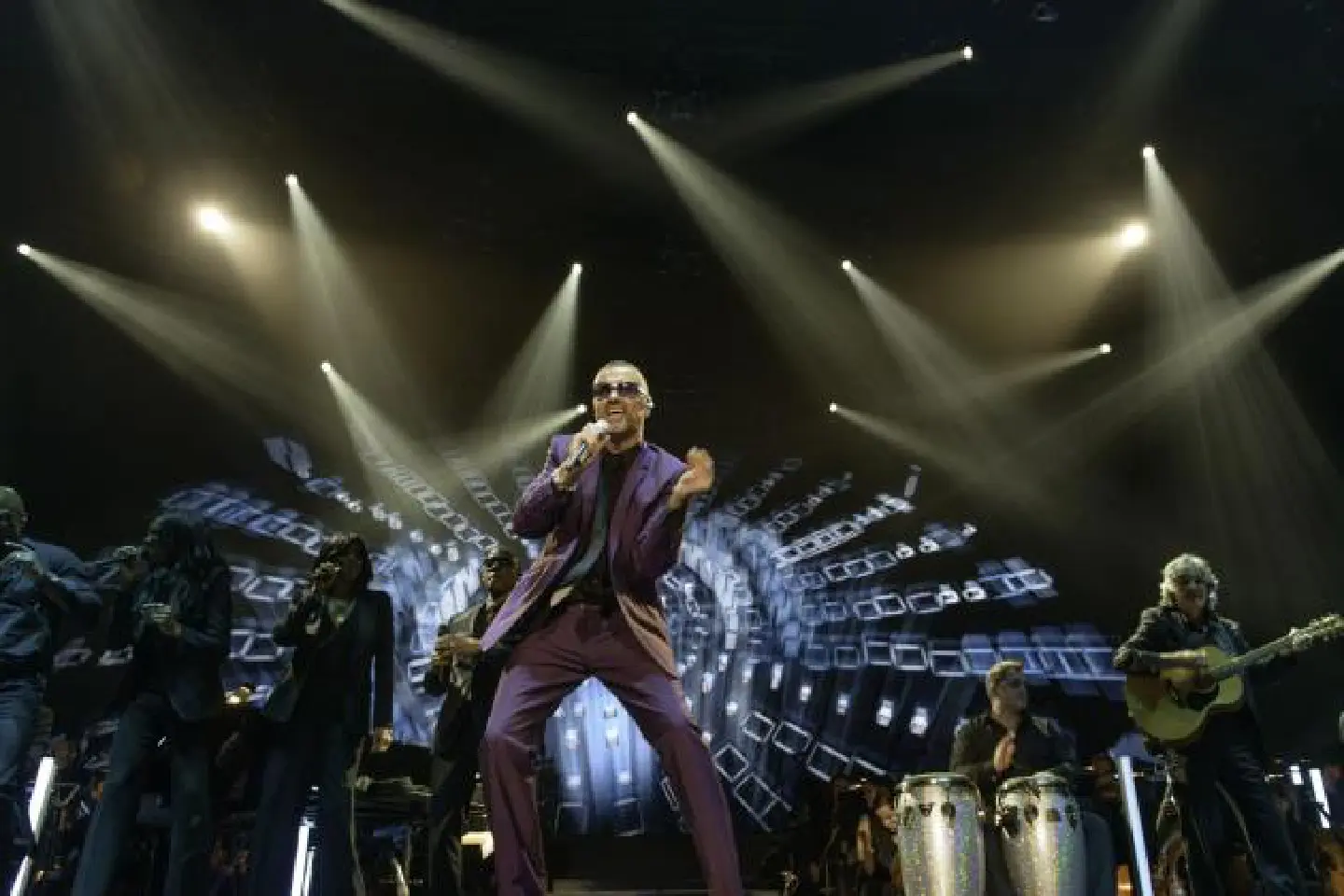
George Michael, long top of the world as part of the singing duo Wham! and then again as a record-breaking solo artist, has certainly had his ups and down, but this year he’s back in the charts with the album “Symphonica”, comprising mostly live versions of songs from his 2011–12 tour, including six of his own compositions.
“Symphonica” is Michael’s sixth album, but his first live offering, and his first album of new recordings since “Patience” in 2004. Fans had been expecting more new material after his successful comeback, but then the storm clouds gathered. Michael spent eight weeks in jail for possession of cannabis and drunk driving.
Out of the trauma, though, came a creative burst of energy. He talks frankly about it in this press release from his record label.
Did you decide to go sober after prison?
Yes, from the moment that last crash happened. Because, apart from anything else, I realised it had to be something to do with me. It shook me out of my denial in a way that the others hadn’t, probably because there was a real chance I’d go to prison. After that crash, I started drug counselling and was two weeks in detox, none of which I made public. It’s so out of character for me to do something so irresponsible as that, let alone repeatedly. But it feels so completely behind me now – it really does.
On your release you wrote the song for Kenny Goss, “Where I Hope You Are”.
The day I came out of prison – it was a very strange thing. I wrote so much material in such a small space of time, most of which I’ve yet to finish, but it’s well underway. I wrote seven or eight songs in two and a half weeks, and that just never happens. It hasn’t happened again since – it was a big burst of creativity, and I was thinking, “Christ, I should have been locked up years ago – I would have come up with a couple of great albums by now!”
I know how to basically record my vocals as I’m going along, and I just keep singing gibberish until something comes together. As it was coming together I originally thought this song was about losing Anselmo [his lover Anselmo Feleppa, who died in 1993] and about Heaven, where I hoped he was. Somehow halfway through, I realised I was writing a break-up song, which I’ve never actually written before from the point of view of someone who’s broken up with someone. Kenny [Goss, his partner from 1996 to 2009] and I were together for 14 years before we decided to live separately.
That’s a long time.
In gay years that’s a long time especially, and it was pretty much my decision to end it, and it’s very, very different to end a relationship with someone you still love very much than it is to end a relationship where you’ve really had enough.
I think I’d been in denial that I really need to write a song about it, and at the moment I realised I was that it made me cry. It was actually a great bit of recording, but it was so “She’s out of my life”, I just thought, “I can’t include that – I’ll have to record that again without the wobbly voice!”
What is it like touring with 40-piece orchestra? You chose to play in opera houses.
I think the Royal Albert Hall was probably the best performance as a vocalist I’ve given in my life. The acoustics are built for singers. When I’m really relaxed enough I can hear myself – I sing the way I do in the studio.
Getting the actual balance of instruments right in the room is essential for a singer if they want to give any detail to what they do. And that’s what I was praying would happen and it has, and it’s so amazing for me to be able to just relax and know that my tuning’s going to be okay and everyone’s going to be able to hear what I’m singing. I’ve never been happier playing live.
Why did you pick Rufus Wainwright’s “Going to a Town” to be in the album?
One of my favourite lines from that is “Do you really think you go to Hell for having loved?” I love the fact that there are no gay references, and that’s the way it should be. We all know that the best work by [gay playwright] Tennessee Williams was when he couldn’t say what he wanted to say. “Less is more” can create the most beautiful lyric. I tend to always want to be understood, so I tend to simplify what could get very lyrical.
What are your plans after this tour and album?
There is another project I’m working on which will contain some of the material I wrote when I first got out of prison which I’m still working on. Not sure what shape it will take, but I’d like to do something for the gay community – possibly a dance album.
Are you a fan of new technology?
I absolutely love it and have been completely seduced by Apple and getting the latest innovations. But, at the same time, I hate the way all these machines are controlling our conversations – people texting and all that – it’s all about control, and I find that a bit distressing.
Your close friends have given you all sorts of nicknames. What does Elton John call you?
Athena, isn’t it? I think it’s something to do with being the Greek poster boy. So I’m the Greek equivalent of scratching your arse when you’re playing tennis, I suppose!
