
Recreating history


Play
A visual arts exhibition and a play allowed the audience to connect and think
The recent four-week long “pre-festival of ideas”, known as “The Open”, an acronym for “open”, “participate”, “engage” and “negotiate”, held last month as a prelude to the Singapore International Festival of Arts (Sifa) proved extremely effective in preparing the audience for what they could expect from Sifa itself.
The foyer of 72-13, the hub for both The Open and Sifa, double-tasked as a small gallery where the audience arriving to watch Chilean company Teatro Re-sentida’s “The Imagination of The Future” could take in the details of “The Arrival of Vasco da Gama”, a photographic tableau conceptualised last year by Bangalore-based multidisciplinary artist Pushpamala N.
The tableau was designed to resemble the 1898 oil by Portuguese artist Jose Veloso Salgado imagining the regal explorer in a declining Asian court, perhaps ready to be helped by a western power.
Displays in other parts of the room showed how the tableau was created – for example, how make up and wigs were put on Asian actors. Pushpamala herself was Vasco da Gama in the photograph. Set props were also on display.
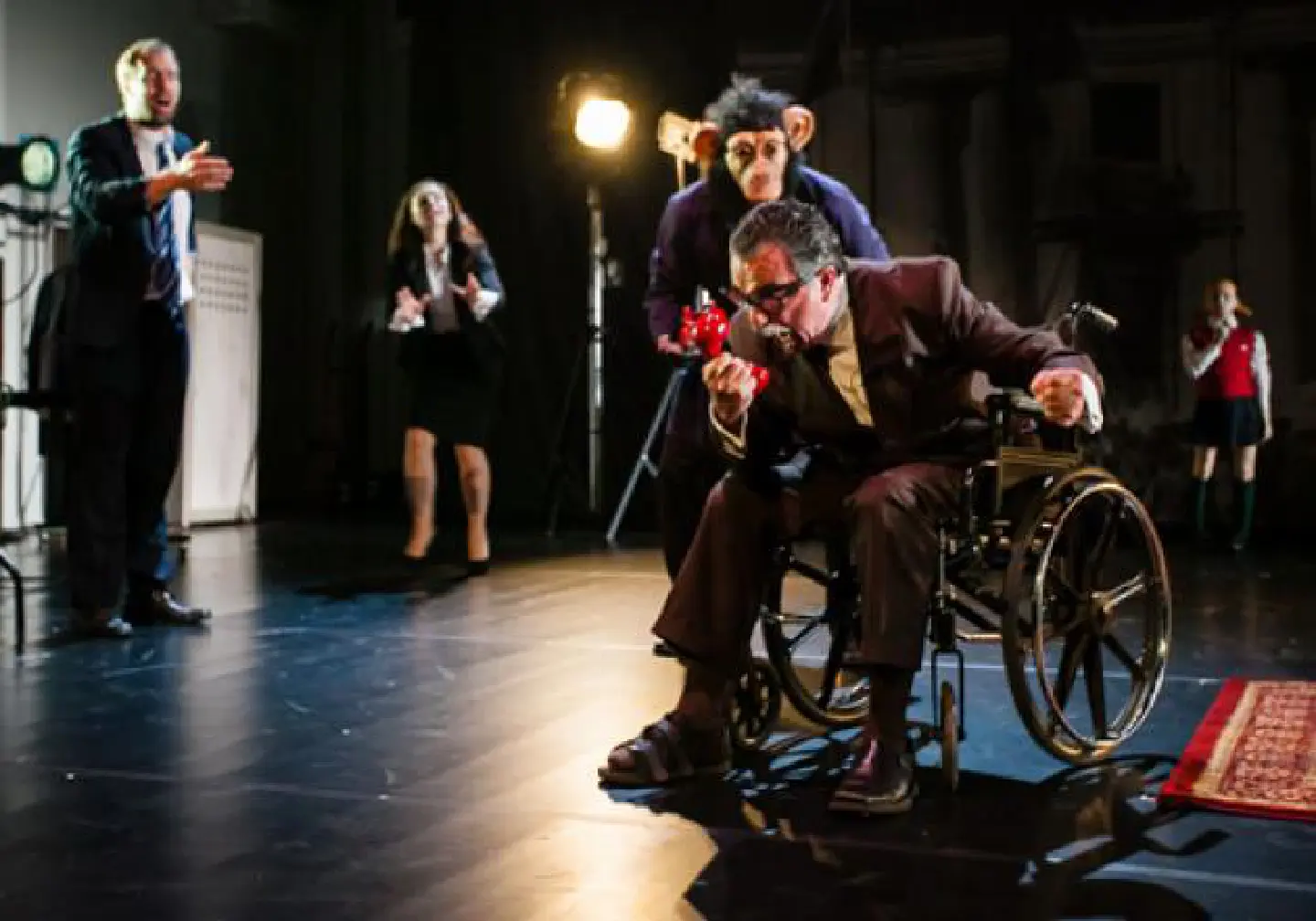
Once inside the main studio, the audience was in for another treat. Here, nine Chilean actors recreated the episode where president Salvador Allende delivered his last speech surrendering his power to Augusto Pinochet and showed different possibilities of how the incident, and the country, would turn out with the help of his ministers in how he delivered the historic speech.
Theatrically riveting and dramatically compelling, “The Imagination of The Future”, which was co-written by the ensemble of high-octane Chilean actors and directed by Marco Layera, was not shy in questioning or even offending, politically, socially and religiously. As in some European countries where the play has been staged over the past two years, certain dialogue and images were edited, and the sign “Censored in Singapore” was held to let us know. Other contexts were adjusted to better communicate with the Singaporean audience.
Here was proof that if other, and more popular media, have to be politically correct, then all the more reason for us to turn off our communication devices and listen to ideas and comments from human actors, which we would certainly not hear elsewhere.
Questions rose in our minds when we linked both works together. History, after all, is not only about recollection or remembrance. By adding the question “What if?”, we can surely better understand our present and prepare for the future.
With arts and artists now frequently and more smoothly crossing discipline boundaries, it’s time academic institutions rethought their arts curricula and for our cultural agencies to take note.
Otherwise, contemporary Thai arts, and its audience, will never be able to catch up with the rest of the world.
The writer’s trip was supported by SIFA and Goethe Institut Bangkok.
SIFA IN FULL SWING
The Singapore International Festival of Arts runs until September 19. For details, check SIFA.sg.
