
The myriad faces of Picasso


Play
Some of the artist's best-known sculptures come to New York
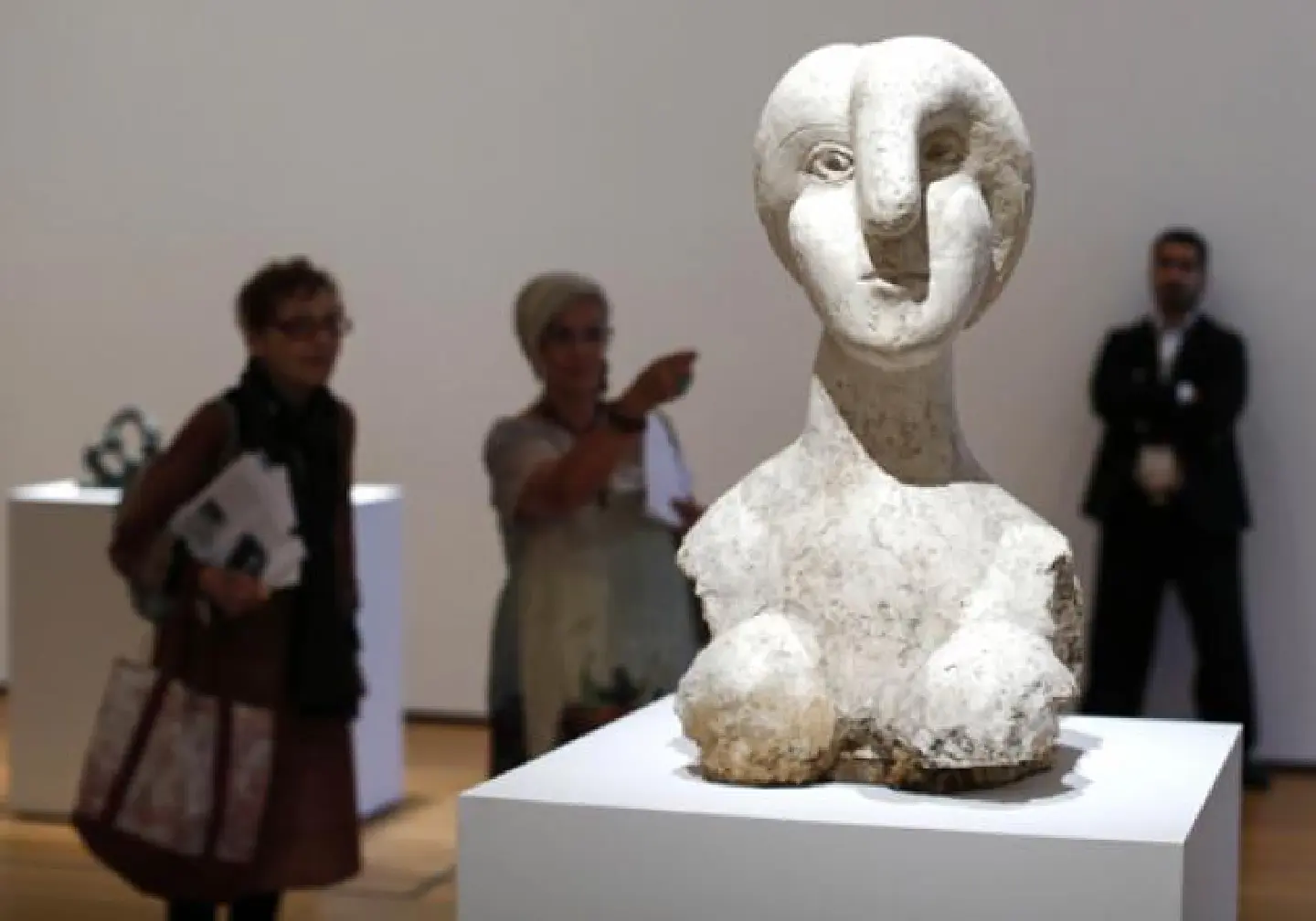
Cubist guitars, sheet metal violins and female busts with disproportionate eyes: the largest exhibition of Picasso sculpture in half a century in the United States opens in New York today.
Spread across an entire floor at the prestigious Museum of Modern Art, the exhibition of 140 works spans 60 years of Pablo Picasso’s prodigious and immensely varied output from 1902 to 1964.
“Sometimes it’s hard to believe that it is the same artist from one gallery to the next,” says curator Ann Temkin.
For many in New York and the United States, “Picasso Sculpture” may be a once in a lifetime opportunity to see the enormity of the Spanish artist’s sculpture, in one place, as it runs through February 7.
Many of the pieces are on loan from public and private collections, both in America and abroad, particularly the Musee National Picasso in Paris, which has provided about a third of the collection.
“There were numerous critical loans that made possible this exhibition,” acknowledges Glenn Lowry, director of MoMA.
The work stretches from Picasso’s first works in bronze, wood and plaster, to painted sheet metal from 1954-1964, his cubist period, pre-war years in France, World War II and his life afterward on the French Riviera.
But if Picasso lived until his death in 1973 as one of the recognised great masters of 20th century painting, his sculpture remained largely hidden from view during his lifetime, says curator Anne Umland.
“Picasso kept his sculptures with him throughout his life,” she says,
“It’s really only at the time of his death that Picasso sculptures as a group began their journey out of the studio to public and private collections in the world.”
MoMA quickly became interested in acquiring the works so the museum now has the most comprehensive collection of Picasso sculptures outside of the Picasso museum in Paris.
Its collection covers all the hallmarks of Picasso, including Cubist musical instruments and women with disproportionate faces.
But it also includes lesser-known sculptures such as the 1941 bronze “Death’s Head” and “The Monument to Apollinaire” created in the late 1920s for a contest to construct the tomb of his friend, French writer Guillaume Apollinaire, none of which were accepted.
The exhibition also includes what Temkin calls a “miracle” – a set of six “Glass of Absinthe” in painted bronze created in 1914 and which dispersed shortly after Europe was flung into the horrors of World War II.
Other attractions are some of the five sculptures that Picasso presented with his legendary antiwar “Guernica” mural at the Universal Exhibition in Paris in 1937, including the great bronze “Woman with Vase” from 1933.
Another highlight is his unique set of sculptures, “The Bathers” from 1956 – six wooden figures lent by the State Gallery of Stuttgart in Germany.
Temkin notes that a visit to the Ethnographic Museum in Paris in 1907 was hugely influential on Picasso’s artistic development.
There he discovered sculptures, figures and masks from Oceania and Africa and, in Temkin’s words, realised “wow, here there are sculptures that kind of have a magical presence, a sort of charisma.”
She says sculpture suited his “restless and impatient” temperament as it allowed him to stop and start, and return to a work at any time, unlike painting, which requires more preparation.
