
A celebration of Hindu roots


Play
The BMA cohosts a birthday party for Vishnu at the revamped Dhevalai Vishnu Shrine
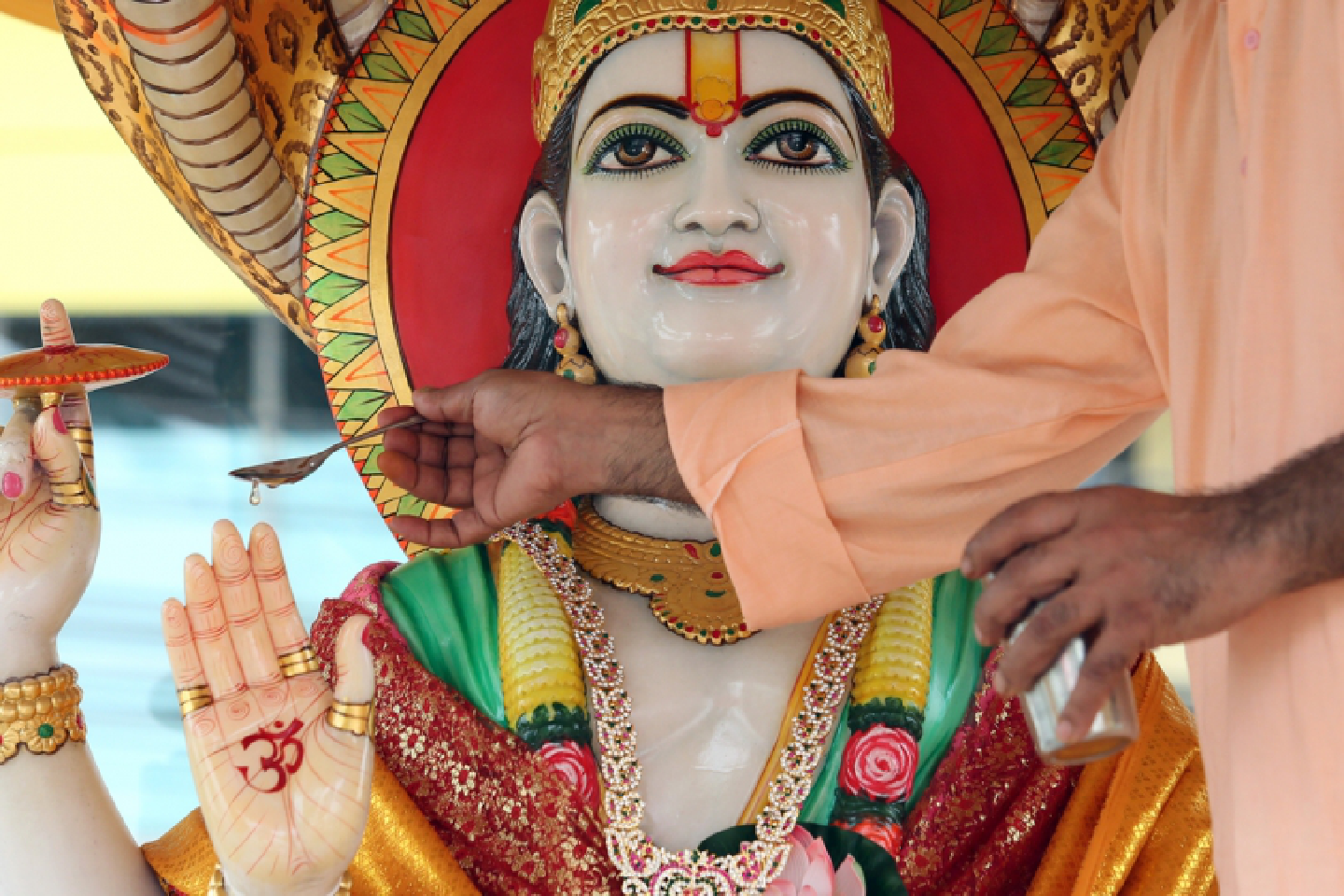
Newly renovated, the Dhevalai Vishnu Shrine near Wat Suthat in Bangkok was the scene of celebrations last week as Hindus gathered to commemorate Lord Vishnu’s birthday.
The Vishnu Foundation and Bangkok Metropolitan Administration jointly hosted the Brahmin ritual, the 34th such ceremony since 1982, when it was part of the capital’s 200th-anniversary observations.
Thailand is home to thousands of Hindus of Indian descent, some of whom can trace their ancestry back centuries, to the era when Siam was heavily influenced by the Khmer Empire, with its strong Hindu roots.
The epic poem the Ramakien, familiar to all Thais, derives from the Hindu Ramayana, its tales retold in performances like those of the masked dance khon. And Ayutthaya, the former Siamese capital, took its name from Ayodhya in India, birthplace of the Hindu god Rama.
Thais are also versed in rituals that stem from Brahmin practices, such as the use of holy threads and the pouring of lustral water from conch shells. Thai Buddhists often worship Hindu deities, as seen most famously at the Erawan Shrine.
Statues of the gods Ganesh, Indra and Shiva are also commonly seen around Thailand, as are Hindu symbols, most notably |the garuda, signifying the monarchy.
Those who recall or have read about the Giant Swing when |it was still in use know the |practice replicated a Hindu ritual, while the Triyampavai-Tripavai ceremony depicts a Hindu legend about how the world was created.
