
Everyone lends a hand


Waterways and farmland benefit from the ‘Power of Human Energy’ – as do people
As His Majesty the late King Bhumibol often reminded us, economy – both the state economy and one’s own finances – should be sustainable and nothing more than sufficient to needs.
Development, he and others have advised, should suit local social and geographical conditions. It should be sustainable in itself, with an eye to conserving natural resources. It should promote public knowledge, particularly in terms of harnessing modern technology.
These are the principles behind an ambitious project sponsored by Chevron Thailand. “The Power of Human Energy: A Journey Inspired by the King” is now entering its fifth year.
With the focus remaining on the design and preparation of water-catchment areas along the Pa Sak and other rivers to help prevent floods and drought, the project has adopted a strategy for the coming year called “Taek Tua Thua Thai … Ao Mue Samakkhi”.
“Samakkhi” refers to the “great civilisation of the waterway”.
The late monarch proposed guidelines for the management of limited natural resources to achieve optimal benefit. In one instance he envisioned an ideally designed private property.
He suggested earmarking 30 per cent of the property for a pond whose water would be used for crop cultivation during the dry season and for raising food fish all year. Another 30 per cent would be devoted to growing enough rice to feed the property’s occupants yearround.
Another third would be used for growing garden crops and fruit. The residents’ home, livestock enclosures, a mushroom nursery and road access would take up the rest.
It’s the kind of thinking that imbues the “Power of Human Energy” project.
“This project has enjoyed continuous success throughout its four years,” says Artit Krichphiphat, a general manager at Chevron Thailand.
“We’ve seen public acknowledgement steadily building and we’ve achieved our purpose in terms of getting more people and networks working together along the Pa Sak River, and we’re expanding into 24 other watersheds around the country.
“We’ve provided a model for learning resources that can solve social and economic problems and we’re seeing concrete evidence of change, from the collaborations to the actual actions, turning wasteland into verdant land and improving people’s livelihoods.”
Dr Wiwat Salyakamthorn, president of the Agri-Nature Foundation and Institute of Sufficiency Economy, says the project emphasises strong collaboration between government and the public, through which success was achieved with the Pa Sak model.
“Taek Tua Thua Thai … Ao Mue Samakkhi” refers to people getting together in a movement that’s spreading across the country. It will cover four provinces, beginning with a farm demonstration property at King Mongkut’s Institute of Technology’s Faculty of Agricultural Technology in Lat Krabang.
The project then shifts to Sukhachai Supsiri’s Rai Suk Klangjai in Ratchaburi on August 19 and 20, Uncle Sawang Srithambutr’s land in Udon Thani on October 7 and 8 and Special Warfare Command headquarters in Lopburi on November 4 and 5.
“The emphasis will be on ‘taek tua’ extending results from the Pa Sak to other river basins,” says Wiwat, who speaks of networks labouring in harmony and exchanging knowledge about the way land uses can be adjusted in keeping with the late King’s philosophy.
“The origin was really in the Mae Taeng watershed in Chiang Mai, where rafting on the river was a tourist attraction,” Wiwat says. “Five or six years ago the drought was particularly bad and the river dried up. So we looked at the concept of ‘reforestation without replanting’.
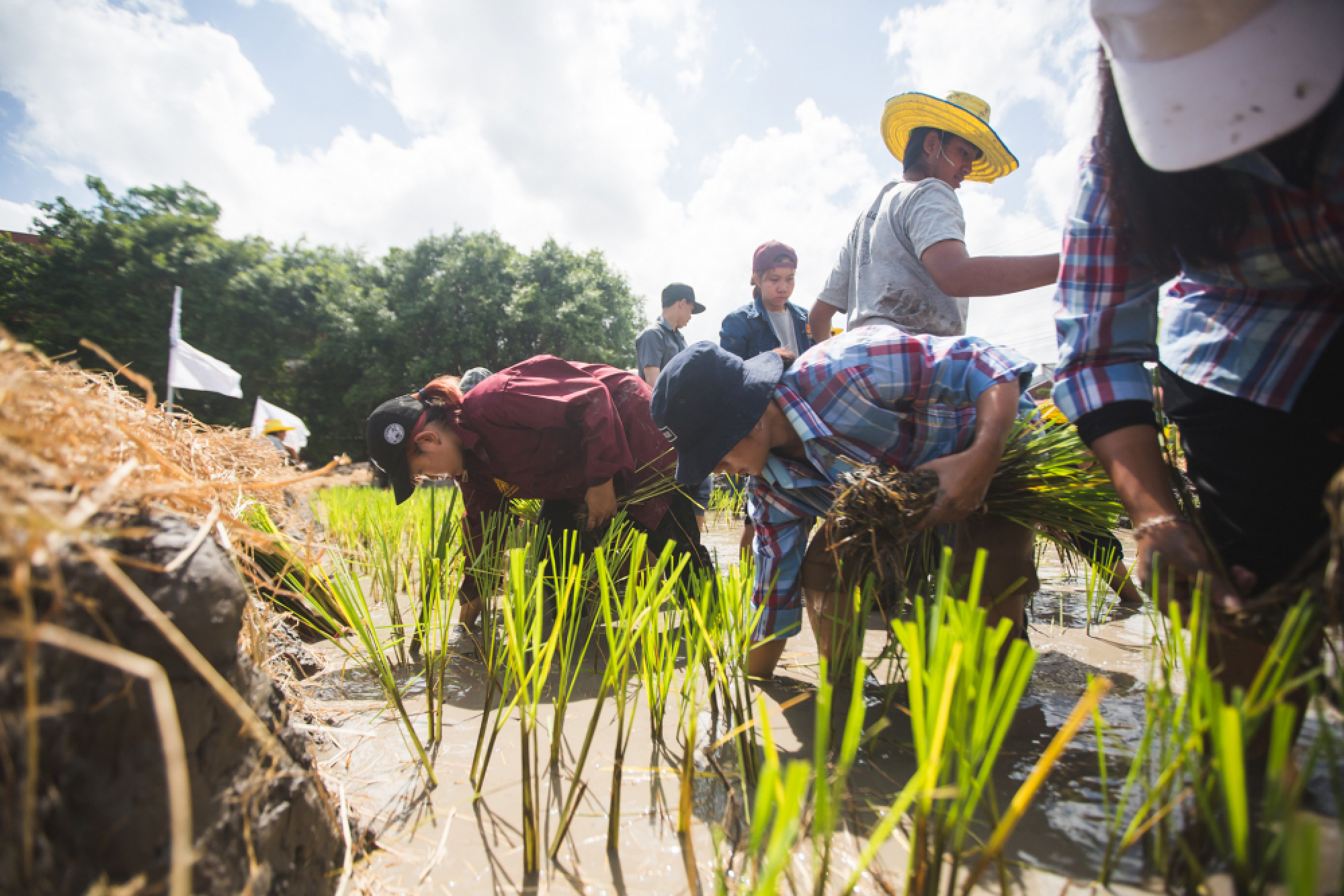
“After our success in Mae Taeng, we went to Mae Ramat district in Tak. ‘Ao mue’ in a northern dialect means ‘gather to help each other’ and ‘samakkhi’ refers to the great civilisation of the watershed. So it was like reviving the traditional means of harvesting rice and at the same time heeding the King’s guidance.”
Dr Pachernchaiphat Chaiyasith, a senior executive vice president at King Mongkut’s Institute, said the school’s been involved in the project since 2015.
“The Faculty of Architecture Technology helps design the land use in accordance with the ‘khok nong na’ [water catchment] model. This year we want to extend knowledge about architectural design to 18 other educational institutions.”
Assistant Professor Pichate Sowittayasakun, dean of the school’s Faculty of Architecture, said the programme is titled “Thai Social Geographic Design: Followup and evaluation of water management in the community”.
It’s a research project under the school’s Integrated Technology Operation that started last October and should be completed next year. Data relating to 300 selected rai in Lampang, Udon Thani and Tak are being collected, to be collated in a manual on helping the economy, society and the environment.
At the school’s demonstration plot, researchers are gathering knowledge about agricultural technology and the processing of raw materials for agro-industry. Visitors are welcome and enjoy themselves in this “garden”, which has the inviting theme of “play and learn”.
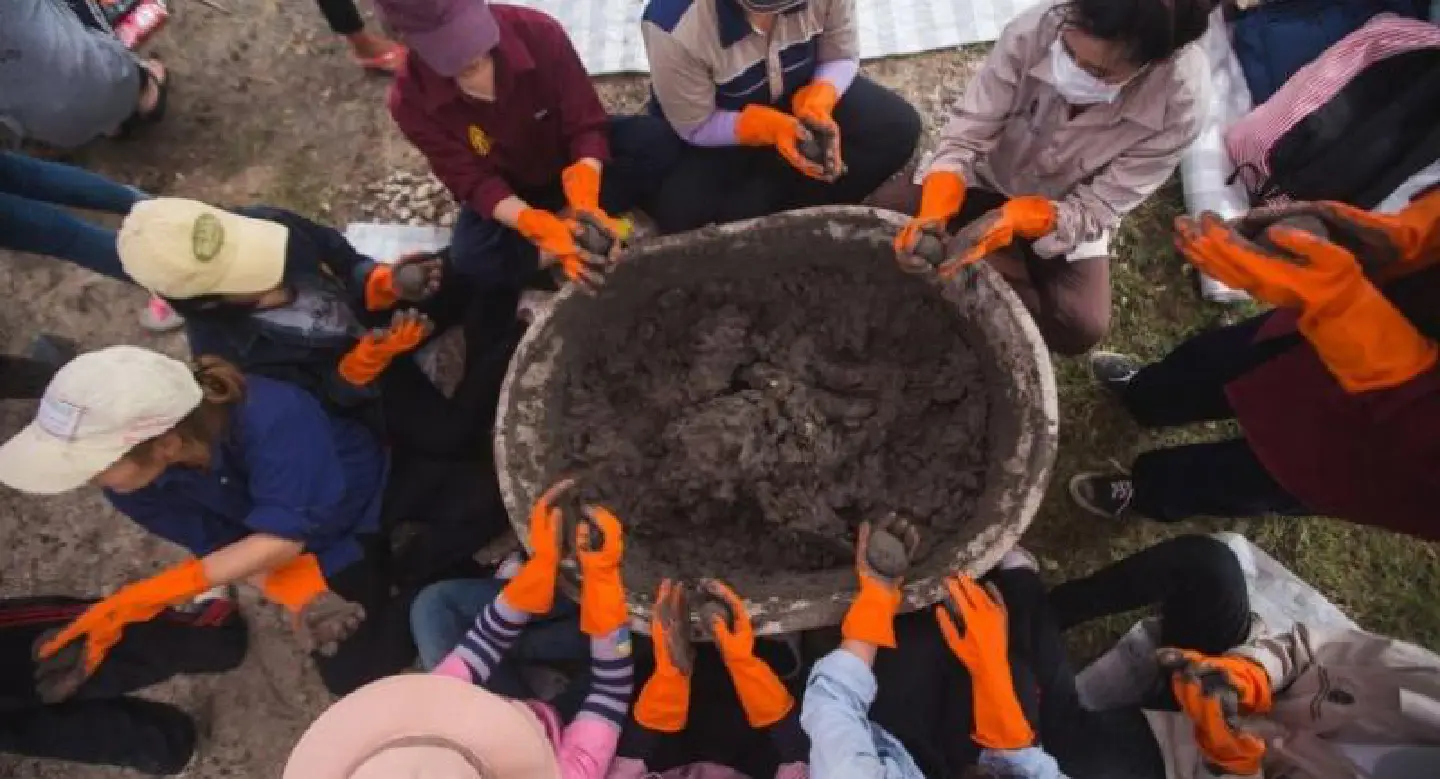
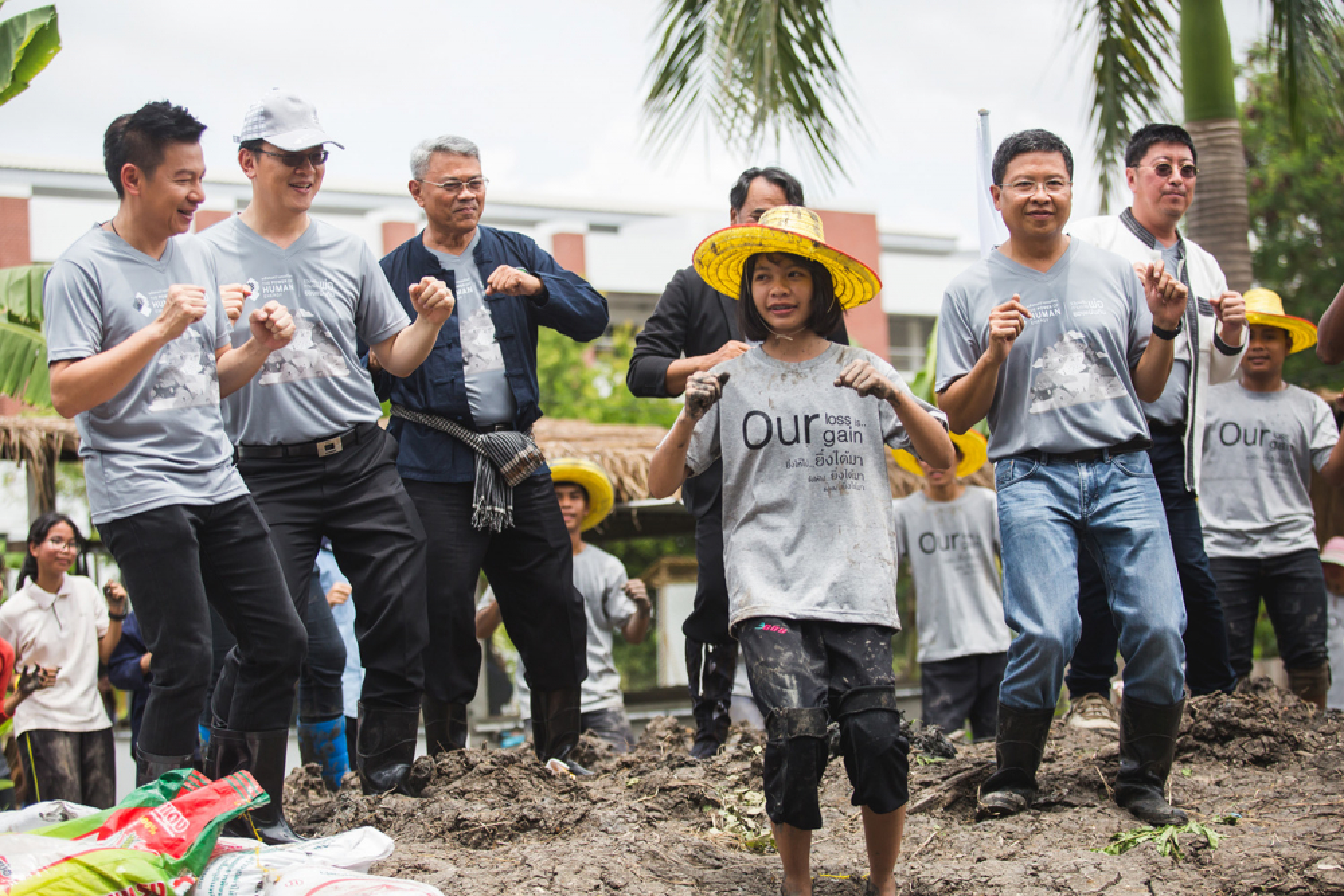
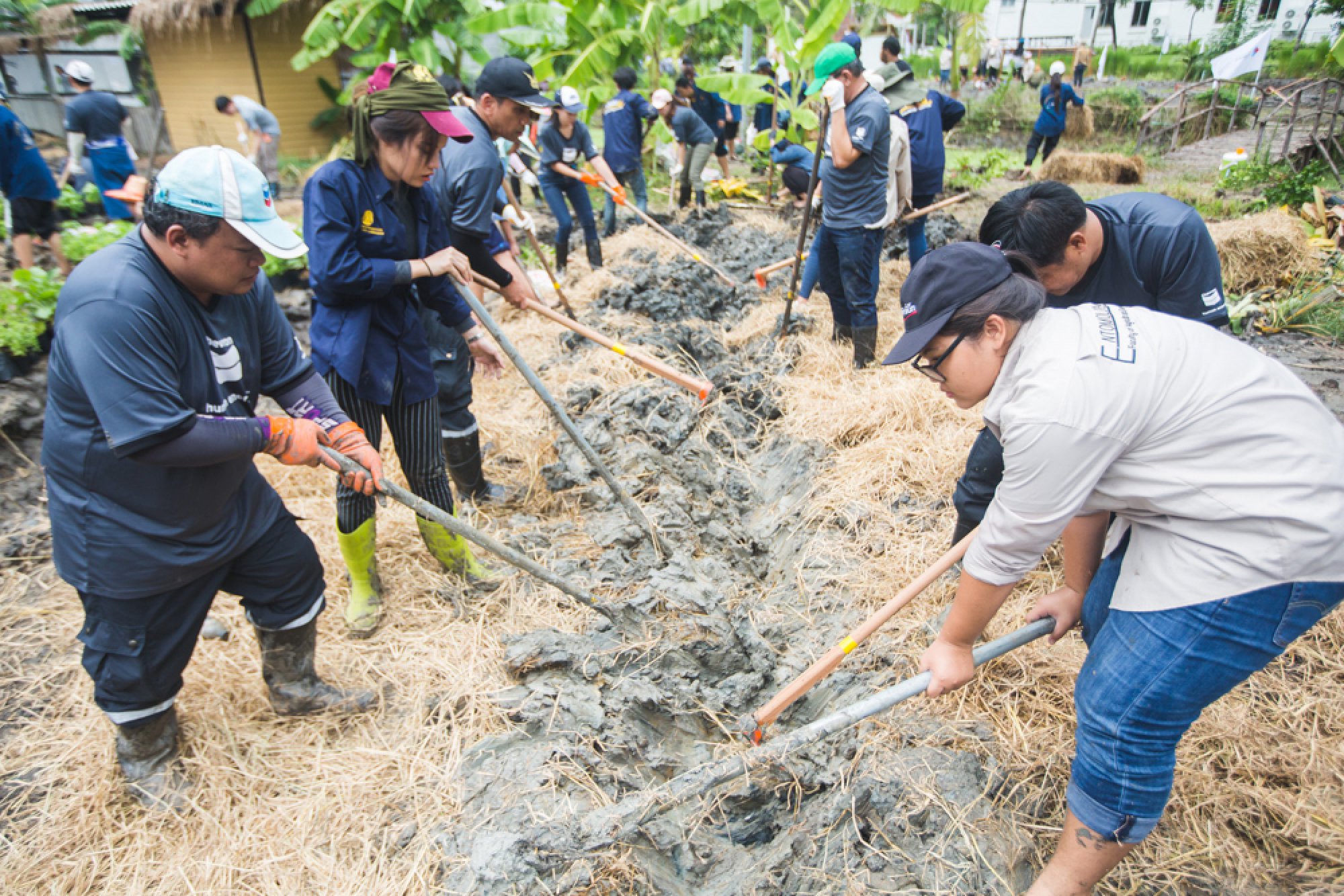
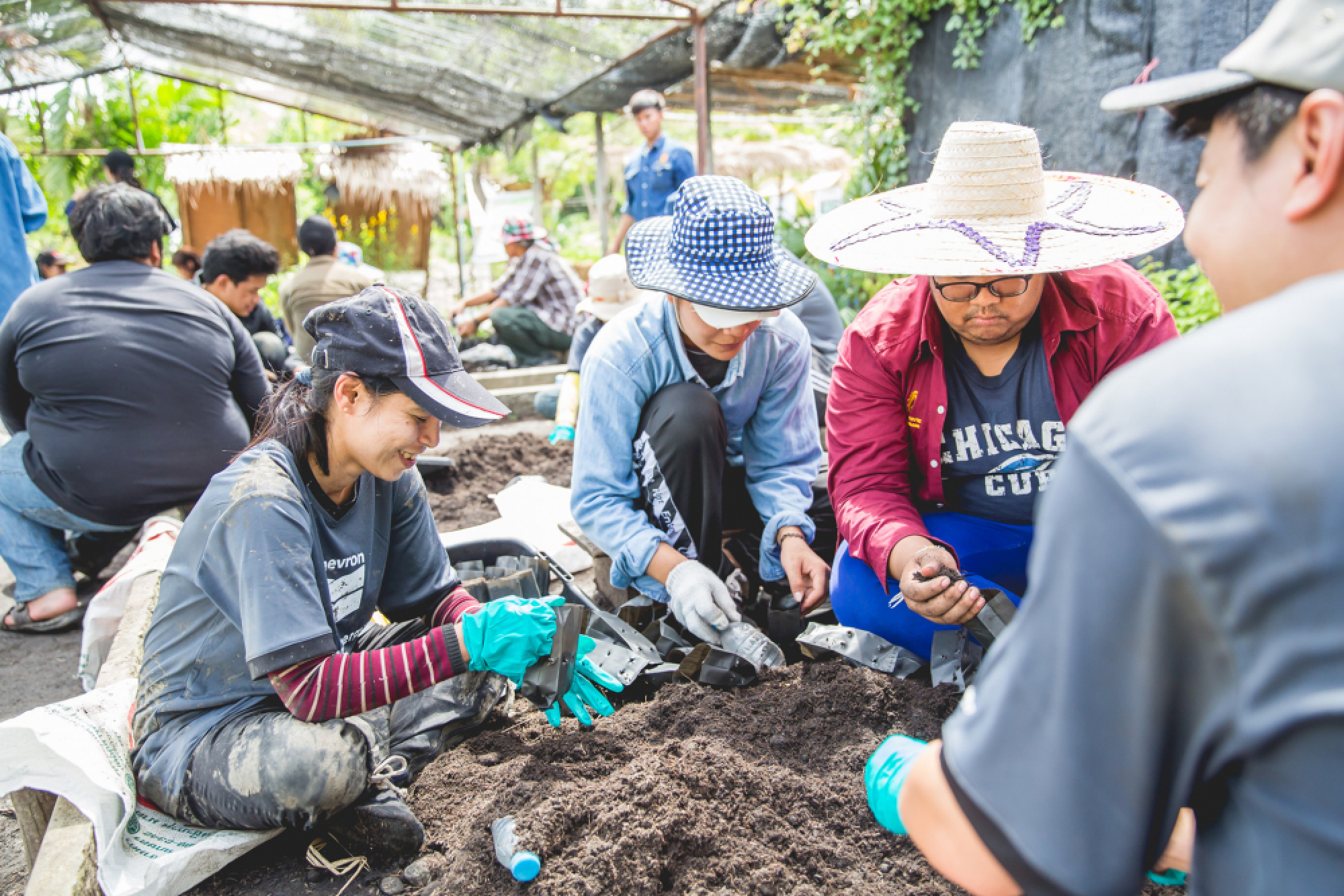
Many of the people involved in the national project are students of the Faculty of Agricultural Technology. Others are members of farm youth networks or farmers themselves. Members of the general public are also welcome, and might even end up participating in a chicken dance before being given assignments with curious names such as “Ridge mould”, “Three forests four benefits”, “EM ball” and the dreaded “Compost”.
BOX
Sign up on Facebook
Anyone interested in participating in the fifth annual “Power of Human Energy” project should go to www.Facebook.com/ajourneyinspiredbytheking.
