
Complexities of love


Thong Lor Art Space experiments with visuals and multiple languages in its newest work
Watching a stage performance in a foreign language is not uncommon for theatregoers, thanks in part to the popularity of surtitle projection. But watching a performance in three different languages, most of which most audiences cannot understand, is rare. But that’s exactly what happened over the past two weekends at Thong Lor Art Space (TLAS) as the centre’s director Wasurat Unaprom revived his adaptation of Marguerite Duras’s 1982 novella “La maladie de la mort” under the new title “La maladie de l’amour: Detoxification of a Heart”.
The performance started on the second floor of TLAS as the audience was chatting or having coffee. A few others were reading the four articles by and about Duras and the first version of this performance in the programme leaflet, which all members of the audience were supposed to study in order to understand the performance. Director and scenographer Wasurat, his co-script writer and actor Banthun Ratmanee as well as members of the production team took the centre table to hold a production meeting and, taking account of the fact that one-third of the audience was expatriate, conducted it in English.
Wasurat stressed that this revival was not only about Duras’s “Malady of Death” but also Christine V, who murdered her child, a case covered by Duras for the newspaper Liberation. He then asked his team members to read a part of Duras’s work.
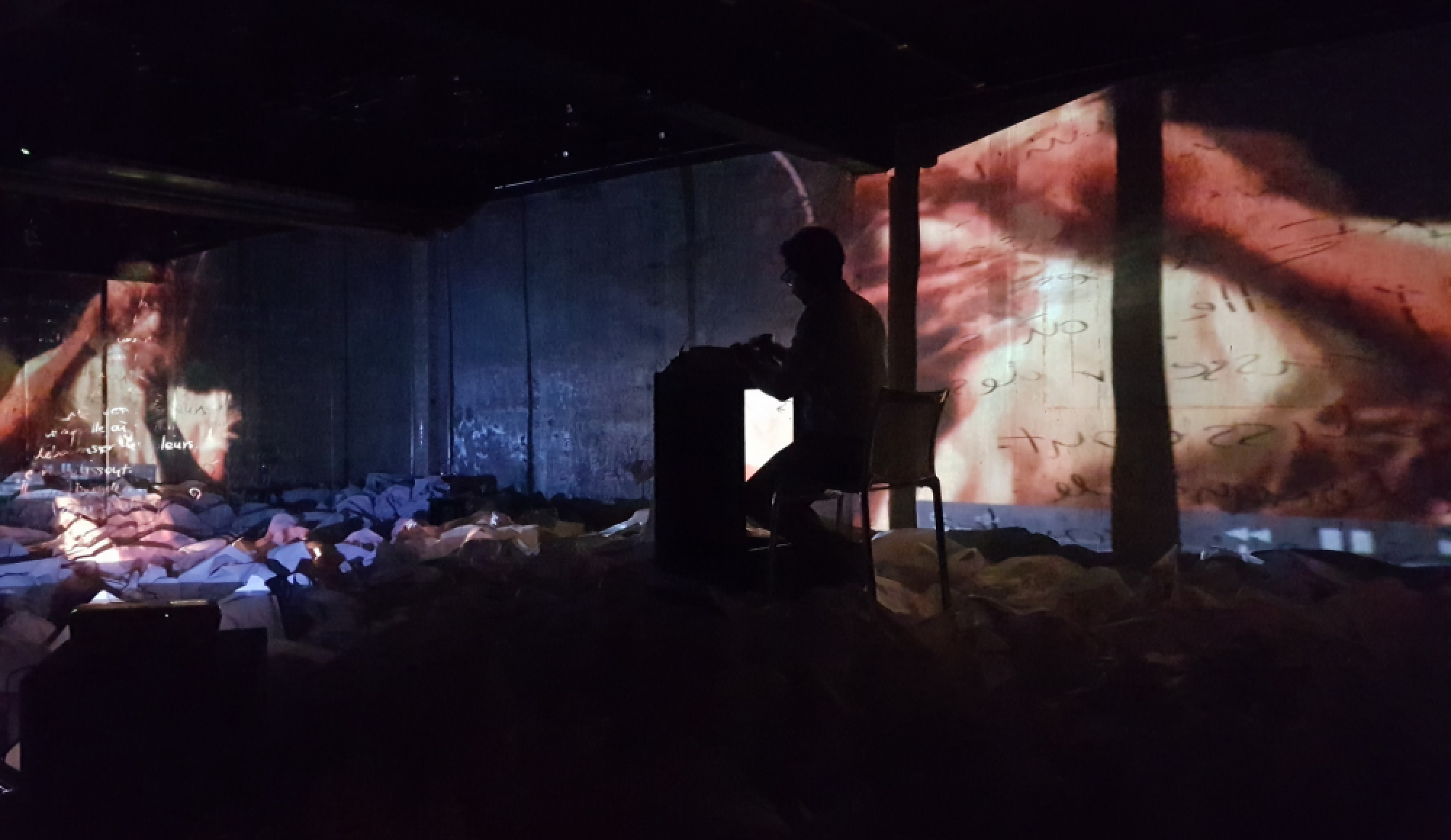
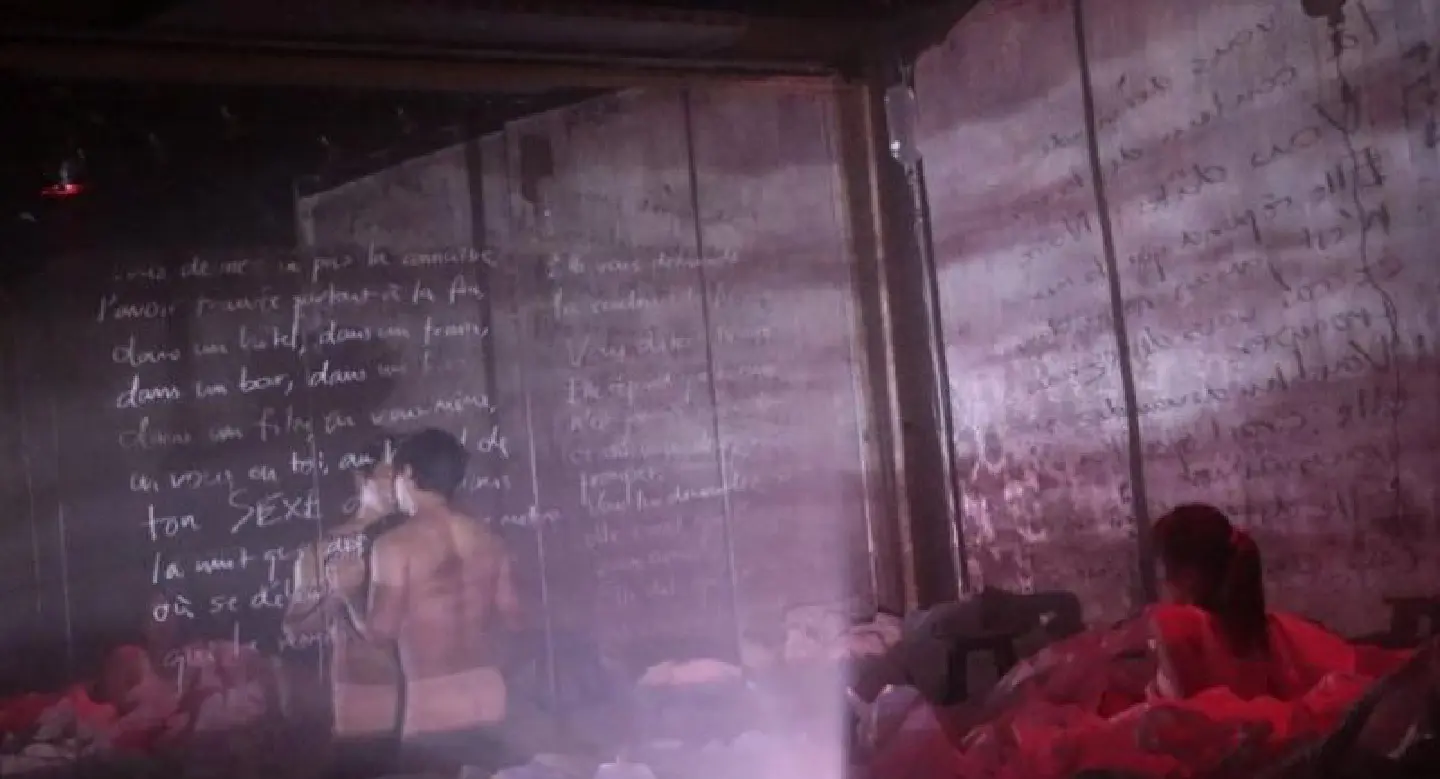
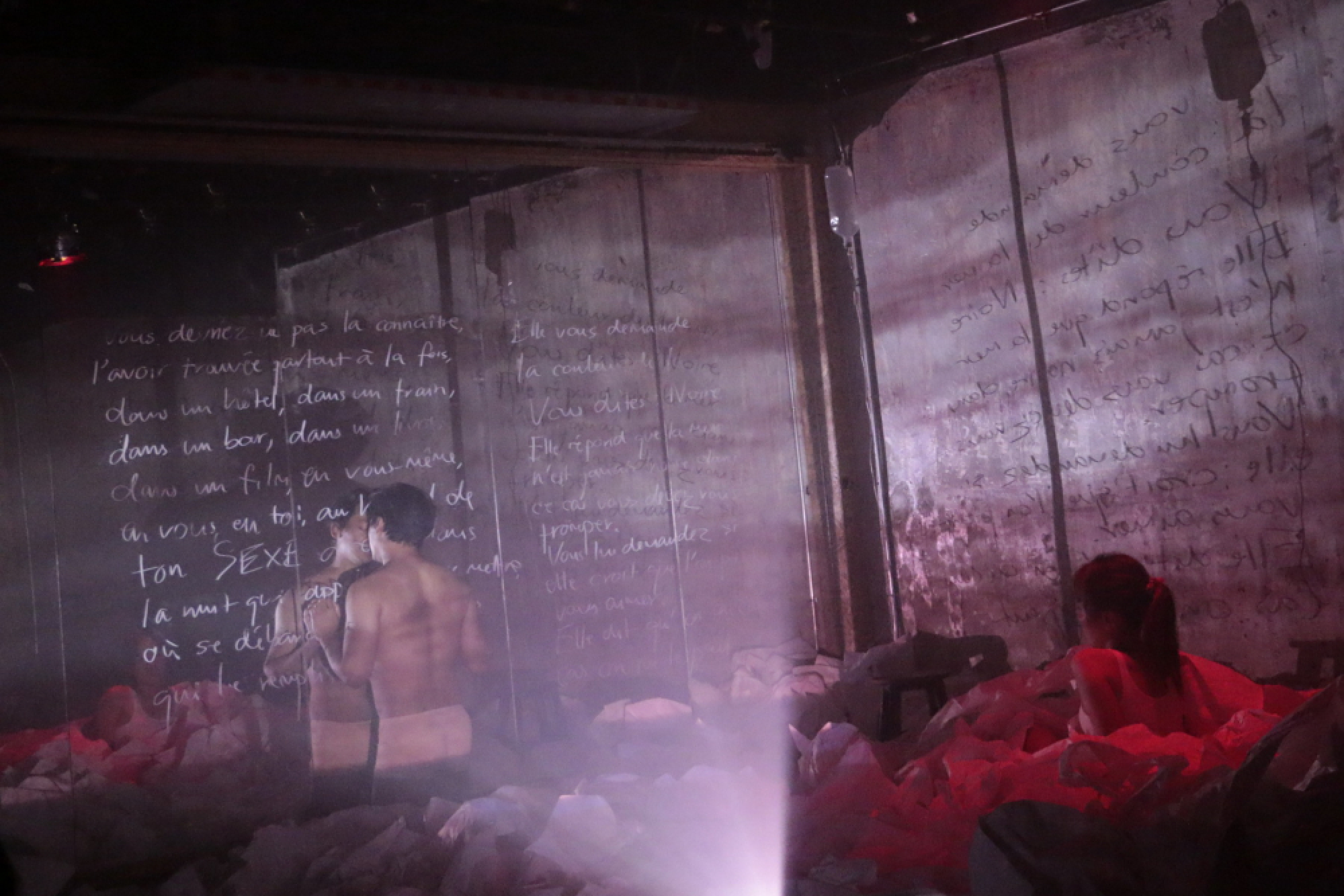
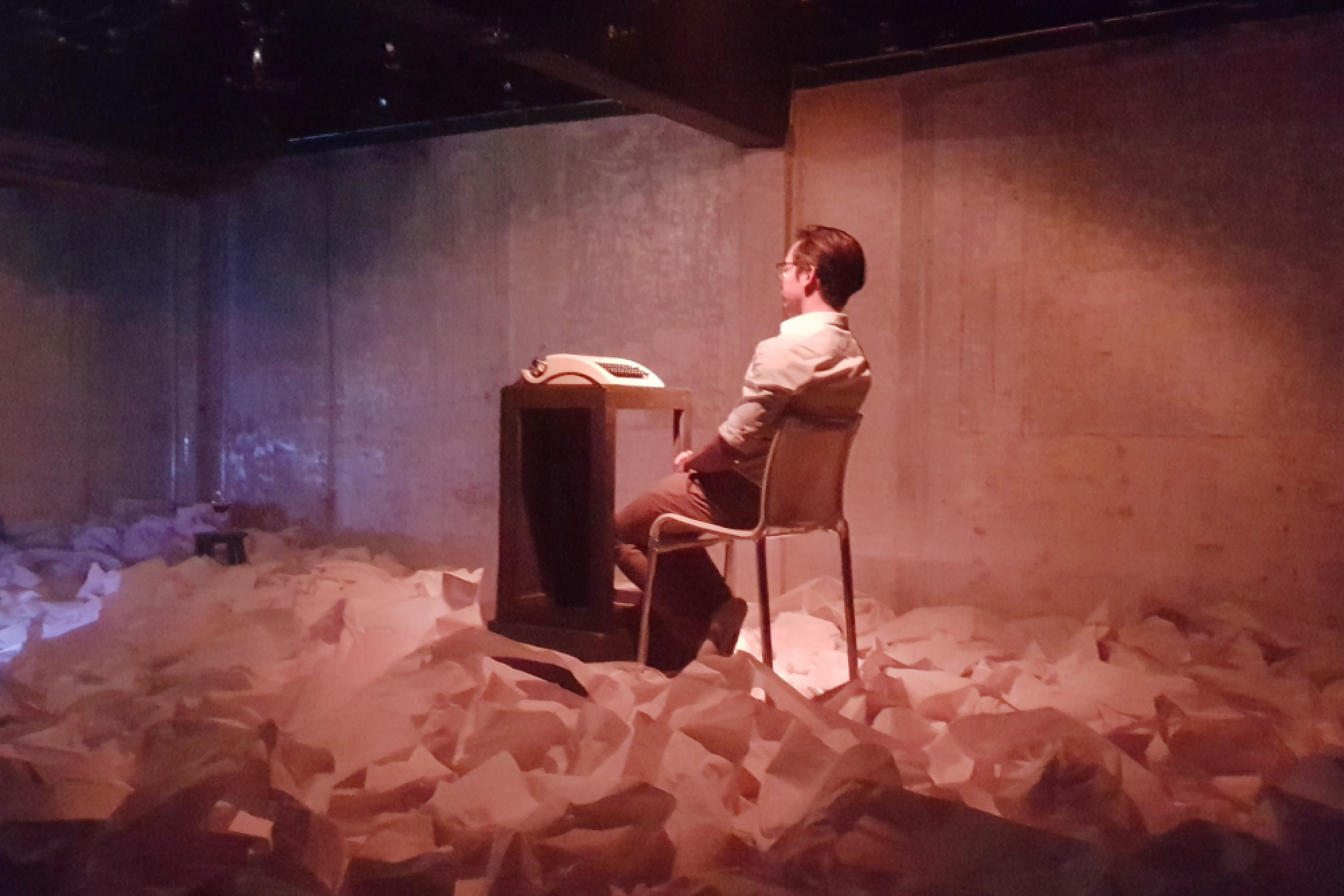
Of course, when the audience cannot rely on its ears, it turns to the eyes, searching for non-verbal language and there was aplenty of that in this work. The set design, which boasted numerous pieces of paper, a typewriter on a desk and a nearby chair, a blood bag with an IV tube and writing, in French, on a mirrored wall already spoke volumes even before Banthun entered the room and stripped down to his underpants.
Adding to the visuals were the still and moving images projected onto the mirrored wall, and the effortless movements of the two performers from light to shadow and back again. A slight setback was the sound design, which drowned out some of the speeches –perhaps though their conversation was too private for the audience to hear.
Were they they Duras and her muse Yann Andrea, or Christine V. and her child? Or an interracial couple suffering from a similar malady? Or simply a Thai man and a Japanese woman who were so moved by Duras’s writing that they wanted to reinterpret it to us, in the original French with a Japanese translation?
My wish was slight different: that I knew both French and Japanese, or the director and the script adapter had cut more of the spoken words and let us use more of our sight.
FRENCH WORK IN ENGLISH
- The next programme at TLAS is Life Theatre’s production of French playwright Yasmina Reza’s “Life X 3” starring Sasithorn Panichnok and directed by IATC-Award winning director Bhanbhassa Dhubthien.
- It’s runs from August 17 to 27 (except Wednesday) and is in English with Thai surtitles.
- Tickets are Bt600 (Bt 450 for students) at Facebook.com/ThongLorArtSpace
