
The Supreme Royal Honour: Princess Bajrakitiyabha Bestowed the Great Golden Urn in Historic Tribute
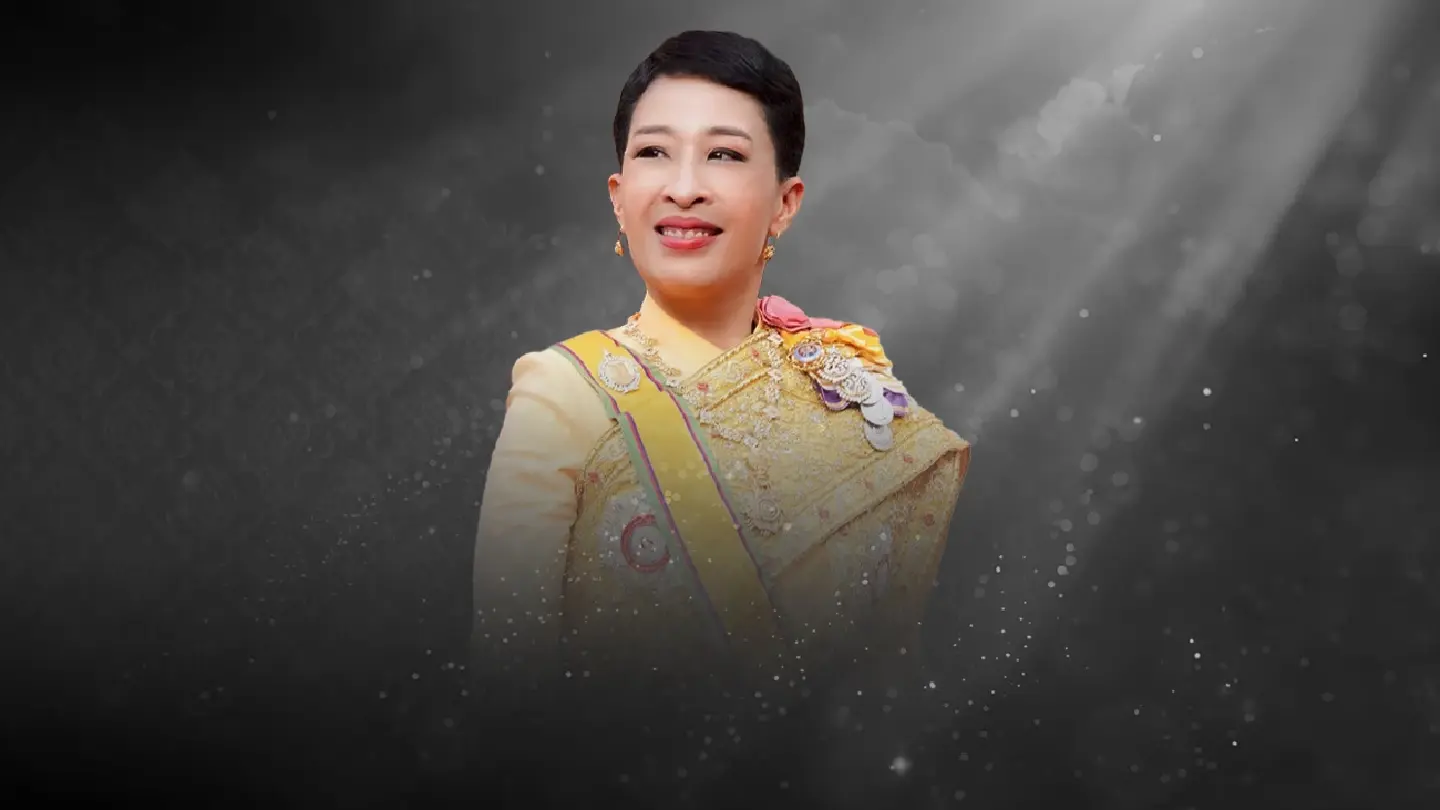


By Royal Command, the prestigious Phra Kot Thong Yai anchors the solemn state funeral rites, reflecting the nation's profound reverence and gratitude
- Princess Bajrakitiyabha has been bestowed the Phra Kot Thong Yai (The Great Golden Urn) for her funeral rites, which represents the absolute pinnacle of royal honour in Thailand.
- The Great Golden Urn is the highest in a 14-tier hierarchy of royal funerary urns, an honour strictly reserved for monarchs, queens, and the most senior members of the royal family.
- This tribute is historic as the urns are permanent state treasures, preserved and reused across generations for the most solemn state functions, a tradition dating back to the reign of King Rama I.
By Royal Command, the prestigious Phra Kot Thong Yai anchors the solemn state funeral rites, reflecting the nation's profound reverence and gratitude.
Following the issuance of a Royal Command directing the Bureau of the Royal Household to conduct the funeral rites for Her Royal Highness Princess Bajrakitiyabha Narendiradebyavati Krom Luang Rajasarinisiribajra Mahavajrarajadhita, the Grand Palace has transformed into a profound canvas of living history and sacred Thai craftsmanship.
As the mortal remains of the beloved Princess lie in state within the historic Phiman Rattaya Throne Hall, she has been accorded the supreme royal honour through the presentation of the Phra Kot Thong Yai (The Great Golden Urn) and the surrounding Khrueang Sung (Royal Regalia of High Honour).
Far from mere ceremonial fixtures, this gesture represents the absolute pinnacle of respect within the Siamese court, utilizing an exquisite masterwork of artisanry to communicate the nation's profound reverence, love, and eternal gratitude for a royal life entirely dedicated to public service.
A masterpiece of absolute prestige
The Phra Kot Thong Yai, or Phra Long Thong Yai, occupies the absolute apex of the traditional 14-tier hierarchy of Thai funerary urns. Reserved strictly for monarchs, queens, and exceptionally high-ranking dynastic figures, the bestowing of this magnificent structure communicates the ultimate earthly and spiritual status of its occupant without requiring a single spoken word.
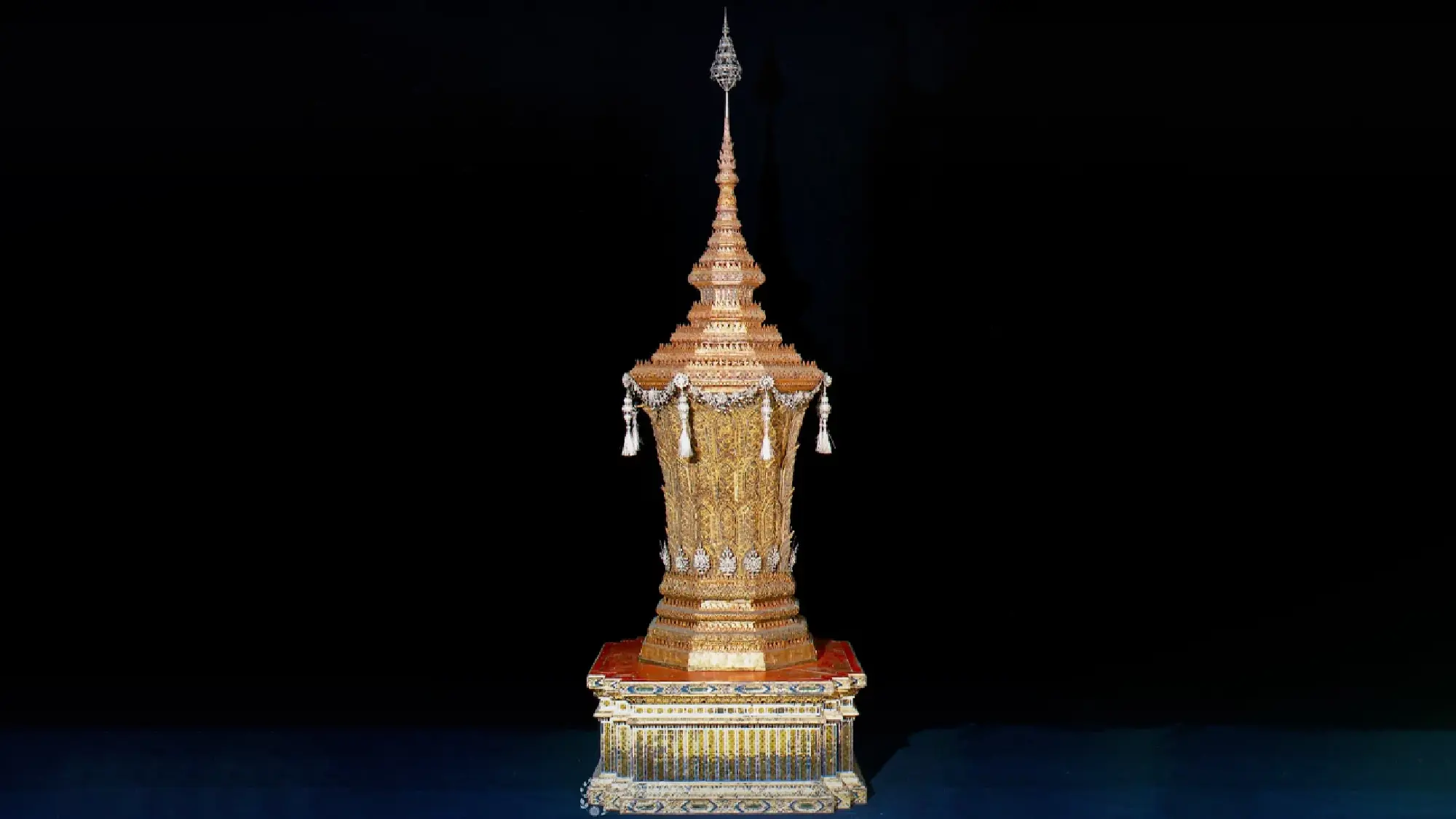
Architecturally, the Great Golden Urn is a marvel of traditional multi-layered construction. The inner repository, known as the Phra Long, is fashioned from solid silver or gold-plated silver to securely shelter the remains.
The outer casing is a breathtaking exhibition of classical decorative arts, masterfully carved from select timber, coated in rich lacquer, and wrapped entirely in pure gold leaf. The surface is intricately encrusted with stained glass and fine gemstones.
The crown of the urn features an exquisite Phum Khao Bin Phet—a diamond-studded ornament mirroring the sacred lotus bud—complemented by Dok Mai Wai (delicately oscillating floral fixtures) and Fueang Phet (cascading diamond festoons).
This specific design reflects a rarefied standard of craftsmanship; throughout the entire Rattanakosin era, only a hand-picked few of these urns have ever been commissioned, preserved solely for the realm's most solemn state functions.
Cosmological architecture in gold and silver
Framing the central urn is an elaborate configuration of sacred regalia arranged in strict accordance with centuries-old palace blueprints. Prominent among these is the Seven-Tiered Royal Umbrella (Bang Saek Chat Chet Chan), a canopy reserved exclusively for celestial princes and princesses of Chao Fa status.
In Thai cosmology, the ceremonial umbrella represents a heavenly shelter, with the number of tiers denoting strict hierarchical rank, ranging from the monarch’s supreme nine-tiered white umbrella down to the lesser variants granted to noble officials.
Flanking the perimeter are the Khrueang Sung Hak Thong Khwang (regalia embellished with rare gold-thread embroidery), the Chum Sai (tasselled ceremonial staffs), and the Ton Mai Thong and Ton Mai Ngen (Ritual Gold and Silver Trees). Together, these objects form a symbolic microcosm of the universe, anchoring the deceased within a sacred space of ultimate peace and dignity.
A living heritage of sustainability and continuity
From an art-historical perspective, the tradition of the Great Golden Urn represents an early and enduring commitment to material preservation. Unlike the utilitarian containers of common practice, these royal urns are designed as permanent state treasures to be used across successive generations. They are never cremated.
Instead, once a state funeral concludes, the outer gold-cased urn is carefully disassembled by palace conservators, meticulously restored, and returned to the inner vaults of the Royal Treasury.
This practice allows a single masterwork to connect generations of history-makers, having previously encased the funeral rites of prominent modern figures such as Her Royal Highness Princess Galyani Vadhana and Her Royal Highness Princess Bejaratana Rajasuda.
The historical precedent for this practice dates back to the reign of King Rama I. Following the tragic passing of his daughter, Her Royal Highness Princess Krom Luang Srisunthorthep, the monarch commanded the creation of the inaugural Phra Kot Thong Yai to honour her memory, establishing a court custom that remains flawlessly intact today.
As the nation reflects on the life and monumental public deeds of Princess Bajrakitiyabha, the glittering symmetry of the Great Golden Urn stands as an enduring monument to her memory—a perfect synthesis of timeless art, cultural continuity, and deep national reverence.
