
Anutin takes back EEC to lead new investment push, source says
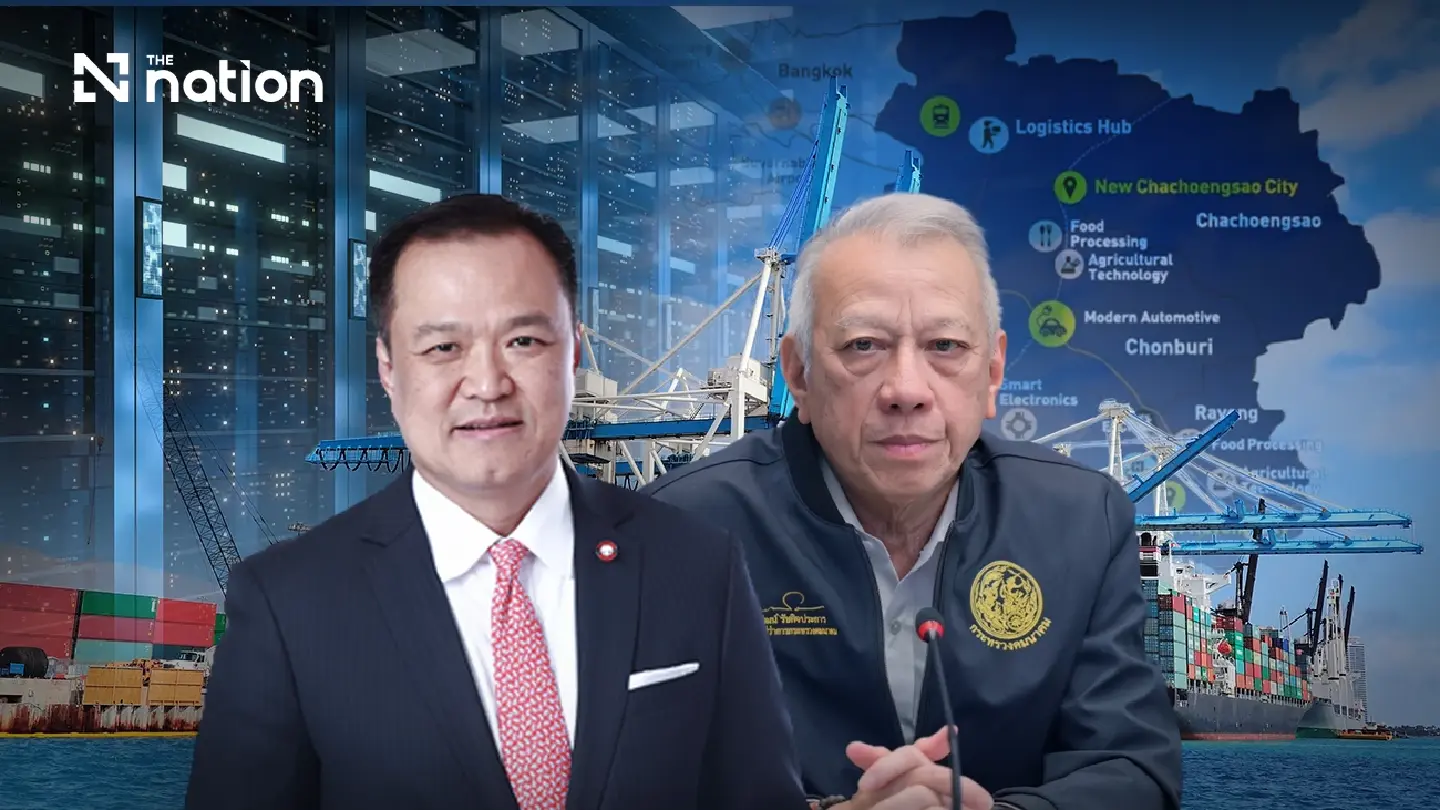


A Government House source says Prime Minister Anutin Charnvirakul will personally oversee the EEC to reposition it as Thailand’s flagship investment project, denying conflict with Phiphat Ratchakitprakarn or links to the three-airport rail dispute.
Prime Minister Anutin Charnvirakul has taken the Eastern Economic Corridor back under his direct supervision to reposition it as Thailand’s flagship investment pitch, with a new focus on global food security and data centres, a Government House source said on Wednesday.
The source said the decision to revoke Deputy Prime Minister and Transport Minister Phiphat Ratchakitprakarn’s authority over the EEC followed talks between Anutin and Phiphat last week, and was not the result of a political rift.
The Cabinet on Tuesday acknowledged two Prime Minister’s Office orders cancelling Phiphat’s supervision of the EEC Office and his role as chairman of the Eastern Economic Corridor Policy Committee. The orders were signed on June 15 and took effect immediately.
PM to become ‘chief salesman’ for Thailand projects
According to the source, Anutin will now oversee the EEC directly and position himself as head of the team “selling Thailand projects” to foreign investors.
The EEC will be used as a pilot project and presented overseas from a new angle, with the government seeking to move beyond the corridor’s traditional image as a base for heavy industry.
The Prime Minister wants to promote the EEC as a global food security hub, drawing on the eastern region’s strengths in livestock, fisheries, agriculture, fruit and horticulture. The source said these sectors are increasingly important to many countries and could become a major selling point for attracting new investment into the corridor.
Data centres also targeted
The government also wants to develop the EEC into a centre for data centre investment, a sector that requires coordination across several agencies because of its heavy demand for electricity, water and supporting infrastructure.
The source said the government had assessed that the EEC could no longer rely mainly on traditional heavy industry because of constraints over electricity and water supply, both of which involve high procurement costs.
The data centre push comes as the Energy Ministry is preparing a new electricity user category, Type 9, for data centres, which would pay higher power tariffs than other groups because of their high power consumption.
Source denies conflict with Phiphat
The source denied that Anutin’s decision to take back the EEC portfolio reflected a conflict with Phiphat.
“The Prime Minister’s decision to take EEC work back under his own supervision does not involve any conflict between the Prime Minister and Phiphat,” the source said.
The source claimed Phiphat had told Anutin that work between the EEC Office and the Board of Investment had faced constant friction. As Phiphat did not like working amid such confrontation, he proposed that the Prime Minister take the EEC back under his own supervision, the source added.
The explanation came after Phiphat said earlier on Wednesday that he had not been informed in advance of the orders and that they were merely read out during the Cabinet meeting for acknowledgement. He told reporters to ask Anutin for the reason behind the decision, while denying that it amounted to a reduced role or a rift within Bhumjaithai.
Rail contract dispute ‘not the reason’
The Government House source also denied that the reshuffle was linked to Phiphat’s position on the long-delayed high-speed rail project linking Don Mueang, Suvarnabhumi and U-Tapao airports.
The source said Anutin himself had ordered that the contract not be amended, adding that the Prime Minister had said he would not take the risk of changing the agreement either.
The three-airport rail project has been under scrutiny because of a proposed amendment to the private-sector contract. Earlier, Phiphat took a firm line against changing the payment model from the original arrangement — under which the private partner must complete construction before receiving state payment — to a “build-and-pay” model tied to construction progress.
The project has been delayed for years. The concession was signed in 2019 with Asia Era One, the private partner linked to CP Group, but construction has yet to begin after prolonged disputes over contract amendments. The contract amendment agenda was also withdrawn from an EEC Policy Committee meeting on May 20, 2026, while talks with Asia Era One continued.
Disneyland proposal questioned
The source also said Anutin had questioned Phiphat about his proposal to develop a Disneyland project in the EEC.
According to the source, the Prime Minister asked when the project would actually move forward, as no study had yet been conducted on whether the returns would justify the investment.
The remarks suggest the government is trying to reframe the EEC under Anutin’s direct leadership, with food security and data centres becoming the new selling points, while distancing the reshuffle from both internal Bhumjaithai politics and the unresolved high-speed rail contract dispute.
