
'Policy Discontinuity Is the Deepest Wound': Democrat MP Warns of Thailand's Education Vicious Cycle
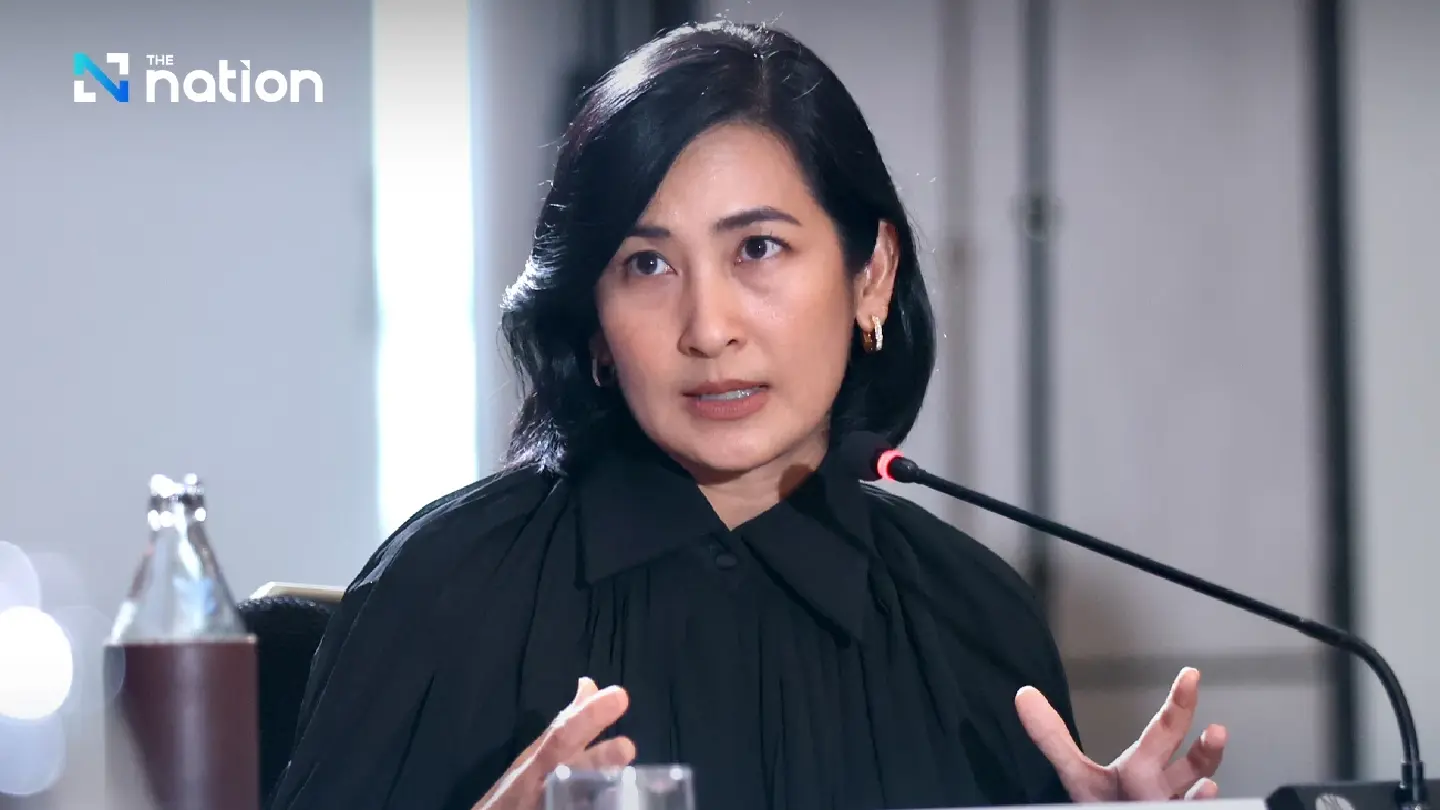


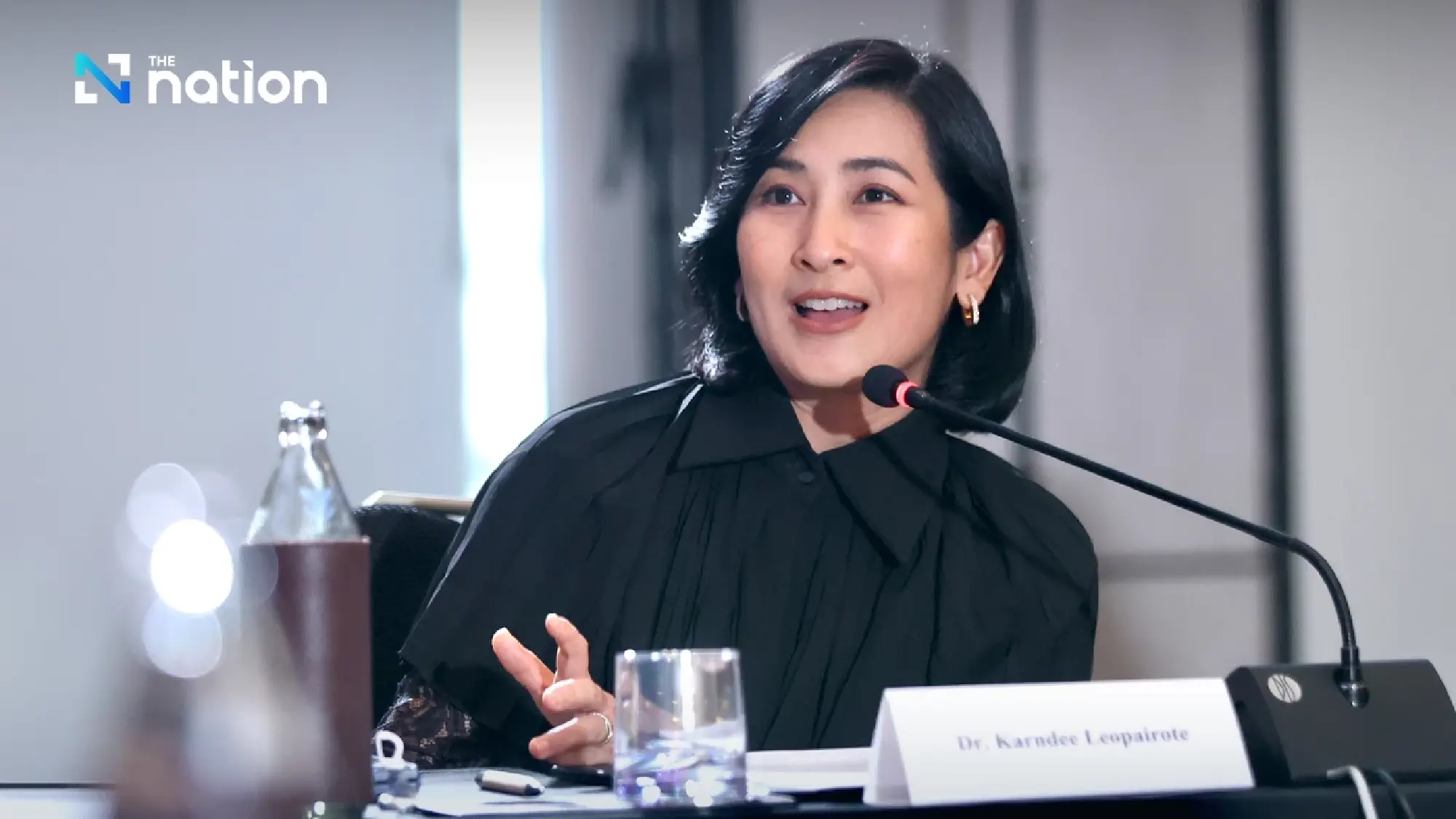
Democrat Party politician Dr Karndee Leopairote cautions that degree inflation, social fragmentation, and demographic pressure will trap Thailand in a cycle of unemployment and inequality
- Democrat MP Dr. Karndee Leopairote identifies "policy discontinuity" as the primary issue, citing a turnover of 21 education ministers in 20 years which has made sustained, long-term reform impossible.
- The current system is described as a vicious cycle fueled by an outdated "manufacturing-era mindset" that prioritizes credentials over competence, leading to "inflated degrees" that don't meet economic needs.
- This educational failure is projected to result in a cycle of unemployment, increased social inequality, and a workforce unprepared for the country's demographic challenges.
- Dr. Karndee argues for a shift away from high-stakes testing towards nurturing curiosity, improving teacher support, and creating a collaborative ecosystem involving parents and the private sector.
Democrat Party politician Dr Karndee Leopairote cautions that degree inflation, social fragmentation, and demographic pressure will trap Thailand in a cycle of unemployment and inequality.
A Democrat Party politician and former academic has warned that Thailand's education system is caught in a self-reinforcing cycle of failure, driven by a revolving door of ministers, a manufacturing-era mindset, and a dangerous overreliance on credentials over competence.
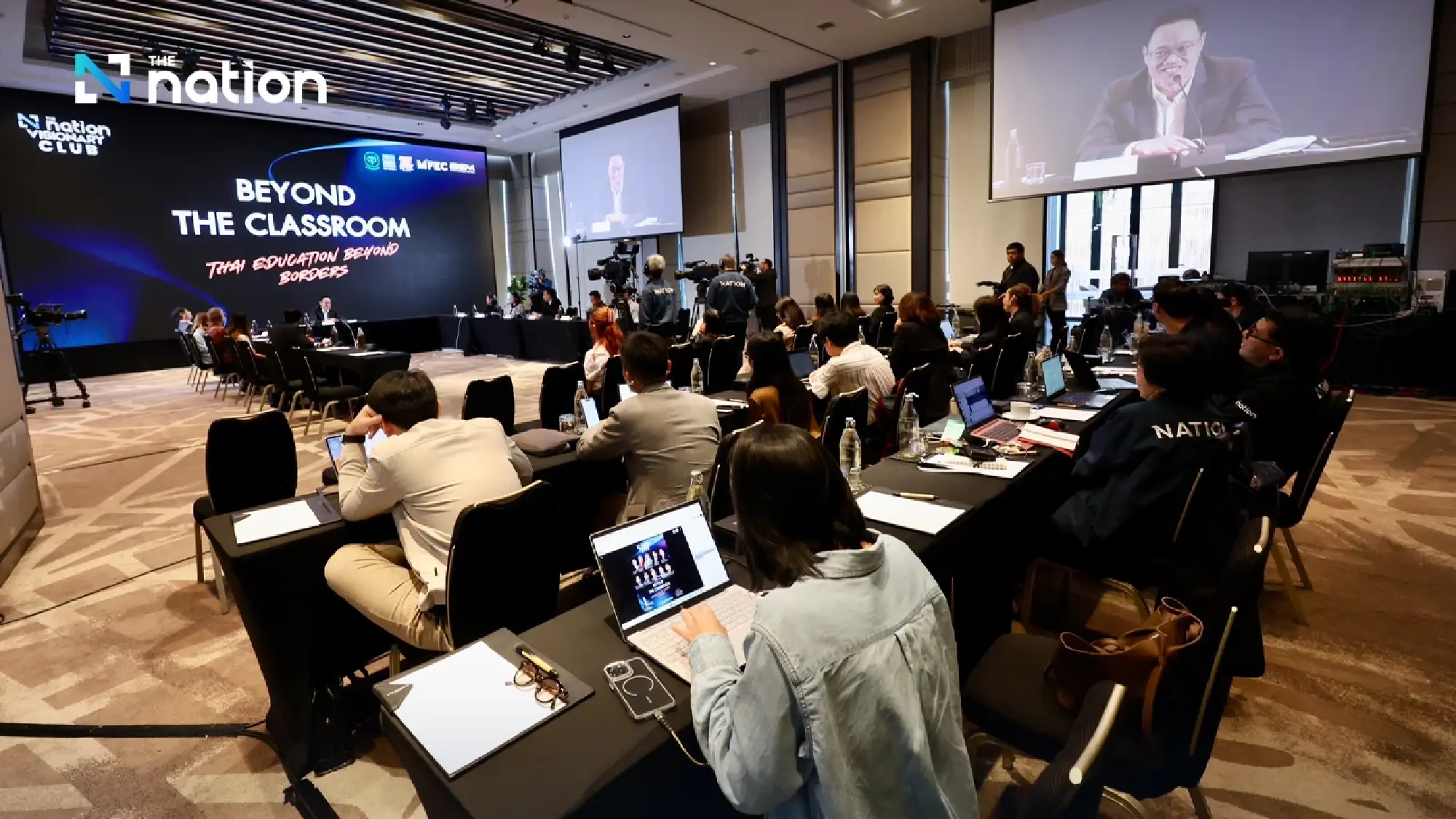
Dr Karndee Leopairote, speaking at Monday's Nation Visionary Club roundtable held under the theme Beyond the Classroom: Thai Education Beyond Borders, brought a distinctly personal perspective to the debate.
Identifying herself as a mother, a former academic, and a politician, she argued that Thailand's education crisis cannot be solved by treating schooling as a closed system – but must instead be approached as a living ecosystem in which parents, the private sector, and local communities are indispensable partners.
The Deepest Wound
At the heart of Dr Karndee's analysis lies what she described as Thailand's single most damaging structural problem: the absence of a long-term vision. In the past two decades, she noted, the country has cycled through 21 education ministers in 20 years — a rate of turnover that has made coherent, sustained reform virtually impossible.
The consequence, she argued, has been a succession of short-term political gestures – distributing tablets to students, launching "skill wallet" initiatives – none of which amount to the comprehensive ten-year strategy for human capital development that the country urgently needs.
"Policy discontinuity is the deepest wound of Thai education," she told the roundtable.
Underpinning this instability, she said, is a deeper philosophical problem: the persistence of an "Industry 2.0" manufacturing mentality that treats students as products on a production line, assessed by identical metrics regardless of the diverse and individual talents they possess.
This industrial logic, she argued, is fundamentally incompatible with preparing young people for the complex, rapidly evolving economy they will inherit.
Killing Curiosity Early
Dr Karndee's vision for reform begins at the earliest stages of childhood. She called for a decisive shift away from high-stakes testing in early education, which she said actively "kills" creativity and the capacity to learn. In its place, she advocated for environments that nurture curiosity — a quality she placed at the very foundation of human development.
"Curiosity leads to learning, learning leads to knowledge, knowledge leads to confidence," she said, distilling her educational philosophy into a single chain of causation.
Her ambition is to raise what she called "multi-potentialite" children — young people capable of excelling across seemingly disparate disciplines simultaneously, such as physics and music — rather than forcing students into narrow academic tracks that serve the system's administrative convenience rather than their individual potential.
Teachers, Parents, and Broken Bubbles
Dr Karndee's reform roadmap extends well beyond the classroom. On the teaching profession, she argued that improving the quality of life and professional development of teachers — particularly those working in remote or underserved areas — are preconditions for meaningful change.
Teachers burdened with administrative duties, she said, cannot inspire; and a system that cannot inspire cannot educate.
She also called for the dismantling of what she described as the "separate bubbles" that divide international and public schools in Thailand.
Rather than allowing elite private institutions and state schools to operate as parallel, non-communicating worlds, she proposed models for shared facilities and knowledge exchange — citing as one example international students teaching English directly to their public school peers.
Parental engagement, too, featured prominently in her vision. She called for schools to offer classes equipping parents with skills in mental health and wellbeing, rejecting the notion that the responsibilities of raising children can be delegated elsewhere.
"Parenting is never about outsourcing," she said.
The AI Warning
On the question of artificial intelligence, Dr Karndee offered a notably cautious perspective. While she acknowledged AI's potential to support what she termed "transformative learning" — particularly in the domains of empathy and the humanities — she issued a sharp warning against its uncritical adoption.
"If we use AI widely without any knowledge, we're going to end up in a scenario called 'machine enslaving education'," she said, coining a phrase that encapsulated her concern that technology, without human oversight and wisdom, risks subordinating education to the logic of algorithms rather than the needs of people.
In this context, she argued that face-to-face learning must be preserved as a "premium privilege" — the irreplaceable site of genuine intellectual debate, human connection, and the kind of nuanced reasoning that no machine can replicate.
Degrees Without Value, a Nation Without Workers
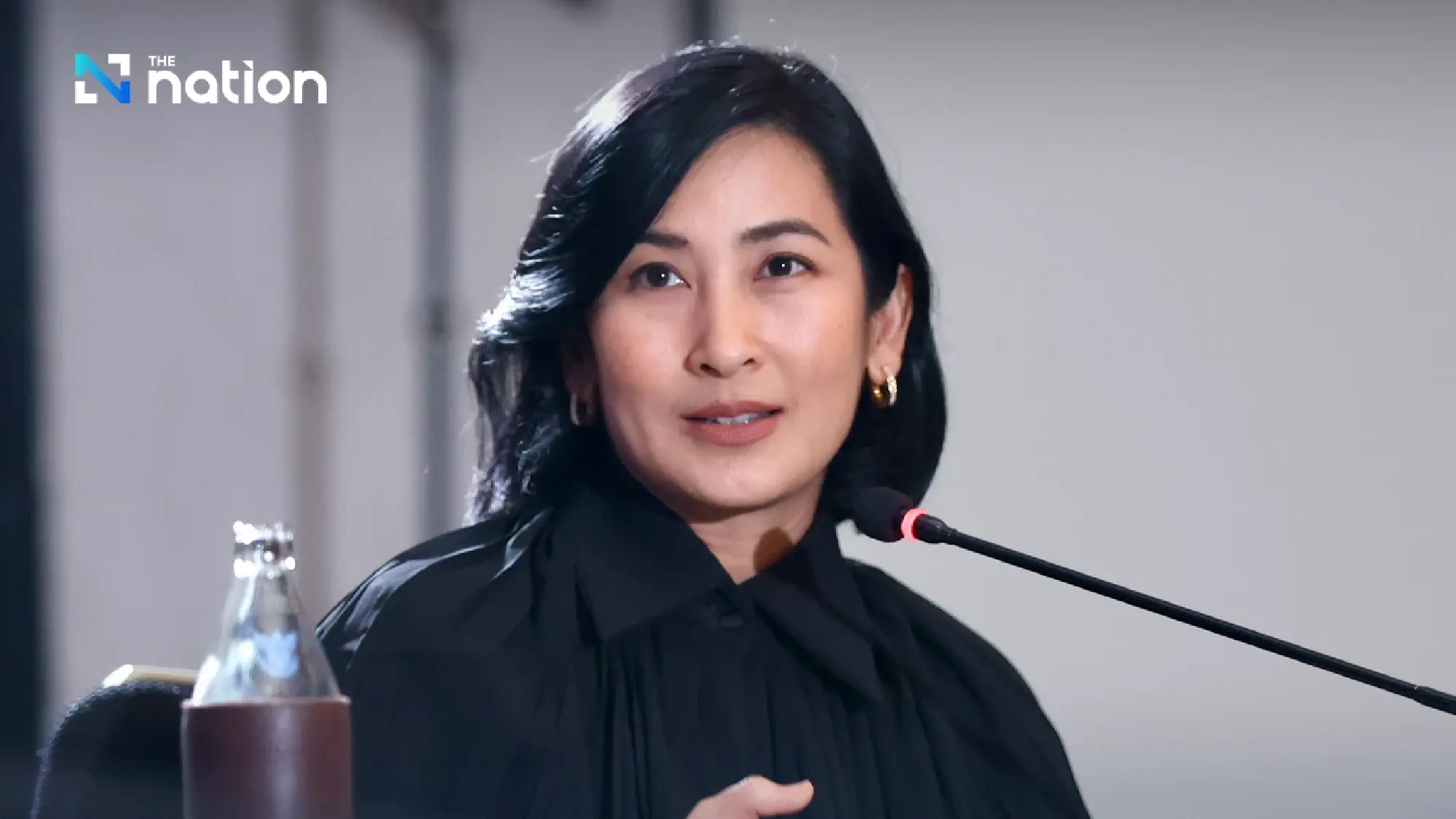
Dr Karndee's closing remarks painted a troubling picture of where the current trajectory leads. She warned of a future defined by "inflated degrees" — a scenario in which the system continues to produce ever-larger numbers of bachelor's, master's, and doctoral graduates who hold high-level credentials but are functionally unable to perform the roles demanded by a modern economy.
This mismatch, she argued, feeds directly into a vicious cycle of unemployment, which in turn risks producing severe social fragmentation.
She conjured the spectre of a "ghetto" scenario – a Thailand in which extreme inequality forces the poor and the wealthy into entirely separate, isolated worlds with no points of contact or shared civic life.
The measure of a successful education system, she insisted, should not be the number of degrees conferred but the number of "high-salary new jobs being created" by Thai people and Thai society — a metric that places the emphasis squarely on economic productivity and meaningful contribution rather than credential accumulation.
Underlying the urgency of her message was a demographic reality that, she reminded the panel, brooks no delay. Within ten years, an ageing population will mean a smaller workforce bearing a heavier national burden. In that context, she said, the quality of every single student educated today is not merely a matter of individual opportunity — it is a matter of national survival.
