
Public transport etiquette: How five countries keep public transport noise in check
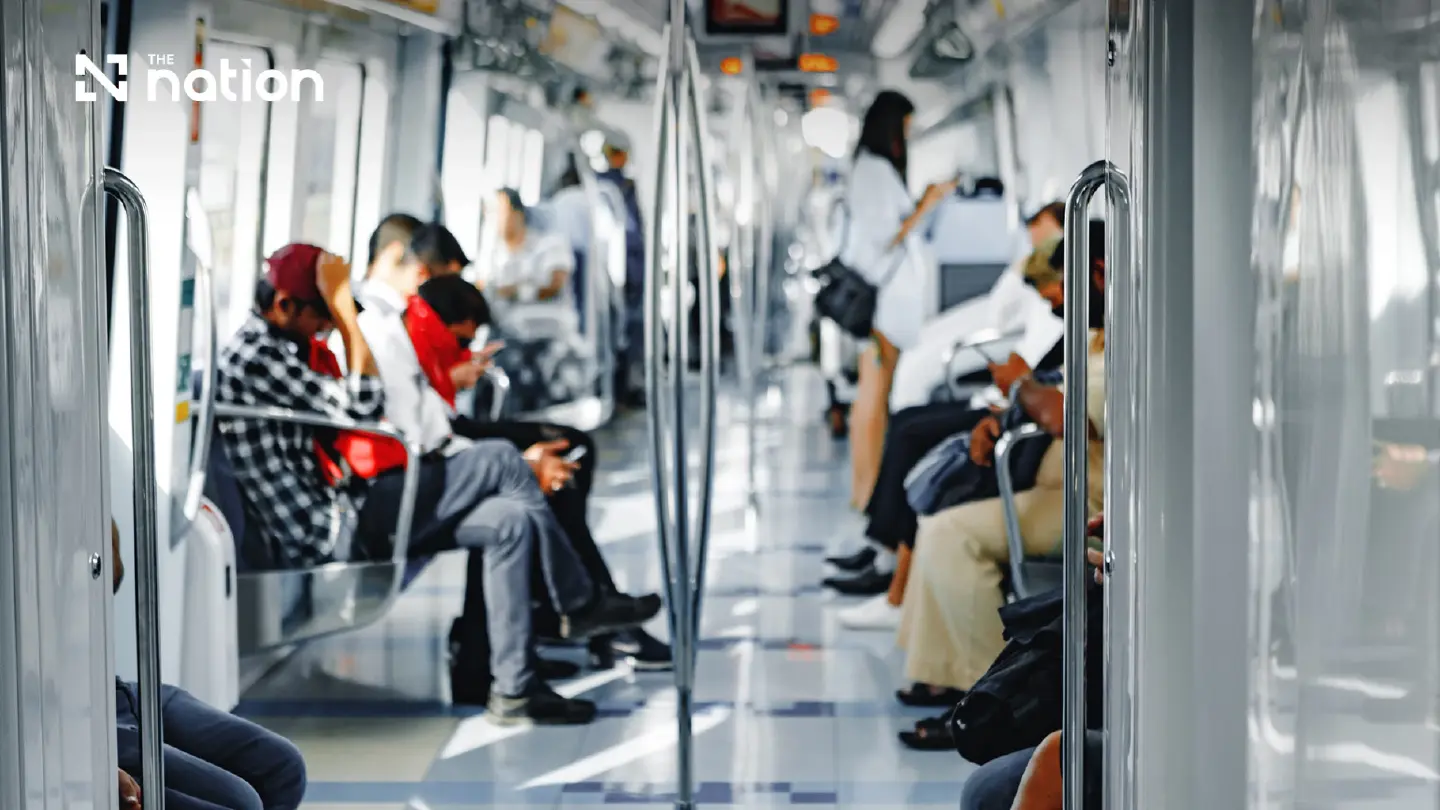


A viral BTS Skytrain clash sparked outrage and Italian expat apologies. Discover how Japan, Singapore, Germany, the UK, and the US enforce transit quiet.
- Japan relies on strong cultural norms and social pressure, such as disapproving glares, to maintain quiet on public transport rather than specific laws.
- Singapore enforces etiquette with strict laws, imposing heavy fines of up to 5,000 SGD for passengers who create loud disturbances.
- Germany and the United States utilize designated "Quiet Zones" or "Cars" on trains, where rules are actively enforced by conductors or transit police who can remove offenders.
- The United Kingdom also features "Quiet Coaches" but primarily relies on passive-aggressive peer pressure from fellow passengers, like "tutting" and glares, to silence rule-breakers.
A recent altercation on Thailand’s BTS Skytrain has ignited a heated nationwide debate on public space etiquette. The controversy began when a viral video surfaced showing a group of young foreign tourists being disruptively loud on a train. When a Thai passenger stepped in to politely request that they lower their voices, the tourists responded with hostility, flashing the middle finger and making condescending remarks such as, "Sorry for bringing money to your country."
While the incident triggered widespread online outrage, commentators quickly pointed out that bringing tourism dollars never justifies poor manners. The core issue, netizens and expats alike agreed, is not about nationality, but a fundamental lack of respect for shared public spaces.
Italian Community in Thailand Speaks Out: "You Represent Your Country"
Following reports identifying the disruptive youths as Italian travelers, prominent members of Thailand's Italian community stepped forward to condemn the behavior and offer heartfelt apologies.
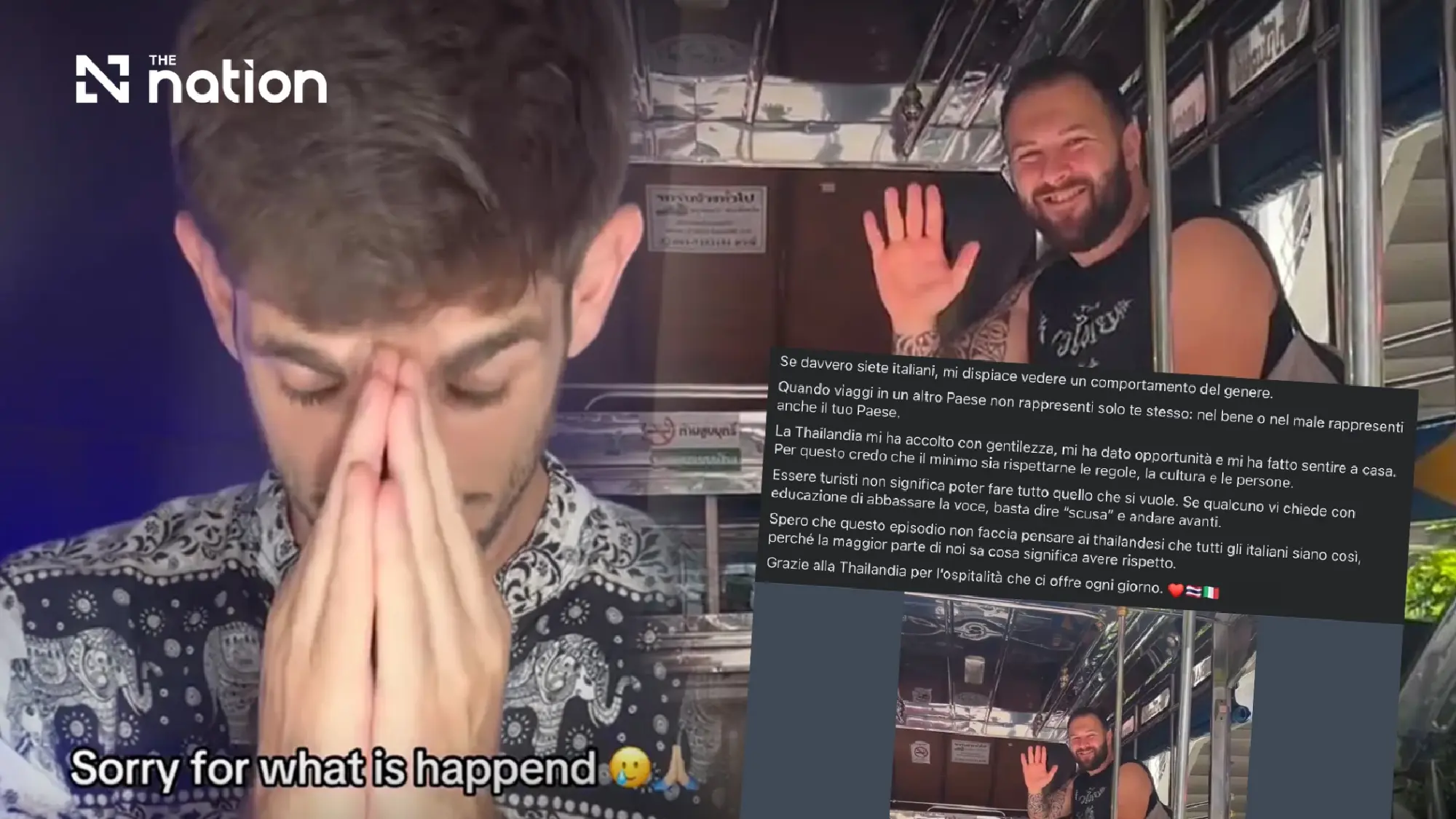
"sncsandro," a well-known Italian content creator famous for his videos documenting daily life in Thailand, broke his silence on the matter, admitting the viral footage left him feeling "deeply saddened and embarrassed."
Noting that while the tourists may have been young and immature, he stressed that their actions demonstrated a complete lack of respect for the host country. He offered a powerful reminder to all travelers:
"No matter where you travel in the world, you act as a 'representative of your country.' When visiting another nation, you must respect the local rules, culture, and people. You cannot use the excuse of bringing tourism money to justify bad manners and disrespect in public spaces."
Expressing deep gratitude for Thailand—a country he described as his "second family"—the influencer concluded his video by performing a traditional Thai Wai to sincerely apologize to the Thai people on behalf of his compatriots.
His sentiments were echoed by another Italian expat residing in Thailand with his Thai wife. Posting on the popular Facebook page Edo Eats Wrong, he wrote:

"Regarding the news about foreigners making loud noises on the BTS in Thailand... Honestly, it's embarrassing. When you travel abroad, you don't just represent yourself; for better or worse, you also represent your country. Thailand has welcomed me with kindness, given me opportunities, and made me feel right at home.
That is why I believe the very least—and simplest—thing to do is to respect the rules, the culture, and the people here. Being a tourist does not mean you can just do whatever you want. I hope this incident won't make Thai people think that all Italians are like this, because the majority of us know what it means to respect others. Thank you, Thailand, for the kindness you show me every single day."

Beyond Thailand: How 5 Countries Handle Noisy Commuters
The BTS incident highlights a universal challenge: managing behavior on public transportation. Mass transit systems exist in every corner of the globe, and different societies have evolved unique ways of handling real-time passenger disputes and noise disturbances.
If you have ever felt annoyed by disruptive commuters, here is how five countries around the world enforce transit etiquette to ensure a peaceful journey for everyone:
1. Japan: The "Death Stare" and Social Philosophy
Japanese society strictly adheres to the principle of "Meiwaku o kakenai" (not causing trouble to others). Even without direct criminal laws punishing noisy train passengers, cultural norms act as an absolute deterrent: keep your personal business at home.
To reinforce this, subway operator Tokyo Metro famously launched the "Please do it at home" campaign, outlining strict guidelines for commuters:
- Avoid loud noises and never talk on the phone inside train cars.
- Be mindful of audio leaking from headphones.
- Do not rush onto trains as doors are closing.
- Avoid applying makeup and never leave trash behind.
- Be considerate of those around you, especially after consuming alcohol.
In Japan, social enforcement is potent. Passengers who talk on the phone or chat loudly face immediate, intense social pressure through "cold stares" or silent, disapproving glares from fellow commuters. Those receiving urgent calls know to step out to the connection areas between cars or disembark at the next station.
2. Singapore: Strict Laws and Heavy Fines
Thailand’s ASEAN neighbor tackles public disturbances with uncompromising legal decisiveness under the Miscellaneous Offences (Public Order and Nuisance) Act.
Anyone who causes a public nuisance by making loud noises—such as playing phone audio through external speakers or shouting—faces a fine of up to 500 SGD (approx. 12,500 THB / $370 USD). In cases of severe or persistent disturbance, the fine can skyrocket to 5,000 SGD. Furthermore, train staff are empowered to summon the police immediately if warnings are ignored.
3. Germany: Strictly Enforced "Quiet Zones"
Long-distance trains operated by Deutsche Bahn (DB) in Germany clearly designate specific carriages as "Quiet Zones" (Ruhebereich).
The rules in these zones are non-negotiable: phone calls are strictly prohibited, and all electronic devices must be muted. Conductors and ticket inspectors actively monitor these carriages and have the authority to order rule-breakers to relocate to regular cars or kick them off the train entirely.
4. The United Kingdom: Passive-Aggressive Peer Pressure
Similarly, many intercity trains in the UK feature a designated "Quiet Coach" monitored by staff. However, the uniquely British method of dealing with rule-breakers relies heavily on peer pressure from fellow passengers.
Instead of legal fines, offenders face a barrage of social disapproval, including "tutting" (making clicking sounds of disapproval in the throat), heavy sighing, sharp glares, or direct, polite confrontations designed to publicly shame the offender into silence.
5. The United States: Targeted Enforcement and Transit Police
On long-distance rail services like Amtrak, designated "Quiet Cars" are a standard feature. Conductors patrol these cars and enforce silence strictly, readily issuing warnings or ordering noisy passengers to relocate immediately.
In urban mass transit systems, such as city subways, standard rules prohibit playing music through external speakers. When a passenger's disruptive behavior crosses the line into public nuisance or harassment, commuters can contact the Transit Police, who will intervene and escort the disruptive individual off the train.
