
Thailand’s low-risk EUDR status gives Thai rubber a competitive edge
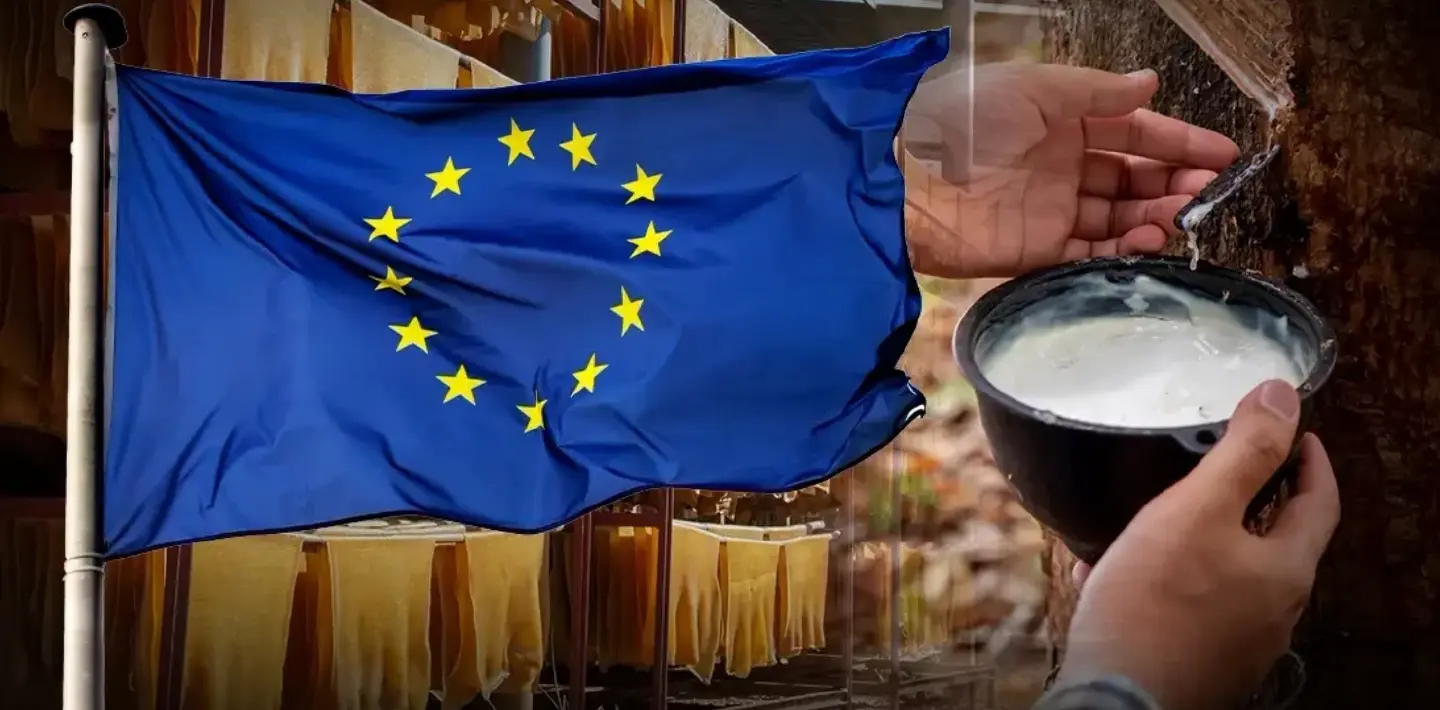


Thai exporters face stricter traceability requirements, but a 1% inspection rate and rubber products’ 69.18% share of EU-bound rubber exports offer advantages.
- Thailand has been classified as a "low-risk" country under the new European Union Deforestation Regulation (EUDR), which covers key exports like rubber.
- This status gives Thai rubber a competitive edge by subjecting it to simplified due diligence and a low 1% inspection rate, reducing administrative burdens and costs for EU importers.
- In contrast, competing rubber exporters like Indonesia and Malaysia have been classified as "standard risk," facing stricter full due diligence and a higher 3% inspection rate.
Thailand’s rubber industry faces a major test as the European Union moves towards implementing its law on deforestation-free products, the European Union Deforestation Regulation (EUDR).
The rules cover seven commodity groups: rubber, palm oil, coffee, cocoa, soya beans, cattle and wood.
Rubber is one of the main products for which Thailand has long relied on the EU market.
The EU’s environmental and sustainability measures are becoming a significant turning point in global trade.
The Commerce Ministry’s Trade Policy and Strategy Office (TPSO) has set out the direction and outlook for Thai agricultural exports under EUDR, with a particular focus on rubber, a principal Thai product that has long relied on EU demand.
ITC Trade Map figures for 2021–2025 show that Thailand held an average 20.3% share of the EU natural-rubber market under HS 4001, measured by the value of the bloc’s total natural-rubber imports.
The figures were presented as meaning that almost one tonne of every five tonnes of rubber imported by Europe came from Thai plantations.
That same market position also puts Thailand under closer scrutiny as the EU tightens traceability checks through due diligence to confirm that imported goods are not linked to deforestation.
Under EUDR, operators importing goods into or exporting them from the EU must conduct due diligence to confirm that the products are deforestation-free and were produced legally under the laws of the producing country.
A due diligence statement (DDS) must be filed through the Information System before goods are imported or exported.
The regulation will apply to large and medium-sized operators from Wednesday (December 30, 2026), and to small and micro operators from Wednesday (June 30, 2027).
Although there are concerns that EUDR could become a new trade barrier, the country-risk classification also offers Thailand an advantage.
The European Commission announced a global risk classification for producer countries on Thursday (May 22, 2025), grouping 140 countries as low risk, 50 as standard risk and four as high risk.
Thailand was placed in the low-risk group, while fellow rubber exporters Indonesia and Malaysia were classified as standard risk.
Nantapong Chiralerspong, director-general of TPSO, said Thailand’s low-risk classification meant importers sourcing goods from the country were eligible for simplified due diligence and faced an inspection rate of only 1%, reducing administrative burdens and import costs.
Indonesia and Malaysia, meanwhile, were subject to full due diligence and a 3% inspection rate as standard-risk countries, giving Thai rubber products a trade advantage.
Thailand’s exports of rubber and rubber products to the EU fluctuated between 2021 and 2025 in line with global economic conditions and commodity prices.
In 2022, the year before EUDR was announced, exports were worth US$2.23785 billion.
They fell to US$1.58143 billion in 2023, a 29.3% contraction, as high inflation and rising interest rates in the EU weakened purchasing power and industrial production.
Exports recovered in 2024, rising 18.35% to US$1.87162 billion.
Growth continued in 2025, although only by 0.51%, taking the total to US$1.88121 billion.
More notable than the total value was the structure of exports.
In 2025, rubber products accounted for 69.18%, while primary natural rubber made up 30.82%.
Vehicle tyres were the main driver, representing 66.68% of rubber-product exports, followed by rubber gloves at 20.18%.
These product groups are considered better placed than primary natural rubber to adapt their traceability systems.
Boonyanuch Sriboonkaew, head of the Rubber Market Development Division at the Rubber Authority of Thailand, said low-risk status was an important advantage.
Rubber and rubber products meeting the requirements could be sold at higher prices and could help expand sales to other markets that prioritise standards and sustainability, such as Japan.
Thailand, however, still faced challenges in collecting plot-level data from smallholders and reconciling differences among maps used to identify plot coordinates.
Supadetch Ongsakul, deputy secretary-general of the Thai Rubber Association, described EUDR as an “opportunity” to screen producers that fail to meet environmental requirements out of the global market and strengthen Thai operators’ bargaining power.
He said the industry had upgraded traceability through three main platforms: (1) platforms operated by European buyers, (2) platforms developed by Thai operators, and (3) third-party platforms.
The industry was also prepared to address Middle East-related logistics challenges that had pushed up freight costs.
Those conditions had also driven up synthetic-rubber prices, supporting stronger global demand for natural rubber.
Finally, Nantapong Chiralerspong said the EU’s environmental measures represented a new direction for global trade standards.
Strong geolocation and due diligence systems would help elevate the image of Thai rubber from a general commodity to “a high-value, environmentally responsible agricultural product”.
He added that the government and relevant agencies were ready to support Thai operators in using the opportunity to build a long-term advantage in global trade.
Rubber therefore stands as a flagship agricultural product capable of helping move Thailand’s production sector towards international standards.
Strong geolocation and due diligence systems will be key to helping Thai rubber seize this valuable opportunity to strengthen its trade position in the EU market.
