
Thailand urged to revise milk powder import controls
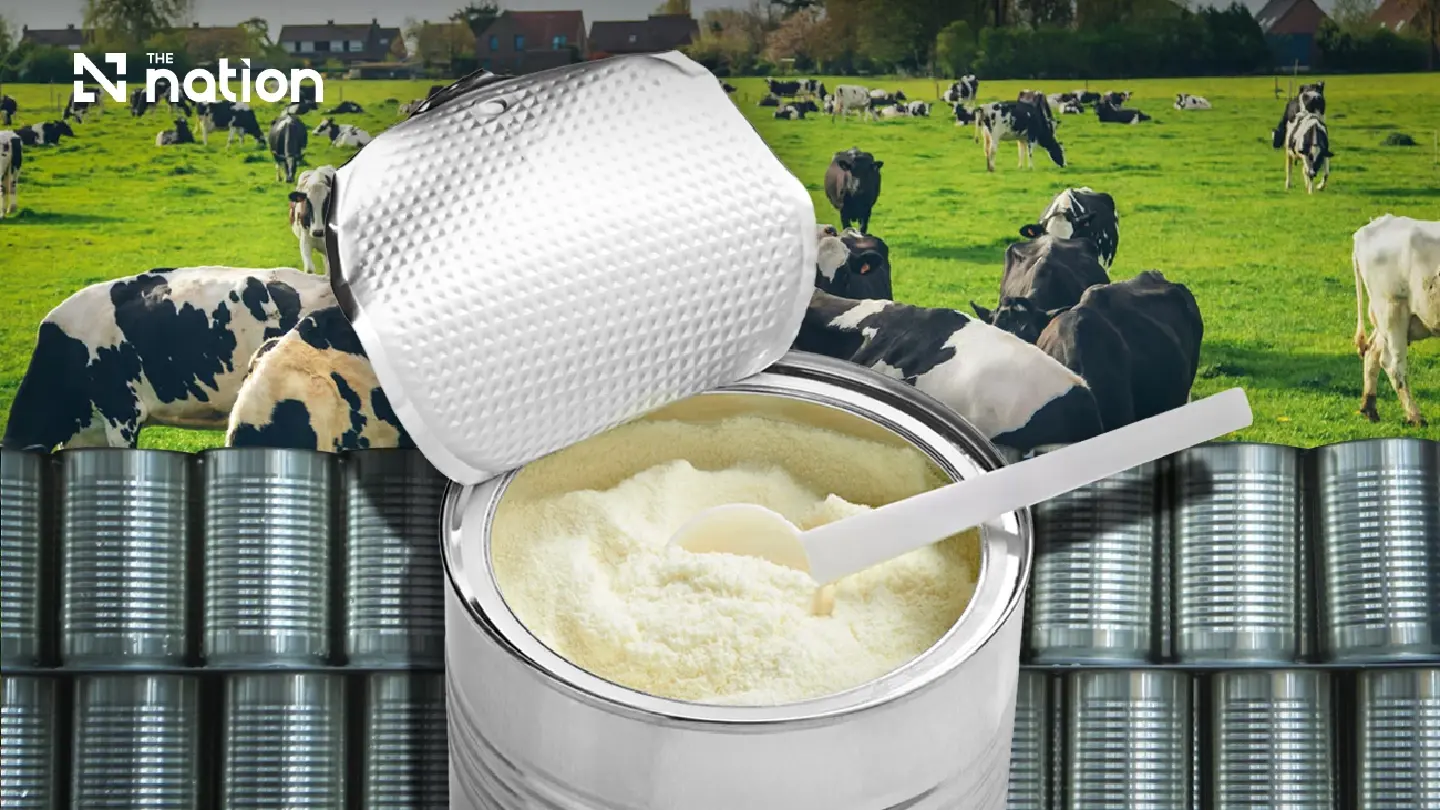


Australia and New Zealand say Thailand’s two-stage approval process restricts skimmed milk powder imports under bilateral trade agreements
- Australia and New Zealand are urging Thailand to revise its two-stage approval process for skimmed milk powder imports, arguing it violates their free trade agreements.
- Thailand's current import controls delay quotas for large dairy operators to pressure them into purchasing surplus domestic raw milk, thereby protecting local farmers.
- A new proposal suggests requiring all importers to source 8% of their milk powder from domestic Thai producers as a condition for importing.
- While import quotas for large companies are on hold, they have been approved for smaller manufacturers who do not use domestic raw milk to ease business disruption.
Australia and New Zealand have urged Thailand to resolve a dispute over its two-stage approval process for skimmed milk powder imports before the prime minister’s expected official visits to the two countries in early August 2026.
Thailand’s Ministry of Foreign Affairs reported that both countries continued to regard the system as a measure restricting the quantity and timing of imports under their respective free trade agreements with Thailand.
Although Thailand has approved 100% of the volumes requested by domestic businesses for use as raw materials in food products manufactured for export, Australia and New Zealand maintain that the process is inconsistent with Thailand’s obligations under the economic partnership agreements.
Both countries have pressed Thailand to resolve the matter before the prime minister’s visits.
Smaller manufacturers receive import allocations
A source at a meeting of the Dairy Farming and Dairy Products Board, known as the Milk Board, said members had approved import-quota allocations for some operators to ease disruption to their businesses.
The approval applies specifically to legal entities in Group 2, comprising businesses that do not purchase domestic raw milk.
These operators include smaller ice-cream and dessert manufacturers whose factories and production lines are not designed to use raw milk directly. Imported milk powder is therefore an essential ingredient for maintaining their operations.
The meeting concluded that these companies should not bear responsibility for the domestic raw-milk surplus because they had not contributed to the problem.
The Milk Board retained its two-stage import procedure as a means of limiting the impact on dairy farmers.
Quotas delayed for large dairy operators
Applications from Group 1 legal entities remain on hold. This category covers large operators that purchase domestic raw milk and use those purchases as a condition for seeking milk powder import quotas.
The board delayed approval because raw milk currently exceeds domestic demand.
Group 1 businesses were asked to determine how much additional surplus raw milk they could buy. A small working group has been established to examine the details and seek a solution for dairy farmers.
“Farmers have a simple condition. If they can sell their raw milk, they do not object to milk powder imports,” the source said.
“They are asking operators to deal with the domestic raw-milk supply first to help farmers.”
Imports under World Trade Organisation quotas and those allocated to Group 2 are not affected because they form part of regular quota rounds already linked to memorandums of understanding on raw-milk purchases, the source added.
Attention will now turn to the amount of surplus milk Group 1 companies agree to buy in exchange for the release of quotas covering imports from Australia and New Zealand, which are important sources of raw materials for Thailand’s dairy industry.
Proposed 8% requirement for Thai milk powder
Amnuay Thongkhak, chairman and chief adviser to the board of Wang Nam Yen Dairy Cooperative, attributed the domestic raw-milk surplus, which has led some farmers to discard milk, largely to imports from both within and outside established quotas.
Combined milk powder imports total about 90,000 tonnes a year, he said.

Amnuay also argued that several large dairy-product companies operating under foreign brand names mainly act as importers of overseas milk powder for domestic use.
He said discussions had been held with the permanent secretary for agriculture and cooperatives and the director-general of the Cooperative Promotion Department on requiring importers to purchase domestically produced milk powder alongside imports.
Under the proposal, businesses seeking to obtain 100 parts of milk powder supply would be permitted to import 92 parts and would have to buy the remaining 8% from Thai producers.
The requirement would cover all operators, including companies that already buy raw milk and those that have never purchased it.
“From now on, any company importing milk powder would also have to buy Thai-produced milk powder at a rate of 8% to support domestic farmers,” Amnuay said.
Cooperative defends domestic product quality
Amnuay maintained that milk powder produced by Wang Nam Yen Dairy Cooperative met standards comparable with imported products, including its regular and skimmed milk powder.
He said the cooperative’s laboratory held a global Grade A certification, while its factory had achieved Grade B status, which he described as a high international standard.
“Businesses operating in Thailand and selling to Thai consumers should support Thai products,” he said.
He argued that the proposed measure would benefit both businesses and farmers while reducing the government’s need to provide repeated budget support to cover price differences.
Amnuay predicted that milk powder prices would rise if the global economy recovered in 2027, prompting companies to compete for domestic raw-milk supplies again.
