
Solo creators face hidden risks as Thailand’s creator economy expands



Thailand has an estimated 9–11 million content creators, but solo operators face overlooked risks involving account access, income, and digital inheritance.
- As Thailand's creator economy expands to an estimated 9-11 million people, solo creators face risks related to account ownership, payment access, and digital inheritance because many operate informally through personal accounts.
- Key structural risks include a single point of failure (linking all access to one mobile device), an information gap where families are unaware of digital assets, and a lack of digital succession planning or wills.
- The death of travel YouTuber Hlun Solo has highlighted these vulnerabilities, demonstrating the legal and logistical challenges families face in accessing a deceased creator's accounts, intellectual property, and revenue.
Thailand’s creator economy encompasses an estimated 9–11 million content creators, but the rapid growth of solo careers has exposed unresolved risks involving account ownership, payment access, and digital inheritance.
Those risks have come into sharper focus following the case of travel YouTuber Hlun Solo, whose legal name was Bowornthat Pengsuk. His family confirmed his death after losing contact with him while he was travelling alone in Georgia to produce content.
Thai embassy officials later travelled to Tbilisi, met Georgian police, and confirmed that all his belongings had been accounted for. They continued coordinating with Georgian authorities and his relatives to clarify the circumstances.
Data from a report by Tellscore and market research institutions in Thailand showed that about 2 million people work as full-time creators. A further 7–9 million are part-time, nano, or emerging creators who produce content as a secondary occupation or are beginning to build an audience.
The figures illustrate not only the scale of the industry but also its fragmented professional structure, with many creators continuing to operate through personal accounts rather than registered companies or formally managed teams.
Earnings rise sharply with audience size
Thailand is estimated to have between 300 and 500 mega-creator or celebrity accounts with at least 1 million followers. Monthly earnings for these creators can range from 200,000 baht to 2 million baht through AdSense, in-stream advertising, and sponsorship deals.
Some operate as companies with production teams, while others remain solo creators who travel and work alone, particularly those producing solo-travel, personal vlog, and lifestyle content.
The macro category, covering accounts with between 100,000 and 1 million followers, is estimated to include 3,000–5,000 accounts or channels. Hlun Solo’s YouTube channel was placed within this category.
Macro creators are estimated to earn between 50,000 and 300,000 baht a month. However, the data identifies them as the group facing the greatest structural exposure because many continue to work alone or with only one assistant.
A large proportion have not registered their operations as companies, leaving their platform accounts, access permissions, and revenue payments connected solely to one person’s personal account.
Thailand also has an estimated 15,000–20,000 mid-tier creator accounts with between 50,000 and 100,000 followers. Their monthly earnings are estimated at between 20,000 and 80,000 baht.
Platform structures create different vulnerabilities
YouTube is estimated to have between 8,000 and 12,000 established income-generating channels in Thailand. Many focus on long-form or evergreen content and may hold accumulated AdSense earnings awaiting payment.
Facebook has an estimated 15,000–25,000 prominent pages. Although these pages may have large audiences, administrative rights are frequently tied to the creator’s personal Facebook profile.
TikTok represents the largest group, with an estimated 30,000–50,000 channels. Their operations generally focus on short-form videos, TikTok Shop, and affiliate income, with earnings held in the platform’s wallet system.
Instagram is estimated to have between 10,000 and 15,000 significant creator accounts, with earnings largely derived from sponsorships and image-based promotional work.
Three structural risks facing solo creators
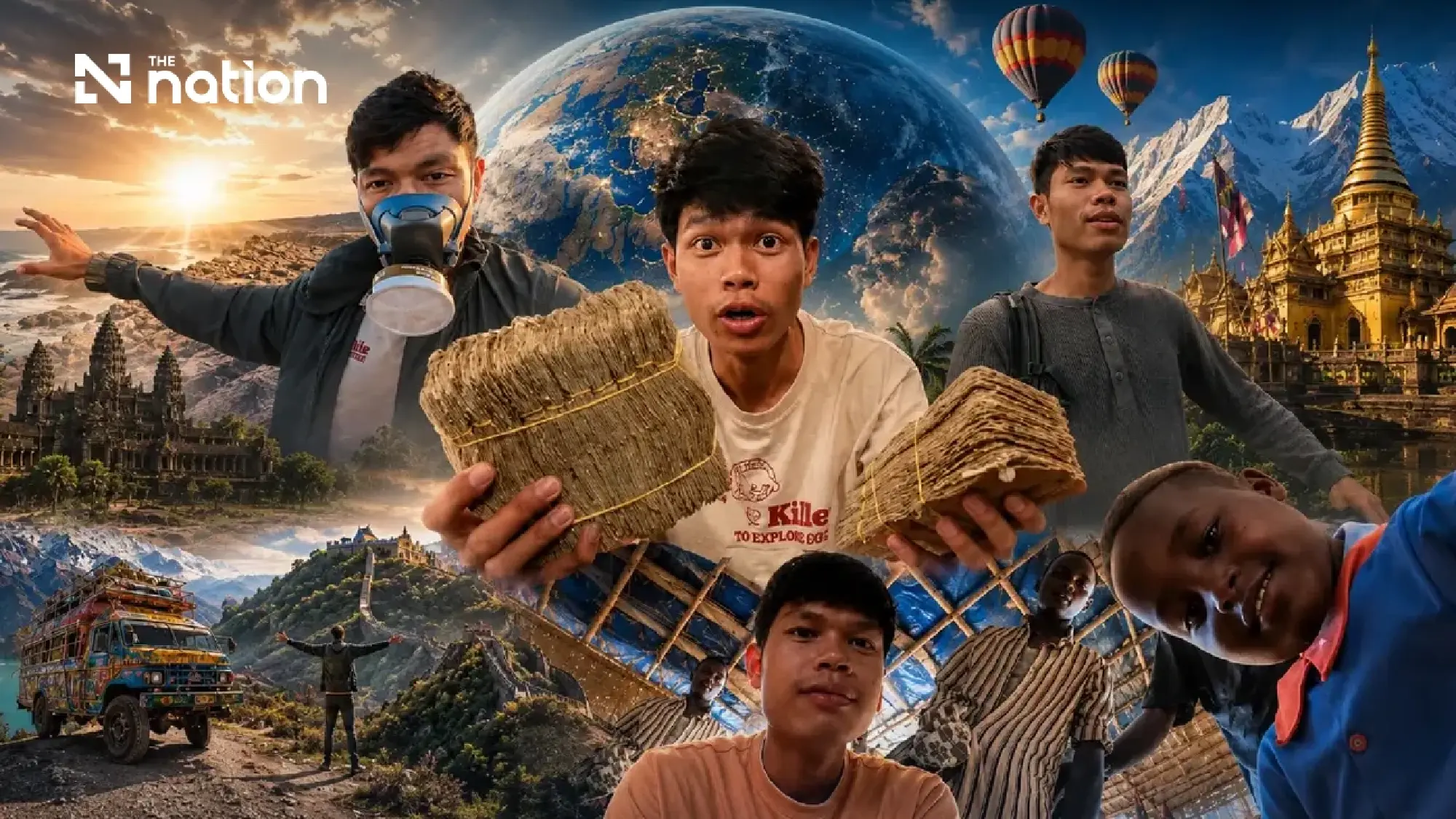
The case involving Hlun Solo has drawn attention to three recurring weaknesses among younger creators who travel and operate independently.
- Information gap within families: Parents and older relatives, particularly in provincial households, may know only that their children “make videos for the internet”, with no clear understanding of their intellectual property, passwords, AdSense accounts, or monthly income streams across platforms.
- Single point of failure: Many creators link two-factor authentication, email access, and financial services to a single mobile device used while travelling. If the device is lost, seized, or becomes inaccessible, their digital assets and revenue channels can be immediately disrupted.
- Lack of digital succession planning: Most creators have not set up digital wills or account inheritance tools such as Google’s Inactive Account Manager or Facebook’s Legacy Contact. Without these, families may need to pursue lengthy legal processes and court orders, during which monetisation and account access may be suspended or lost.
The case has therefore become a broader lesson for Thailand’s digital media industry. It highlights the need to encourage creators to prepare digital estate plans covering account access, intellectual property, and accumulated platform revenue, helping to protect their families’ interests when creators are no longer able to manage those assets personally.
