
CAAT new rule allows airport security to open checked bags without passengers present


Thailand’s aviation regulator introduces stricter baggage checks from October 16, with inspections recorded and passengers notified after searches
- Effective October 16, 2026, a new rule from Thailand's Civil Aviation Authority (CAAT) will permit airport security to open checked luggage without the passenger being present.
- This action is authorized only when security officers have reasonable grounds to suspect a bag contains explosives, dangerous goods, or other prohibited items.
- During an inspection, the process will be recorded, a notification will be placed inside the bag for the owner, and any prohibited items found may be confiscated.
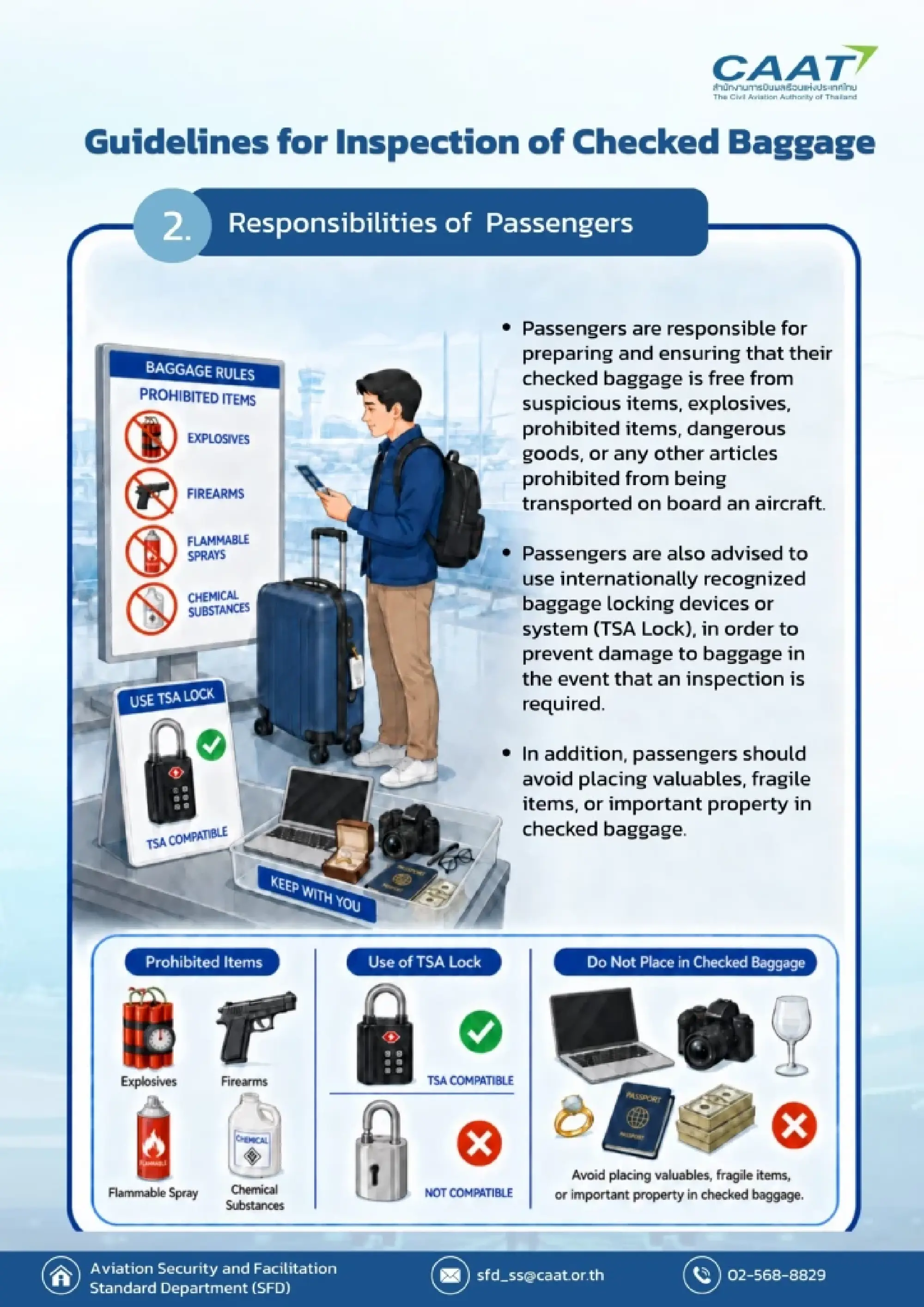
- Passengers are advised to use internationally recognized locking systems, such as TSA Locks, to prevent damage to their baggage if an inspection is necessary.
Thailand’s aviation regulator has issued new rules allowing airport security officers to open checked baggage without the passenger being present when suspicious items are detected, with the measure taking effect on October 16, 2026.
The Civil Aviation Authority of Thailand (CAAT) announced the regulation on “Inspection of Registered Baggage Carried on Aircraft B.E. 2569” on February 24, 2026, as part of efforts to strengthen aviation security standards in line with international requirements.
Under the regulation, public airport operators are responsible for inspecting registered baggage.
If security officers have reasonable grounds to suspect that a checked bag contains explosives, prohibited items, dangerous goods or other items not allowed on aircraft, they are authorised to open the baggage for inspection.
If restricted items are found, officers may confiscate them without returning them and take further action in accordance with relevant laws, regulations or procedures.
Inspections must be recorded and passengers notified
Public airport operators must have procedures to record images of any baggage being opened for inspection and must inform the baggage owner that the luggage has been searched.
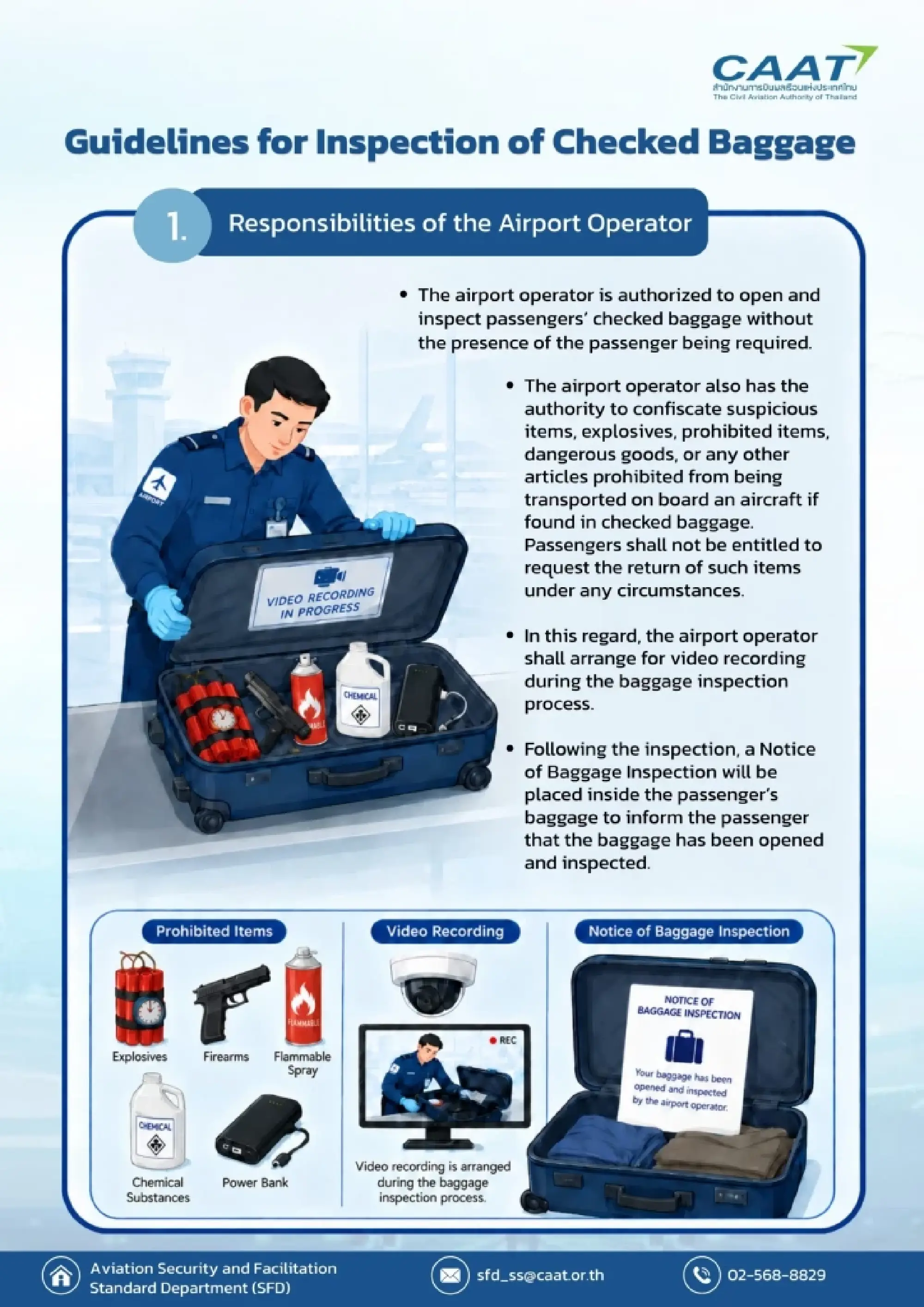
"For aviation security purposes, checked baggage may be opened and inspected by airport operators if suspicious items, prohibited articles, or potentially dangerous goods are detected during the screening process.

Baggage inspections may be conducted without the passenger being present. The inspection process is video recorded, and a Notice of Baggage Inspection will be placed inside the baggage to inform the passenger that the bag has been opened and inspected.

To avoid delays and inconvenience, passengers are advised to:

- Ensure that checked baggage does not contain prohibited or dangerous items.

- Use TSA-approved locks to facilitate security inspections when necessary.

- Avoid placing valuables, fragile items, important documents, or essential personal belongings in checked baggage."
CAAT advised passengers to check their checked baggage against lists of prohibited items, illegal goods and airport security requirements before every journey.
New rules apply from October 16
Under the new inspection framework, security officers may open checked baggage without searching it in front of the passenger if there are suspicious circumstances.
After an inspection, airport authorities will keep records and place a notification document inside the baggage to inform the owner.
If prohibited items are discovered, officers have the authority to seize them and proceed under applicable legal and security procedures.
CAAT said passengers should inspect their belongings before travelling to help ensure smoother journeys and improve safety across all flights.
