
Thailand cuts September power tariff, caps first 200 units at 3 baht
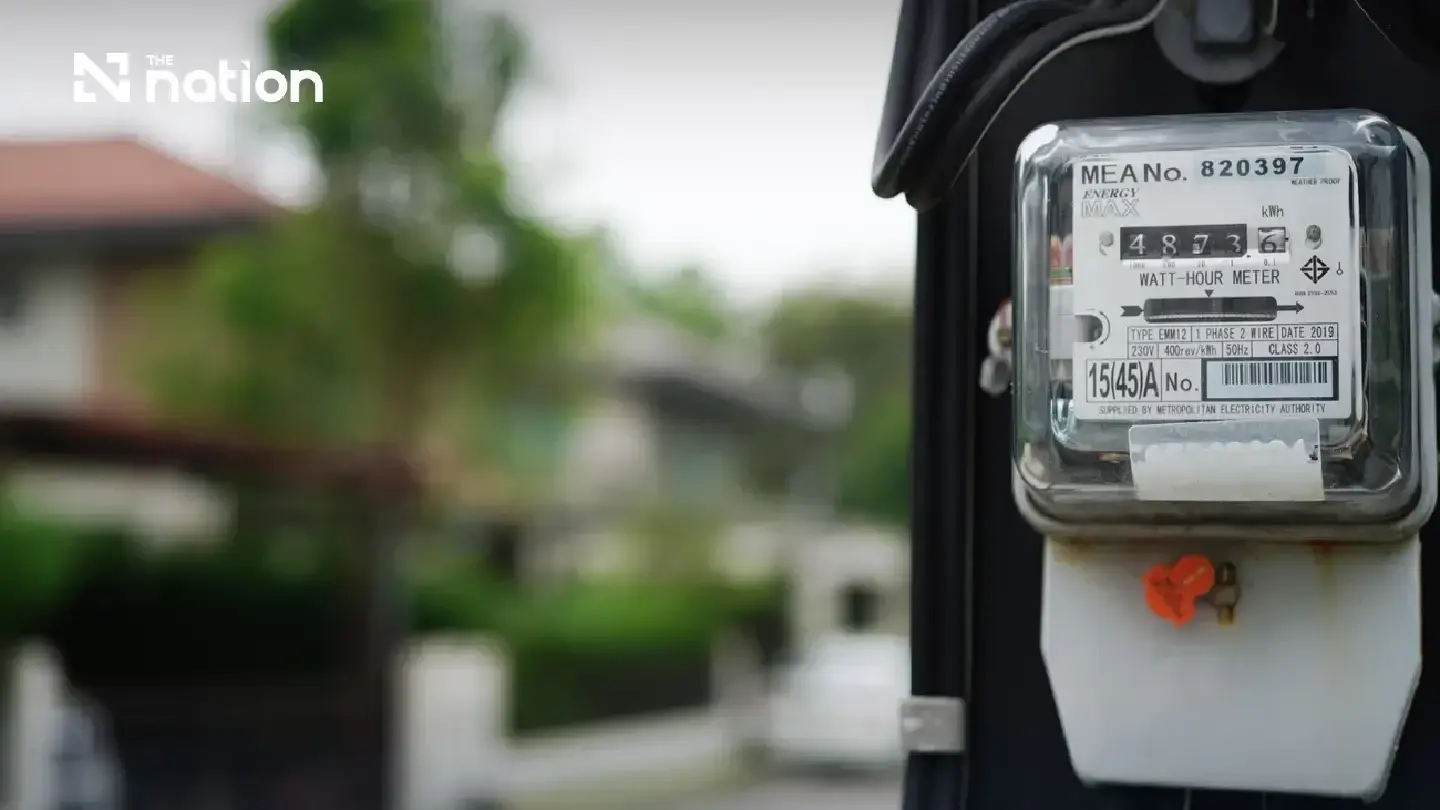


Thailand’s September electricity tariff will fall to 3.89 baht per unit, while the first 200 household units will cost no more than 3 baht
- Thailand's average electricity tariff will be reduced to approximately 3.89 baht per unit for September bills, a decrease achieved by removing public lighting costs.
- The energy charge for the first 200 units of electricity consumed by residential customers will be capped at a maximum of 3 baht per unit.
- Eligibility for these residential rates has been expanded to include users in rental homes, dormitories, and apartments.
Thailand’s average electricity tariff will fall to about 3.89 baht per unit for September bills, down six satang from the previously set rate of 3.95 baht, following a decision by the Energy Regulatory Commission (ERC).
The revised structure will also cap the energy charge for the first 200 units used by residential customers at no more than 3 baht per unit and expand household-rate eligibility to rental homes, dormitories, apartments and homes without registered addresses.
Poonpat Leesombatpiboon, Secretary-General of the Office of the Energy Regulatory Commission and ERC spokesman, said the regulator had completed its public consultation on changes to the progressive residential tariff and the removal of public-lighting costs from the base electricity tariff.
The ERC will notify the three electricity authorities of its decision so that the revised rates can be applied to September bills.
Street-lighting cost removed from tariff
About six satang per unit in public-lighting costs, including street lighting, will be removed from the electricity tariff paid by general users.
The expense had been included in electricity costs for more than 30 years and amounts to about 18 billion baht annually.
Removing the charge will reduce the base electricity tariff from 3.78 baht to about 3.72 baht per unit.
Once the automatic fuel adjustment tariff, or Ft, is included, the average September rate will be about 3.89 baht per unit, excluding value-added tax.
The ERC had previously approved an average tariff of 3.95 baht per unit for the September-December 2026 period, comprising a base tariff of 3.78 baht and an Ft charge of 16.23 satang per unit.
First 200 household units capped at 3 baht
Under the revised progressive residential tariff, the first 200 units of electricity consumed will carry an energy charge of no more than 3 baht per unit.
The measure covers residential users with meters of no more than five amperes — classified as Type 1.1 by the Metropolitan Electricity Authority and Type 1.1.1 by the Provincial Electricity Authority — as well as households with meters above five amperes, classified as MEA Type 1.2 and PEA Type 1.1.2.
Rates for consumption from 201 to 400 units and above 400 units will remain unchanged, apart from the reduction resulting from the removal of public-lighting costs.
The definition of residential users will also be expanded so that rental homes, dormitories, apartments and homes without registered addresses can use the same tariff structure as other households.
New funding planned for public lighting
The National Energy Policy Council has instructed the ERC to amend rules governing the Power Development Fund so that public-lighting costs can instead be supported by new funding sources.
The proposed sources include electricity users in data centres, customers with direct power purchase agreements, savings from reductions in electricity purchase adders and community solar projects.
The money would be used to support public-lighting costs and further reduce the burden on residential electricity users.
Funding for the measure capping the first 200 household units at no more than 3 baht per unit will come from the three electricity authorities.
