
Anutin orders reserve fuel injection, expects pump shortages to ease in 1-2 weeks
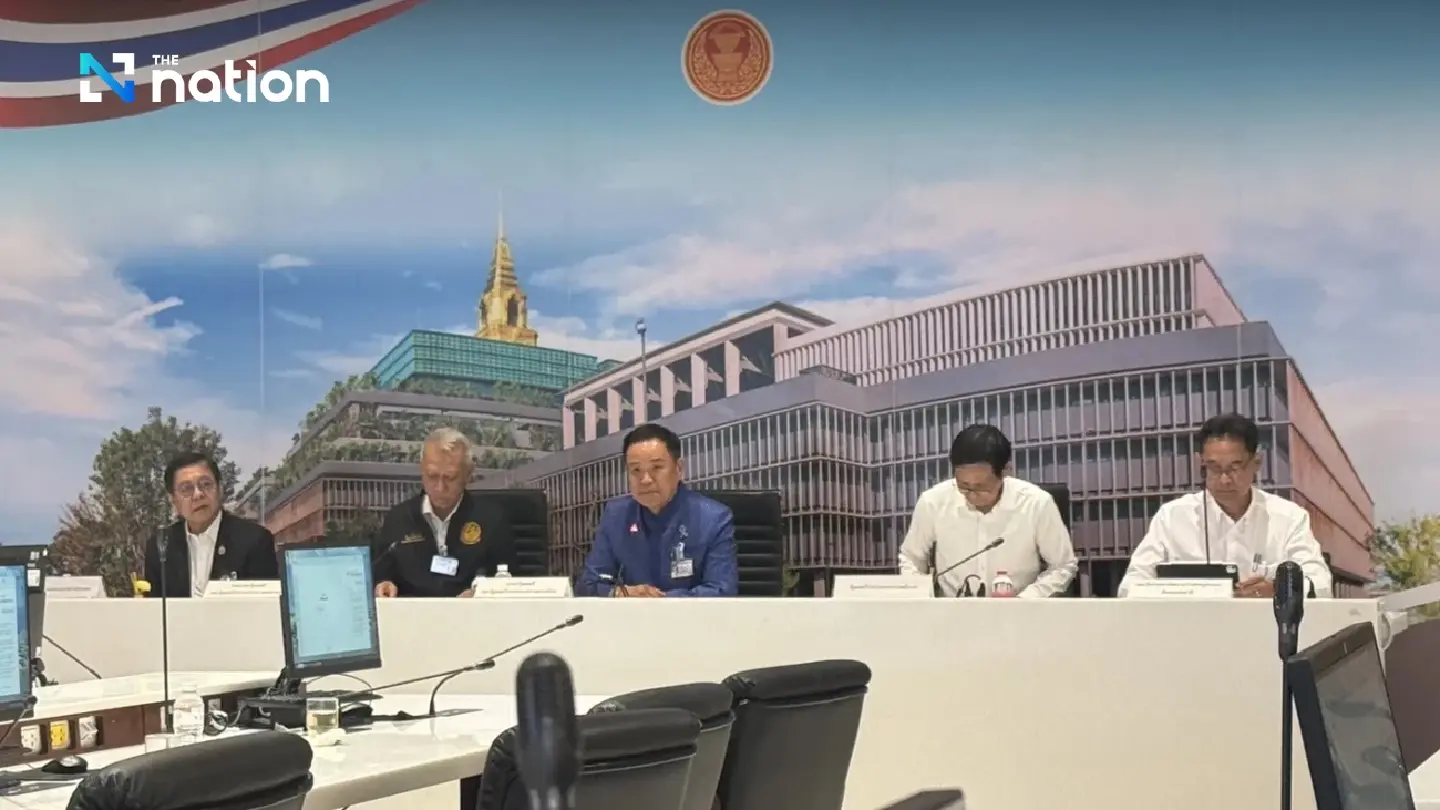


Anutin said emergency fuel injections were now being accelerated, with the situation expected to return to normal within 1-2 weeks.
On Thursday (March 19), Prime Minister Anutin Charnvirakul convened a meeting of the Joint Management and Monitoring Centre for the Situation in the Middle East.
Agencies attending the meeting included the Ministry of Finance, Ministry of Energy, Ministry of Interior, Ministry of Commerce, Ministry of Justice, Ministry of Transport, the Budget Bureau, the National Economic and Social Development Council (NESDC), as well as representatives from refinery operators, Section 7 oil traders, and wholesale oil distributors, or jobbers.
Later, at 6pm, Anutin told a press conference that checks had found all six domestic oil refineries were still operating at full production capacity of 175 million litres per day. Diesel output in particular stood at 77 million litres per day, while normal demand is only around 67 million litres per day.
However, current consumption has surged to 84 million litres per day because of public anxiety over possible fuel shortages. This has led people to stockpile fuel at home and keep topping up their tanks, causing petrol stations to run out of supply faster than normal delivery cycles can replenish them.
He stressed that Thailand’s oil reserves remain sufficient, with current stockpiles covering around 100 days, up from 62 days at the start of the crisis.
Measures are now being introduced to restore the situation to normal within 1-2 weeks, returning conditions to what they were before the outbreak of conflict in the Middle East.
Anutin said the first urgent step was a reserve fuel injection, with the Department of Energy Business and PTT instructed to feed reserve oil into the system to boost confidence and meet unusually high demand.
At the same time, measures have been introduced to address fuel purchases by wholesale distributors, or jobbers, allowing them to buy fuel directly at refinery gates at the same price as purchases made at petrol stations, with PTT Oil and Retail Business (OR) set to pilot the measure.
Transport facilitation measures have also been introduced. The Prime Minister said the Royal Thai Police had issued a temporary exemption allowing fuel tanker trucks to operate 24 hours a day nationwide in order to speed up deliveries to service stations.
On fuel export controls, Anutin said Thailand had suspended exports of refined oil products to other countries from March 1, except for Laos and Myanmar, which are strategically important in energy exchanges involving electricity and gas supplied back to Thailand.
He added that Laos had confirmed that fuel sent from Thailand was not being illicitly re-exported to a third country, namely Cambodia.
Electricity generation, meanwhile, faces no risk because Thailand relies mainly on gas from the Gulf of Thailand, meaning there is no threat of shortage, he said.
“Our production capacity has not fallen. Output remains unchanged. But because people are worried, they have rushed to stockpile fuel, fearing prices will rise and supplies will run short. The government will not allow a shortage to happen,” the Prime Minister said.
“As for prices, they will move in line with market mechanisms. When fighting intensifies, prices rise, and when the situation calms, they fall. We will let prices follow the market. So when asked who caused the fuel shortage, I cannot answer, because there is no actual shortage. The problem is excessive stockpiling driven by anxiety.”
Anutin urged the public to return to normal life and avoid hoarding fuel. If consumption returns to the normal level of 67 million litres per day, available supply will immediately be in balance with production capacity, he said.
“I can confirm the government is doing everything possible to fully meet public demand,” the Prime Minister said.
Energy Minister Auttapol Rerkpiboon also addressed the status of the Oil Fuel Fund, saying it still holds more than 20 billion baht in cash.
Although around 2 billion baht per day has been flowing out to subsidise fuel prices, he said the fund remains capable of continuing to support prices, since there is still time before payments must be made to traders and only a limited amount has actually been disbursed so far in March.
