
Court to rule on ballot barcode case on September 28



Thailand's Constitutional Court set to make a ruling on September 28 after it began hearing five witnesses over claims that ballot barcodes and QR codes could identify voters and reveal how they voted.
The Constitutional Court has scheduled September 28, 2026, to deliver its ruling in a challenge to ballot papers used in Thailand’s February 8 general election, with the hearing set to begin at 2pm.
The case concerns allegations that barcodes and QR codes printed on the ballots could identify voters and reveal how they voted, undermining the constitutional requirement that voting be conducted in secret.
The ruling date was set after the Court held a closed-door witness hearing on August 26. The hearing examined allegations arising from 22 complaints received by the Ombudsman and referred to the Constitutional Court under Section 213 of the Constitution.
The complaints concern the Election Commission’s conduct of the general election for members of the House of Representatives, including its design and printing of ballot papers containing barcodes and QR codes.
EC chairman Narong Klunwarin attended the hearing as an observer.
Court cites ballot security
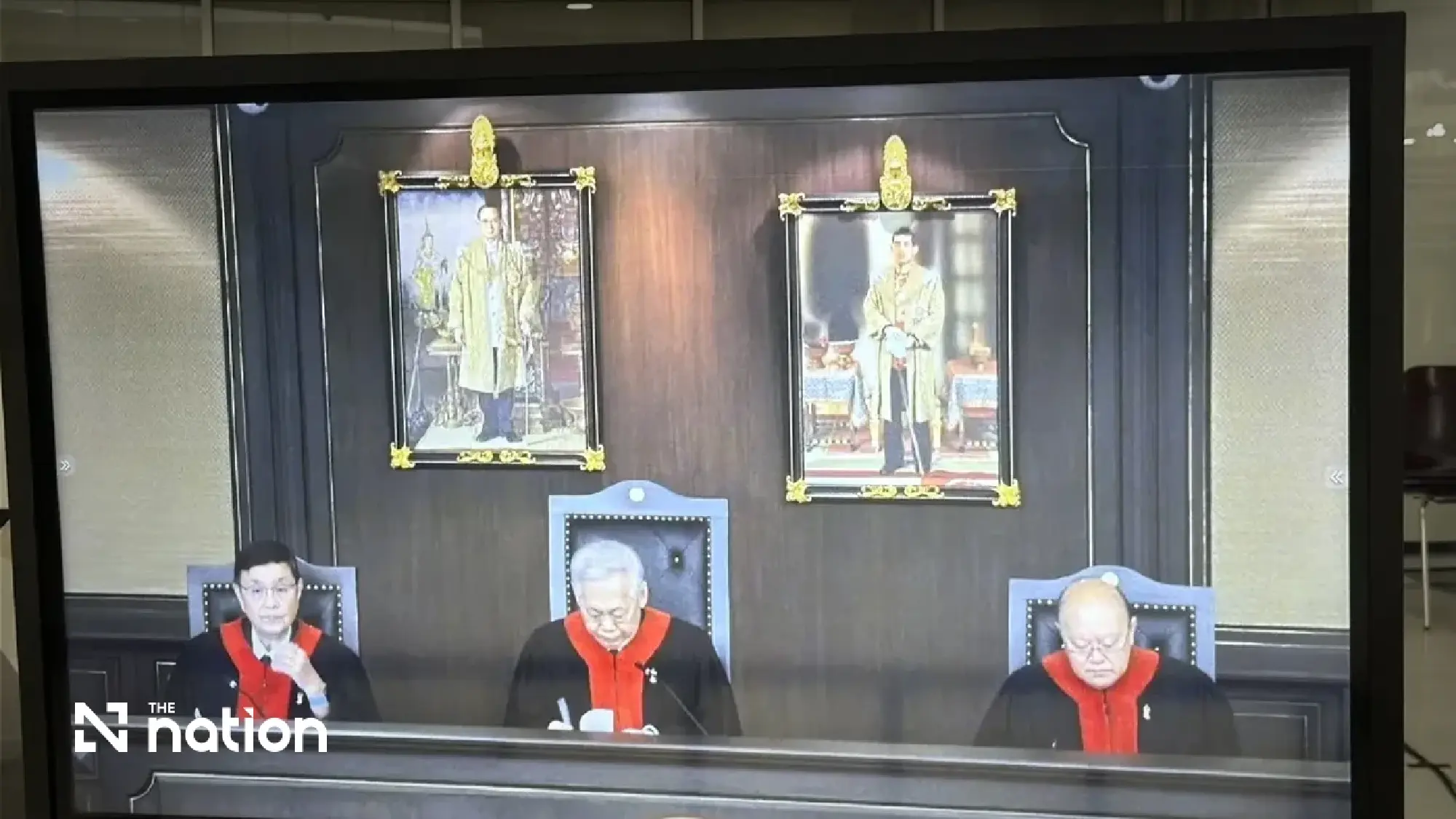
Before the examination began, Constitutional Court judge Wiroon Sangtian, who was assigned to conduct the hearing, informed the parties that the EC chairman and the ballot-printing companies had requested that the proceedings not be held publicly.
The Court found that ballot papers were essential election materials and that both forms of ballot used in the House election contained several safeguards intended to prevent counterfeiting and electoral fraud.
Public disclosure of those measures could compromise security in the production of ballot papers and weaken protections against forgery, the Court said. It also warned that this could affect political security and stability by creating a risk that elections would not be conducted honestly and fairly.
To protect the public interest, the Court halted live video and audio coverage of Wednesday’s hearing.
Attendance was limited under Section 59, paragraph one, of the Organic Act on Procedures of the Constitutional Court B.E. 2561 (2018), with only people authorised by the Court permitted to remain in the courtroom.
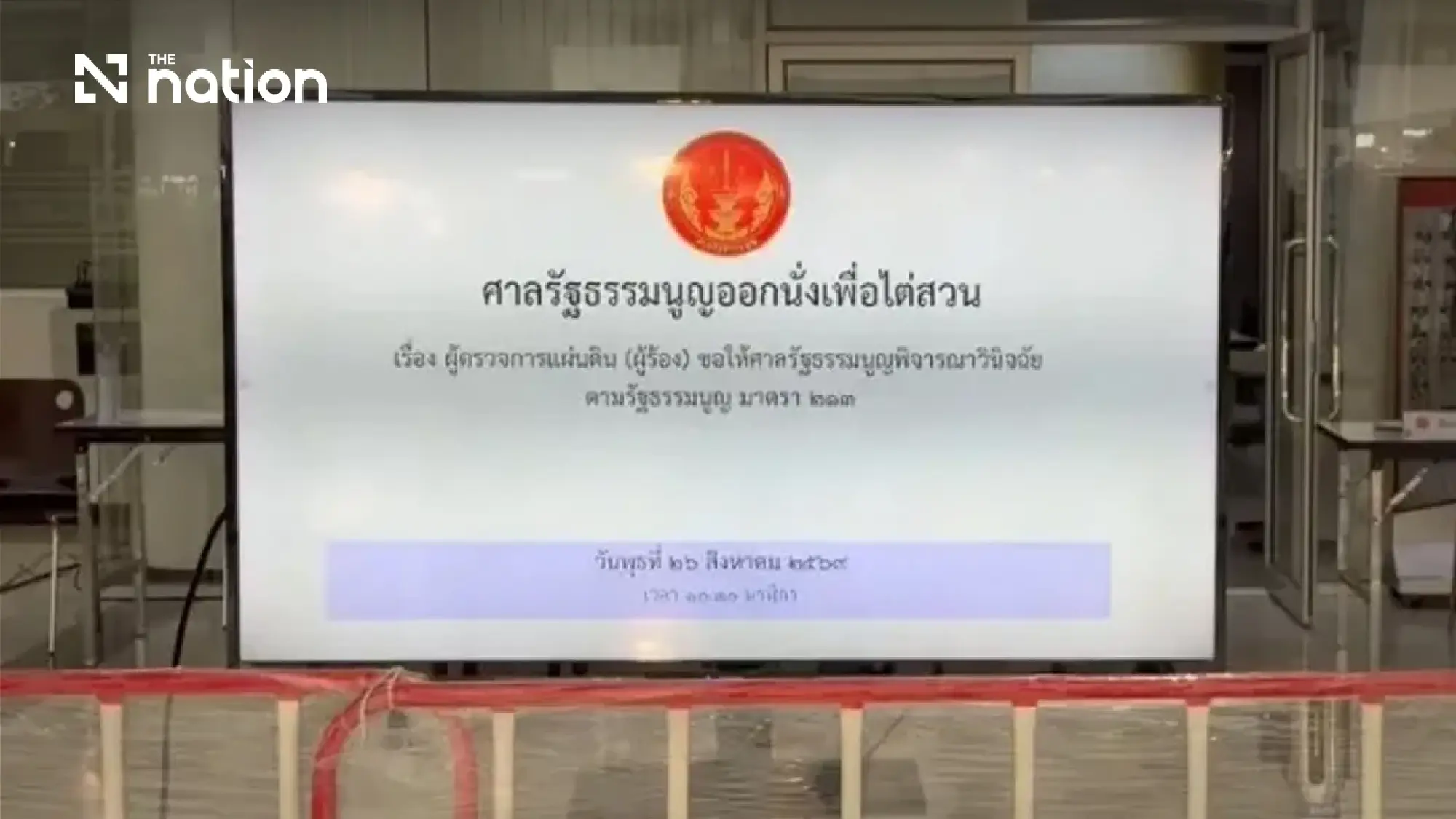
Those attending were strictly prohibited from disclosing information obtained during the examination to anyone outside the courtroom.
Five witnesses and ballot-storage demonstration
The five witnesses summoned by the Court were:
- Nitriya Rattanathatsanee, a computer technical officer at the Office of the Election Commission;
- Worapong Anancharoenkit, director of the Election Support Bureau at the EC Office;
- Phakphum Phu-udom, a director of T.K.S. Technologies Public Company Limited;
- Kanyanat Pikuntong, a director of Chan Wanich Security Printing Company Limited; and
- Sawang Boonmee, secretary-general of the Election Commission.
The Court also permitted Acting Sub Lt Phasakorn Siriphakhayaphon, a deputy EC secretary-general, to demonstrate the process used to store ballot papers.
Case accepted after nationwide complaints
The Constitutional Court accepted the Ombudsman’s petition for consideration on March 18 in a 6-3 decision.
The majority found that the dispute concerned the EC’s administration of the general election across the country, rather than a specific constituency or an individual case. It also involved the constitutionality of the EC’s exercise of its powers under Sections 224 and 83, paragraph two.
The EC, its secretary-general and the EC Office were ordered to respond to the allegations within 15 days and submit lists of evidence and information on how that evidence had been obtained.
On July 9, the Court scheduled the examination of witnesses for August 26. Its announcement described the case as arising from 22 complaints concerning the design and printing of the ballots.
The Ombudsman’s petition alleges that the use of barcodes and QR codes was contrary to Sections 4, 25, 32, 34, 50(7), 83 paragraph two, 85, 95 and 224 of the Constitution.
The EC has previously defended the barcodes as ballot-security features. It said identifying an individual voter would require access to the upper portion of the ballot, which had been separated and stored securely.
