
Analysts: Iran war leaves Netanyahu stronger as Trump faces market shock and Gulf blowback
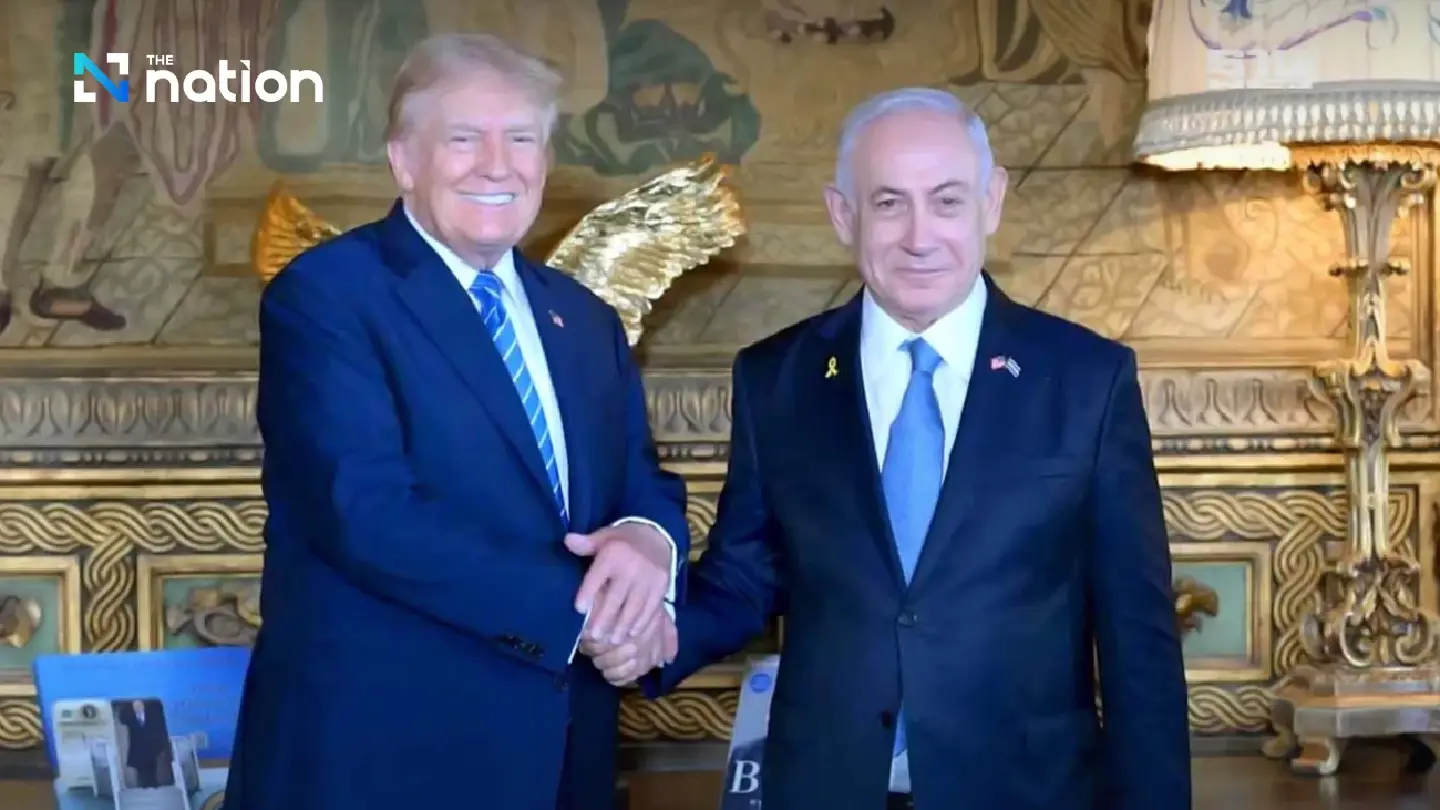


Analysts say Israel’s Benjamin Netanyahu has emerged as the early political winner of the US–Israeli war on Iran, while Donald Trump is left managing oil-market turmoil, strained alliances and Gulf states facing the heaviest fallout.
If the US-Israeli war on Iran ended tomorrow, analysts say one outcome is already taking shape: Israeli Prime Minister Benjamin Netanyahu would emerge politically strengthened, while US President Donald Trump would be left grappling with the economic shock and the sharpest regional blowback falling on Gulf Arab partners.
The conflict has helped Netanyahu shift the political spotlight away from Gaza and onto Iran — an arena where national consensus in Israel is stronger and his security credentials resonate more. By contrast, analysts say Trump is increasingly boxed in by a conflict with no clear exit route, while the risks to energy markets and Gulf allies undercut the economic narrative that powered his return to office.
“There is a clear winner and a clear loser,” said Aaron David Miller, a former US Middle East negotiator. “Netanyahu is by far the key winner. He has demonstrated Israel’s military competence. The Gulf states are by far the biggest losers.”
Miller added that Trump has no obvious “off-ramp” that allows him to declare victory and walk away.
Analysts also point to a deeper divergence: in Israel, the campaign is widely framed as a war of necessity, while in Washington it is viewed more as a war of choice — with different tolerances for regional instability. Natan Sacks, a senior fellow at the Middle East Institute, said that “even if regime change doesn’t happen”, weakening Iran and the “axis” of allied militias remains a major objective for Netanyahu.
Reuters also reported that Israeli and US officials describe a broad division of labour: Israel focusing strikes on western and northern Iran, while the US concentrates more on the east and south — including the Strait of Hormuz — to weaken Iran’s naval capabilities.
The political risks for Trump are amplified by the Gulf fallout. As shipping and energy infrastructure come under pressure, the concern is that Gulf states absorb the steepest costs in security and economic terms, analysts say.
“The notion that the Gulf represents the future of the region is now at stake — and with it, the Gulf’s vision for itself,” Miller said, describing how the conflict is reshaping threat perceptions in Gulf capitals.
The strain has been sharpened by disputes over attacks on energy infrastructure. Reuters reported that a strike on Iran’s South Pars gas field drew a furious response from Trump, who said the US “knew nothing” about that particular attack — a moment that highlighted the delicate balance between Washington’s alliance with Israel and its relationships with oil-rich Gulf partners.
Adding to the uncertainty, US intelligence officials have cautioned that Iran’s leadership remains in place even after weeks of strikes. Tulsi Gabbard, the US director of national intelligence, told Congress that while Iran’s government has been weakened, it remains intact and retains the capability — directly and via proxies — to attack US and allied interests across the Middle East.
In separate testimony, Gabbard said US and Israeli war aims are not the same, stating: “The objectives that have been laid out by the president are different from the objectives that have been laid out by the Israeli government.”
While the war enjoys broad public backing in Israel, Reuters reported it has not yet translated into a clear polling boost for Netanyahu ahead of elections later this year, even as Israeli markets have remained buoyant. Analysts quoted by Reuters warned that the campaign could ultimately be judged in stark terms: whether Iran’s system collapses or endures, with the risk that an unfinished war could turn early gains into a liability.
Source: Reuters
