
What Xi’s Thucydides Trap warning to Trump means for US-China ties
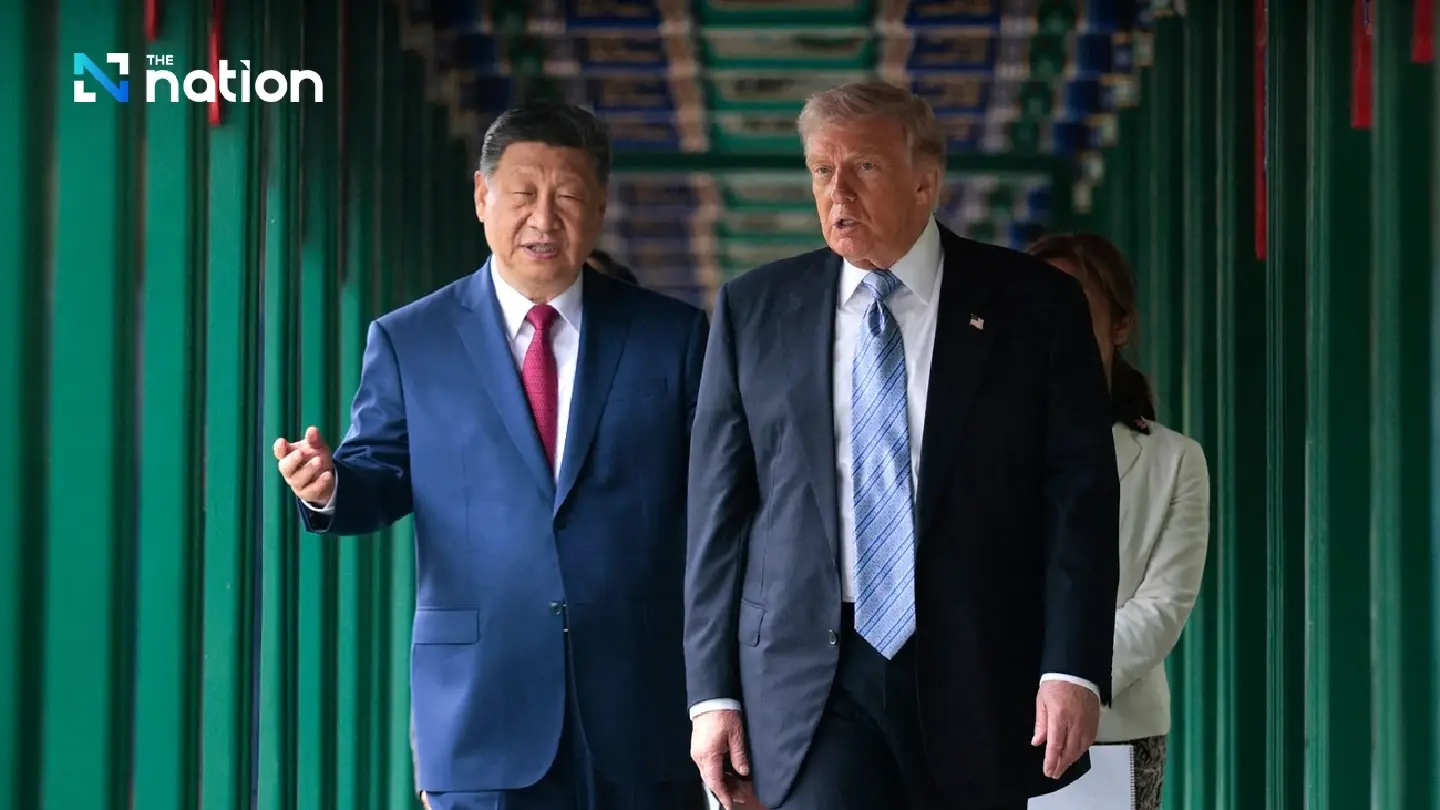


Xi Jinping’s warning to Donald Trump over the Thucydides Trap highlights the risks facing US-China ties as rivalry, trade and Taiwan tensions converge.
Amid trade talks that produced what both sides described as “positive results”, Chinese President Xi Jinping raised one of the most serious questions in relations between the world’s two largest powers directly before US President Donald Trump at the Great Hall of the People in Beijing on Thursday (May 14).
“Can China and the United States avoid the Thucydides Trap?”
The question was more than diplomatic rhetoric. It was a warning rooted in one of history’s harshest lessons about power, fear and conflict.
What is the Thucydides Trap?
Thucydides was the ancient Greek historian who recorded the Peloponnesian War around 2,400 years ago — a conflict between Athens, the rising power of the time, and Sparta, the established power that had long dominated the Greek world.
His enduring conclusion was that the rise of Athens, and the fear this created in Sparta, made war inevitable.
In modern times, Harvard professor Graham Allison revived the concept in his 2017 book Destined for War, using it to explain shifts in global power. His study of 16 major power transitions over the past 500 years found that 12 ended in war.
At the heart of the trap is a simple but dangerous dynamic: when a rising power begins to challenge the position of a ruling power, both sides can be pulled into conflict unintentionally — through fear, misunderstanding or miscalculation.
Supachai Panitchpakdi’s warning
Dr Supachai Panitchpakdi, former director-general of the World Trade Organisation and former secretary-general of UN Trade and Development (UNCTAD), previously explained the trap in direct terms during an interview with Thansettakij.
He said the core of the problem lies in the fact that “a country that is already a giant refuses to accept that it has a secondary role”. That refusal, he warned, can create a “last struggle” that often leads to war.
Supachai also noted that Xi himself had raised the issue on the global stage before, showing that the Chinese leader understood the risks of the trap and had cautioned the world against falling into the same cycle.
Xi, Kissinger and the idea that the world is big enough
One of the most significant conversations in modern diplomatic history came when Xi met Henry Kissinger, the former US secretary of state and architect of the modern US-China relationship, in their final meeting before Kissinger’s death in 2023.
At the heart of that exchange was a shared understanding: the world is large enough for two major countries to coexist peacefully, and if the two choose confrontation, neither side will benefit.
It was a fragile consensus, but it remains one of the most important foundations of the relationship between the two powers.
When the dragon becomes too big to ignore
In the 21st century, the equation has become sharper. China is increasingly cast as the new Athens — a rising power challenging the United States, the Sparta of the modern era, across economics, technology and geopolitical influence.
Xi’s decision to raise the question while Trump was seated before him carried a clear message: China does not want recently eased economic and trade tensions to escalate into a wider conflict that could spin beyond control.
A new vision of ‘constructive strategic stability’
The answer announced by the two leaders was the concept of “constructive strategic stability”, which Xi defined as resting on four pillars: cooperation as the core, moderate competition, manageable differences and lasting commitments to peace.
For Beijing, this represents an attempt to set clearer rules for the relationship, rather than allowing both sides to interpret each other’s intentions freely — a pattern that, over the past two decades, has often become the starting point for crises.
Signals from Trump
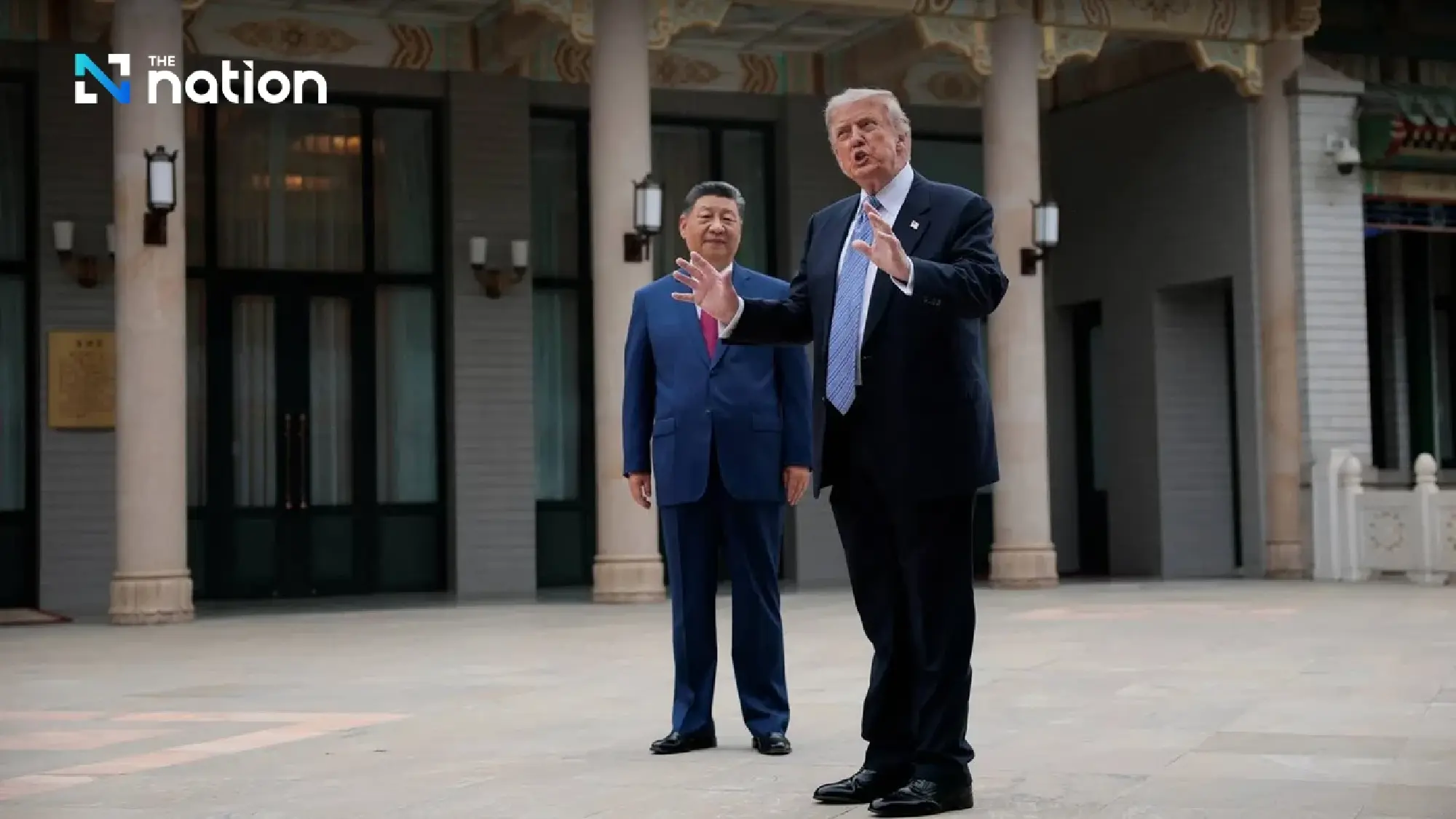
Trump responded in a positive tone, praising Xi as a “great leader” and expressing readiness to strengthen communication, manage differences and push bilateral relations to become “better than ever”. He also voiced support for US businesses expanding cooperation with China.
Taiwan remains the flashpoint
Despite the warmer atmosphere, Xi did not overlook Taiwan. He stressed that the Taiwan issue remained the “most important” matter in relations between the two countries and a potential trigger that could ignite the Thucydides Trap if mishandled.
The question Xi left inside the Great Hall of the People cannot be answered in a single day. But one thing is clear: both countries know they are standing before one of the most famous traps in history.
Recognising that danger may be the first and most important step towards avoiding it.
