
Trump warns Iran of 1,000-missile response over assassination threat
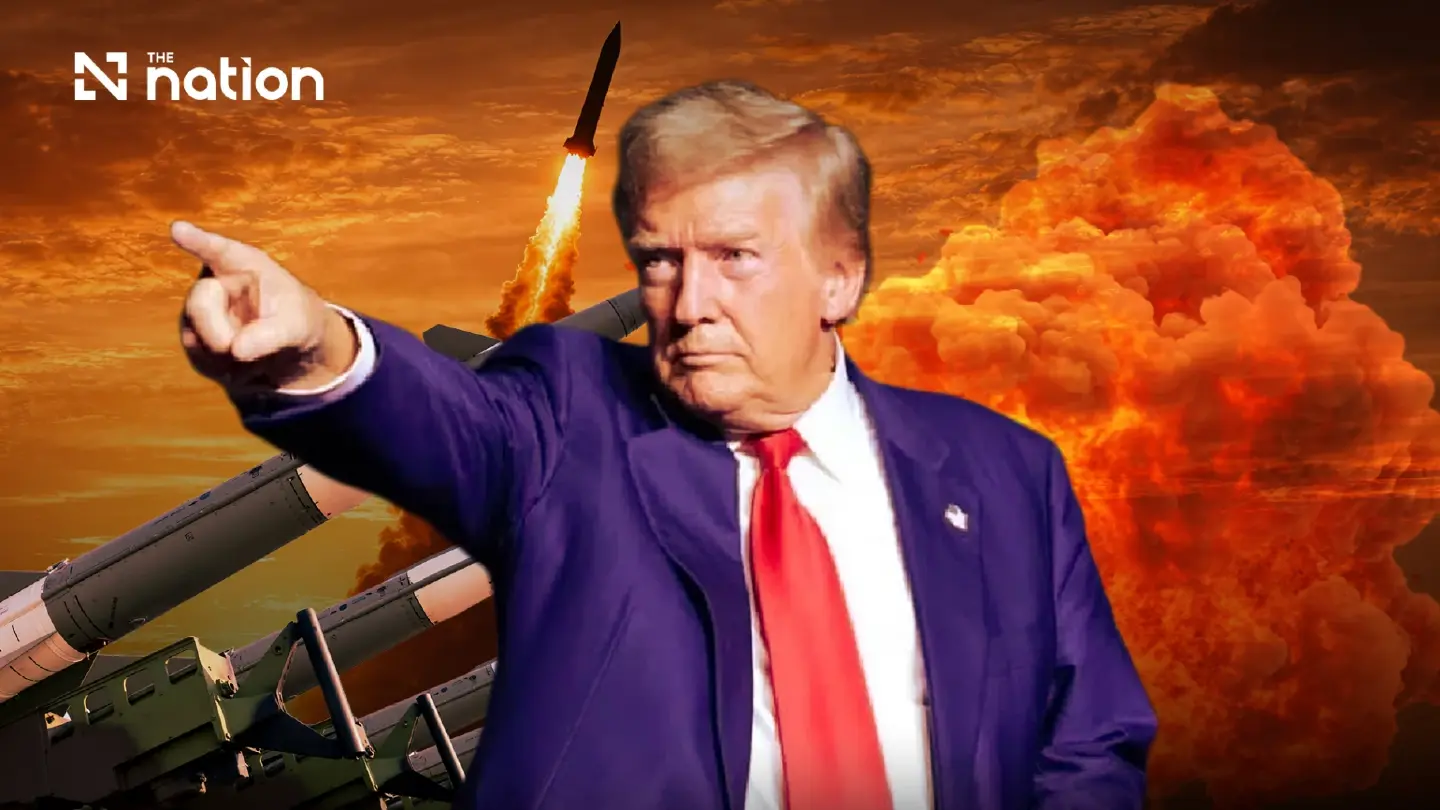


Donald Trump says 1,000 US missiles are aimed at Iran if Tehran targets him, even as Washington and Tehran signal further talks amid renewed tensions
- Donald Trump warned Iran that any assassination attempt against him would trigger a massive military response, stating that 1,000 missiles are already aimed at the country.
- The warning is tied to alleged Iranian assassination plots, including a previously cited US indictment of an Iranian national accused in such a plan.
- Trump claimed that military orders have been given and that US forces are prepared to sustain an operation against Iran for a year or longer, with thousands more missiles available.
- This military threat was issued even as both the US and Iran signaled that diplomatic talks might continue, despite the breakdown of a recent interim agreement.
US President Donald Trump has threatened a massive military response against Iran if Tehran carries out or attempts an assassination targeting him, claiming that 1,000 American missiles are already aimed at the country and that thousands more could follow.
Trump issued the warning in a post on Truth Social, saying military orders had already been given and that US forces were prepared to sustain operations for as long as a year, with the possibility of extending the campaign. He framed the threat as a deterrent against what he described as Iranian efforts to kill a sitting US president.
The post sharply escalated his rhetoric towards Tehran at a time when the two governments are also signalling that diplomatic contacts may continue following renewed clashes and the breakdown of an interim agreement.
Trump said the United States had agreed to Iran’s request for further discussions, telling reporters that Tehran wanted to talk and Washington had accepted. Iran’s Foreign Ministry disputed that account, denying that it had asked for direct negotiations with the United States and indicating that mediation channels remained involved.
Assassination warning tied to alleged Iranian threats
Trump’s message centred on alleged Iranian threats against him and stated that any attempt to assassinate the US president would trigger an overwhelming response.
He claimed that 1,000 missiles had been prepared and targeted at Iran, with several thousand more available immediately. He also asserted that the US military had the personnel and equipment required to continue an operation for one year or longer if necessary.
The White House has previously cited an alleged Iranian plot targeting Trump. A US government account published in March referred to the November 2024 indictment of an Iranian national accused of involvement in a plan to assassinate him. The allegation remains part of the wider confrontation between Washington and Tehran over Iran’s regional activities and attacks attributed to Iranian-linked groups.
Trump did not provide public evidence in the post showing that a new assassination operation was imminent, and Reuters reported the statement as a warning tied to alleged threats from Tehran.
Talks continue despite end of ceasefire
Trump separately said the United States and Iran had agreed to continue negotiations, while declaring that the previous ceasefire was over.
The diplomatic opening follows renewed hostilities involving attacks on shipping and retaliatory strikes by US and Iranian forces. Iran denied initiating direct talks but acknowledged mediation efforts led by Qatar.
The earlier framework had emerged from the Islamabad Memorandum of Understanding, a 14-point interim agreement intended to halt the conflict and reopen the Strait of Hormuz. Pakistan urged both sides to continue honouring their commitments after Trump declared the arrangement over.
The accord had been regarded as a major attempt to end months of fighting and gradually restore maritime traffic through Hormuz. However, further attacks on tankers and military sites have undermined the agreement and revived concerns that the conflict could widen again.
Hormuz remains central to dispute
The Strait of Hormuz remains one of the most sensitive issues in the confrontation.
About one-fifth of global oil supplies pass through the waterway, making any interruption a major risk to international energy markets and shipping. The United States is pressing Iran to make a public commitment that it will stop attacks on commercial vessels and permit free passage without imposing tolls or other restrictions.
Iran, meanwhile, continues to assert a right to exercise control over the strait and regards the route as an important source of leverage in negotiations with Washington.
US officials have also demanded the surrender of more than 900 pounds of highly enriched uranium as part of a proposed 60-day negotiating framework, warning that military and economic consequences could follow if no agreement is reached.
Renewed fighting adds pressure to diplomacy
The latest exchange comes after a fresh series of US strikes on Iranian targets and Iranian retaliation against American facilities in Gulf states.
US forces recently struck more than 80 targets, including Iranian naval and military installations, after attacks on tankers in and around Hormuz. Iran condemned the action as a violation of the interim ceasefire and threatened further retaliation.
The escalation has pushed oil prices higher and slowed tanker traffic through the strait, increasing pressure on regional governments and mediators to prevent another prolonged conflict.
Trump’s latest warning therefore presents two conflicting tracks in US policy: an explicit threat of overwhelming military retaliation if Iran targets him, alongside an agreement in principle to continue diplomatic engagement.
Whether the talks can produce a new arrangement will depend heavily on security in the Strait of Hormuz, Iran’s nuclear material, shipping guarantees and the ability of mediators to prevent further attacks from derailing negotiations.
