
Japan finds vital rare earths in Minamitorishima seabed mud
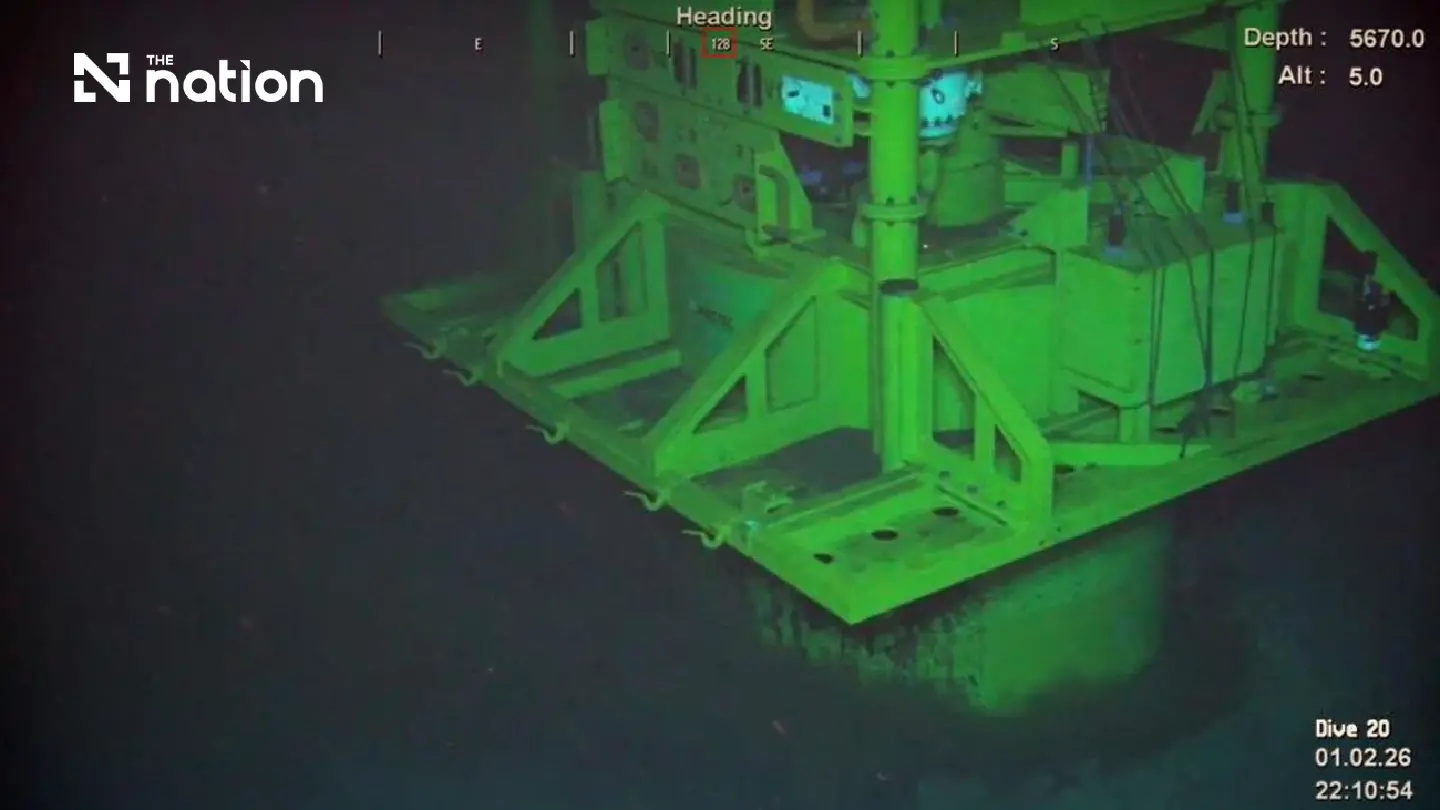


Analysis of 50 tonnes of mud recovered near Japan’s easternmost island showed that medium and heavy rare earths formed 54% of its total rare earth content.
- A significant deposit of rare earth elements has been discovered in seabed mud in Japan's exclusive economic zone near Minamitorishima island.
- The deposit is particularly rich in valuable medium and heavy rare earths (approximately 54% of the total), which are vital for advanced technologies like electric vehicle motors and semiconductors.
- The discovery is a key step in assessing the feasibility of domestic production, which could reduce Japan's heavy dependence on China for these critical materials.
- A larger-scale extraction trial is scheduled for February 2027, with a full feasibility report on domestic production expected by March 2028.
A larger extraction trial is due to begin in February 2027 after deep-ocean samples from waters around Minamitorishima revealed a substantial share of medium and heavy rare earth elements.
Laboratory analysis put medium and heavy rare earths at roughly 54 per cent of the material’s total rare earth content, leaving about 46 per cent classified as light rare earths.
The medium and heavy elements have comparatively high atomic weights and are needed in advanced technology, including motor magnets for electric vehicles.
Japan remains heavily dependent on China for supplies.
The Japan Agency for Marine-Earth Science and Technology (JAMSTEC) announced the findings on Friday, 24 July.
It said the results of the forthcoming full-scale work, to be carried out with other organisations, would form the basis of a report on the feasibility of domestic rare earth production, due by March 2028.
During a test-drilling operation in January and February, JAMSTEC’s deep-sea scientific drilling vessel Chikyu brought up around 50 tonnes of seabed mud from Japan’s exclusive economic zone around the country’s easternmost island.
The recovery used a pipe approximately 5,600 metres long.
Yttrium formed 29.9 per cent of the rare earth total and is required for light-emitting diodes and semiconductors.
Gadolinium, used to control nuclear reactors, accounted for 4.9 per cent, while dysprosium, used in EV motors, represented 4.6 per cent.
Neodymium, a light rare earth used in powerful permanent magnets, made up 18.4 per cent.
Tests found no significant levels of harmful or radioactive substances in the recovered mud, even though radioactive substances can occur in rare earth ores.

[Copyright The Jiji Press, Ltd.]
