
Spain reverses mass Ceuta crossings after 57 deaths
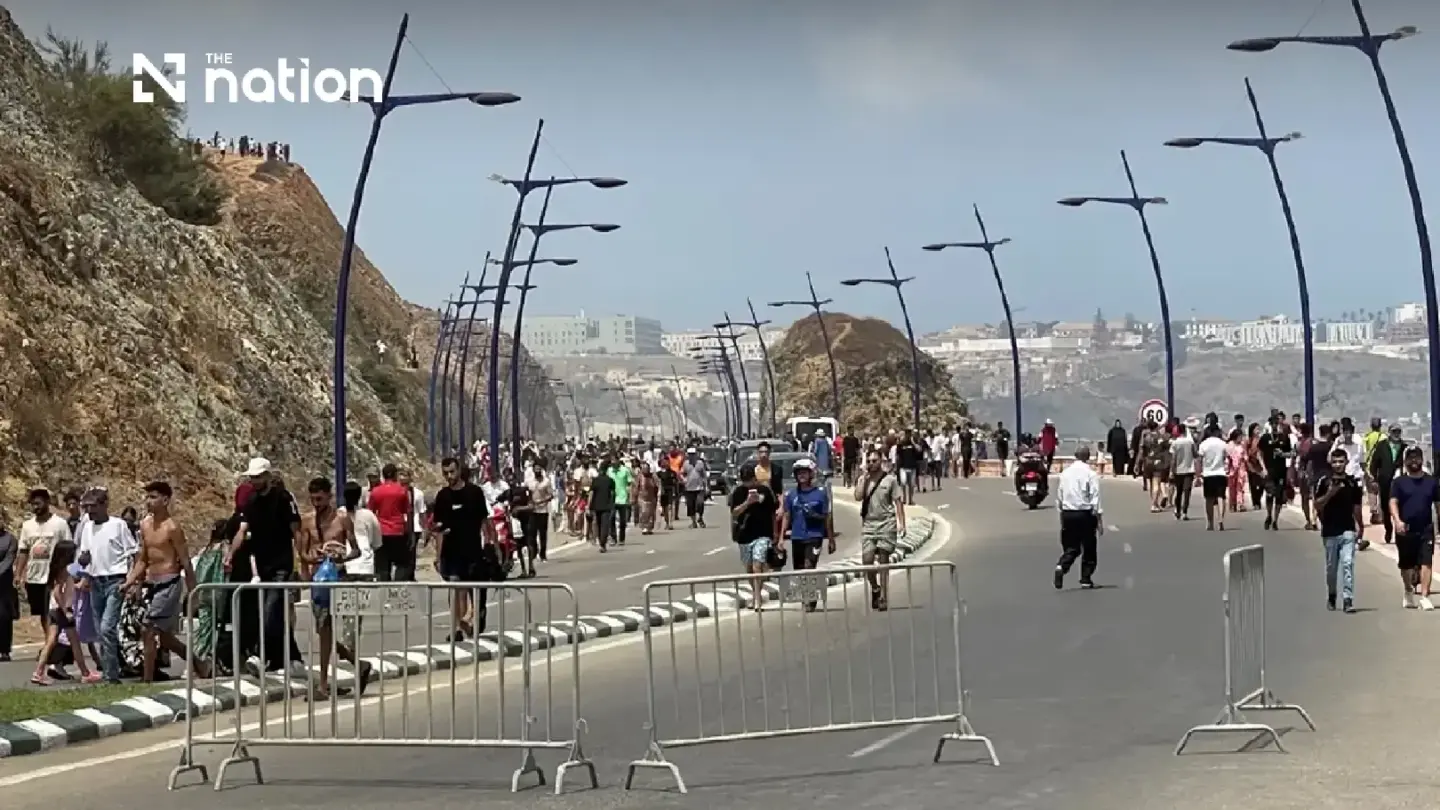


About 48,300 people had returned to Morocco by Friday evening after an unprecedented mass crossing into Spain’s North African enclave of Ceuta
- Spain has largely reversed a mass crossing into its North African enclave of Ceuta, with an estimated 48,300 of the approximately 50,000 people who entered having returned to Morocco.
- At least 57 people died during the incident, with victims drowning or being crushed while attempting to climb the border's breakwater.
- The reversal was achieved through accelerated repatriations by Spain and the use of force, including tear gas and batons, by Moroccan security forces to prevent further crossings.
Spain said it had largely reversed an unprecedented mass crossing into Ceuta after recovering 57 bodies and estimating that most of the roughly 50,000 people who entered the North African enclave had returned to Morocco.
The Spanish government’s representative in Ceuta reported that some victims had drowned, while others were crushed as crowds attempted to climb the breakwater supporting the border fence. Officials warned that further deaths might have occurred on the Moroccan side.
Spain’s Interior Ministry estimated that 48,300 people had returned by 6pm on Friday after about 50,000 crossed by land and sea from Thursday morning. Juan Jesús Vivas, president of Ceuta’s local government, put the number entering over the previous two days as high as 60,000.
Moroccan security forces used batons and tear gas to prevent more people reaching the small Spanish territory, which lies on the Mediterranean coast of northern Morocco.
Crowds retreat from the border
Moroccan riot police fired tear gas at groups gathered near the border fences, while water-cannon vehicles were deployed. A burnt-out bus and seven damaged cars remained near the crossing points following clashes with the crowds.
Spanish military vehicles were positioned along parts of the frontier as dozens of people watched from a hill on the Moroccan side, unable to enter Ceuta.
Several hundred people returned through official border gates and openings in the fence. Some told Reuters they were leaving because they had been unable to find food or accommodation after crossing.
One young man from Tangier said he regretted making the journey and had not eaten since the previous afternoon despite carrying money.
Ayman, a 20-year-old hairdresser from Larache, said he had reached Ceuta on Wednesday after swimming for five hours. He reported finding no food and alleged that Spanish soldiers had expelled him harshly.
Spain accelerates repatriations
Prime Minister Pedro Sánchez visited Ceuta on Friday and was met by protesters who shouted insults at him.
Sánchez described the crossing as a breach of Spanish sovereignty and announced that authorities were accelerating the return of people who had entered without authorisation. He said Morocco was fully cooperating with the operation.
Ceuta and Melilla are autonomous Spanish cities on Morocco’s northern coast and form the European Union’s only land borders with Africa. Attempts by migrants to enter the enclaves occur periodically, although the number crossing during the latest incident appeared to be unprecedented.
Right-wing political parties in several European countries blamed Spain’s migration policies, including an amnesty granted this year to hundreds of thousands of people living in the country without authorisation.
Spain summoned Italy’s ambassador after Foreign Minister Antonio Tajani argued that the amnesty had encouraged human trafficking.
European countries tighten controls
Italy announced the suspension of Schengen border arrangements with Spain, affecting passengers travelling between the two countries by air and sea. Madrid responded that the decision breached European Union treaties.
France also prepared to increase the police presence on its border with Spain fivefold by Saturday. French Interior Minister Laurent Nuñez announced additional aerial surveillance and patrols on trains.
Schengen members generally do not conduct checks at their internal borders, although temporary controls may be restored in exceptional circumstances.
US President Donald Trump compared the Ceuta arrivals to an invasion during a Cabinet meeting and linked the incident to the forthcoming US midterm elections.
The US State Department blamed the Spanish government’s migration policies and stated that Washington was considering measures to protect Americans and support European allies examining similar action.
Staffing and court ruling questioned
The Unified Association of Civil Guards, or AUGC, wrote on X that too few officers had been deployed along the fence when the crossings began on Thursday, leaving security personnel unable to stop the crowds.
Territorial Policy Minister Ángel Víctor Torres identified a recent Spanish Supreme Court ruling as another possible factor behind the surge.
The court ruled earlier in July that people intercepted at sea while trying to reach Ceuta or Melilla could not immediately be turned back at the border. Legal experts noted that the judgment did not prevent Spain from subsequently expelling them.
Thousands of people entered the Moroccan border town of Fnideq overnight despite a reinforced security deployment that prevented most attempts to reach Ceuta. Some began leaving the area later on Friday.
Although the main crossing routes appeared to have been closed, smaller groups continued moving along the coast in search of ways around the border fence.
Brahim, a 32-year-old man from Tangier, said he had arrived hoping to pass through a border gate but found it effectively sealed.
