
Incheon Airport passes Heathrow and Changi in international traffic
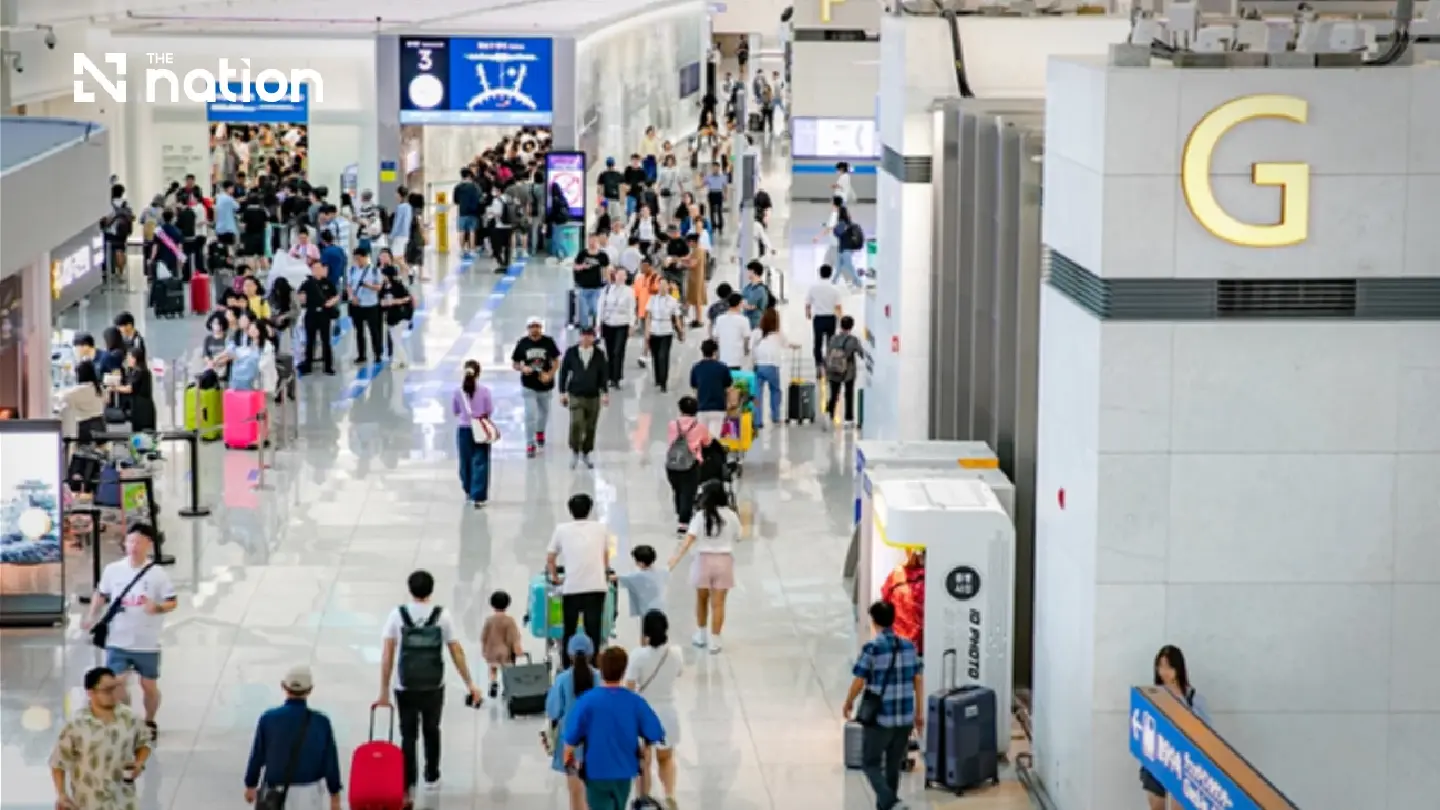


Airport expansion, broader connections and changes in global travel flows helped the South Korean hub move ahead of Heathrow and Changi.
- Incheon International Airport became the world's busiest for international traffic in the first half of 2026, handling 38.39 million passengers and surpassing London Heathrow and Singapore Changi.
- The top ranking was driven by a major expansion completed in 2024, which increased its annual capacity to 106 million, and the growth of its network to 183 cities.
- A surge in transfer passengers, diverted from Middle Eastern hubs due to geopolitical conflict, and a significant rise in inbound tourism from China and Japan also fueled the growth.
Long-term expansion and shifts in global travel have combined to put Incheon International Airport at the top of the international passenger rankings for the first six months of 2026.
Incheon handled 38.39 million international passengers, preliminary data covering 1,234 airports compiled by Airports Council International (ACI) showed on Thursday (August 13).
London Heathrow was second with 37.79 million, followed by Singapore Changi Airport with 34.53 million.
Dubai International, a long-standing rival to Heathrow for the leading position, was expected to finish outside the top five.
The half-year result extended Incheon’s rise from 10th place in 2002 to fifth in 2018 and third in 2024.
The airport reached first place about 25 years after opening.
Four phases of expansion completed in November 2024 increased Incheon’s annual international passenger capacity to 106 million.
This gave it the world’s third-largest capacity, behind only Hong Kong International Airport and Dubai International.
Its aviation network has developed alongside the additional infrastructure.
A total of 101 carriers now connect Incheon with 183 cities in 53 countries, compared with 139 cities served from Hong Kong, 92 from Shanghai Pudong International Airport and 86 from Narita International Airport.
External developments also reshaped international passenger flows.
The conflict between the United States and Iran disrupted transfers through Middle Eastern hubs and diverted some travellers to Incheon.
Transfer passenger numbers consequently rose by 18.1 per cent from a year earlier to 4.24 million, while transfer traffic involving European routes increased by 63.2 per cent.
Inbound tourism provided further momentum, led largely by visitors from China and Japan.
Foreign nationals accounted for a record 44.4 per cent of Incheon’s overall passenger traffic in the second quarter, compared with 39.5 per cent a year earlier.
Incheon International Airport Corporation (IIAC) said the first-place ranking strengthened the airport’s position as a top-tier global hub, alongside its 12th consecutive year as the leading airport for service quality.
Incheon also passed one billion cumulative passengers just over 25 years after opening, reaching the milestone faster than any other major international airport.
In its role as South Korea’s gateway airport, Incheon has long supported major national events and government policy, IIAC said.
The corporation is now investing in artificial intelligence and urban air mobility infrastructure in line with the government’s goal of attracting 30 million inbound tourists.
“We’re grateful for the government’s support, the public’s encouragement and the hard work of everyone stationed at the airport in making Incheon the world’s No. 1 airport,” said Kim Beom-ho, acting president of IIAC.
Kim added that the corporation would maintain its focus on core operations while widening regional links to support the growth of South Korea’s aviation industry.
Source: The Korea Herald
