
Two unstable lakes raise fresh flood fears in Nepal and China
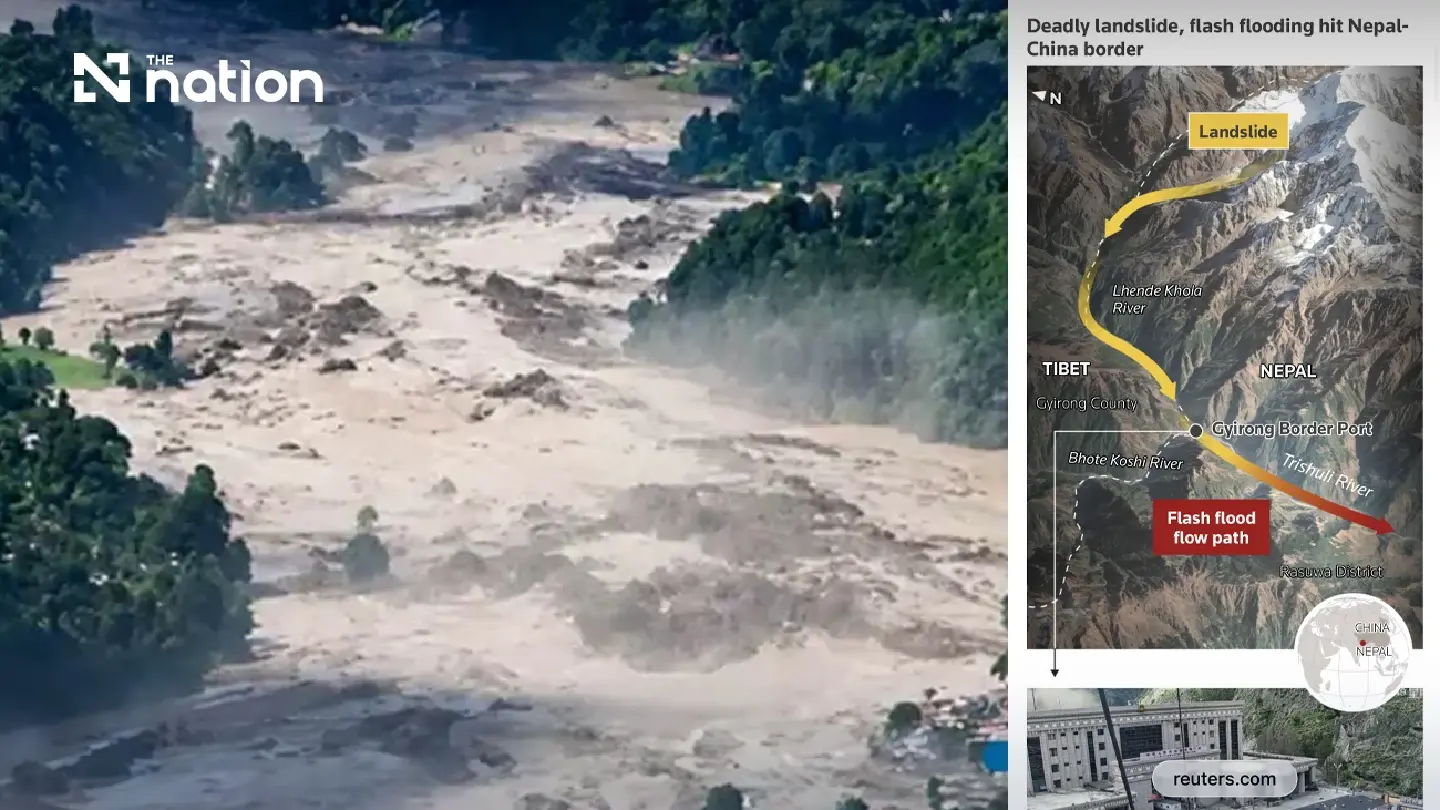


Nepal and China have issued new flood warnings as two debris-dammed lakes near their border continue to rise and risk bursting.
Nepal and China issued fresh warnings on Thursday over the risk of further flooding in the Himalayas, as two newly formed lakes on opposite sides of their border threatened to burst in an area already devastated by severe floods this week.
Search-and-rescue operations continued across debris-filled valleys and mountain slopes after Wednesday’s flooding swept through border areas of Nepal and China’s Tibet region.
Nearly 1,000 people remained missing, while at least 362 deaths had been reported.
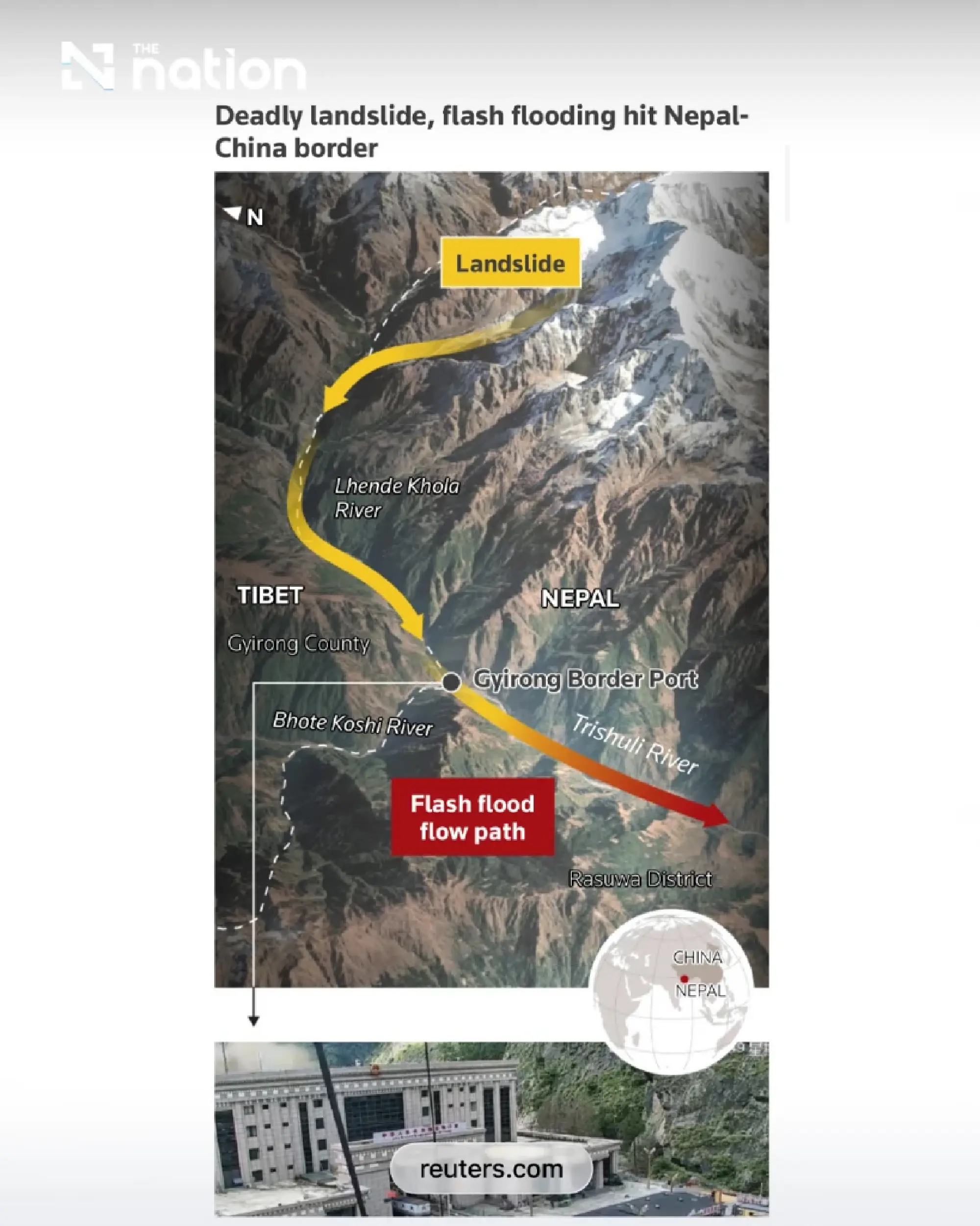
Both countries said the disaster was triggered by a glacier collapse that sent rock, ice, mud and other debris into the mountain river system.
Nepal warns debris-dammed lake is rising
Nepal’s disaster-management agency said a lake formed after debris blocked a river near the flood zone was continuing to rise and could breach its natural barrier.
The agency urged residents living downstream, travellers, rescue workers involved in search operations and all other people in the area to exercise extreme caution.
People were advised to remain in safe locations away from riverbanks and other areas at risk of further flooding.
Three million cubic metres of water expected
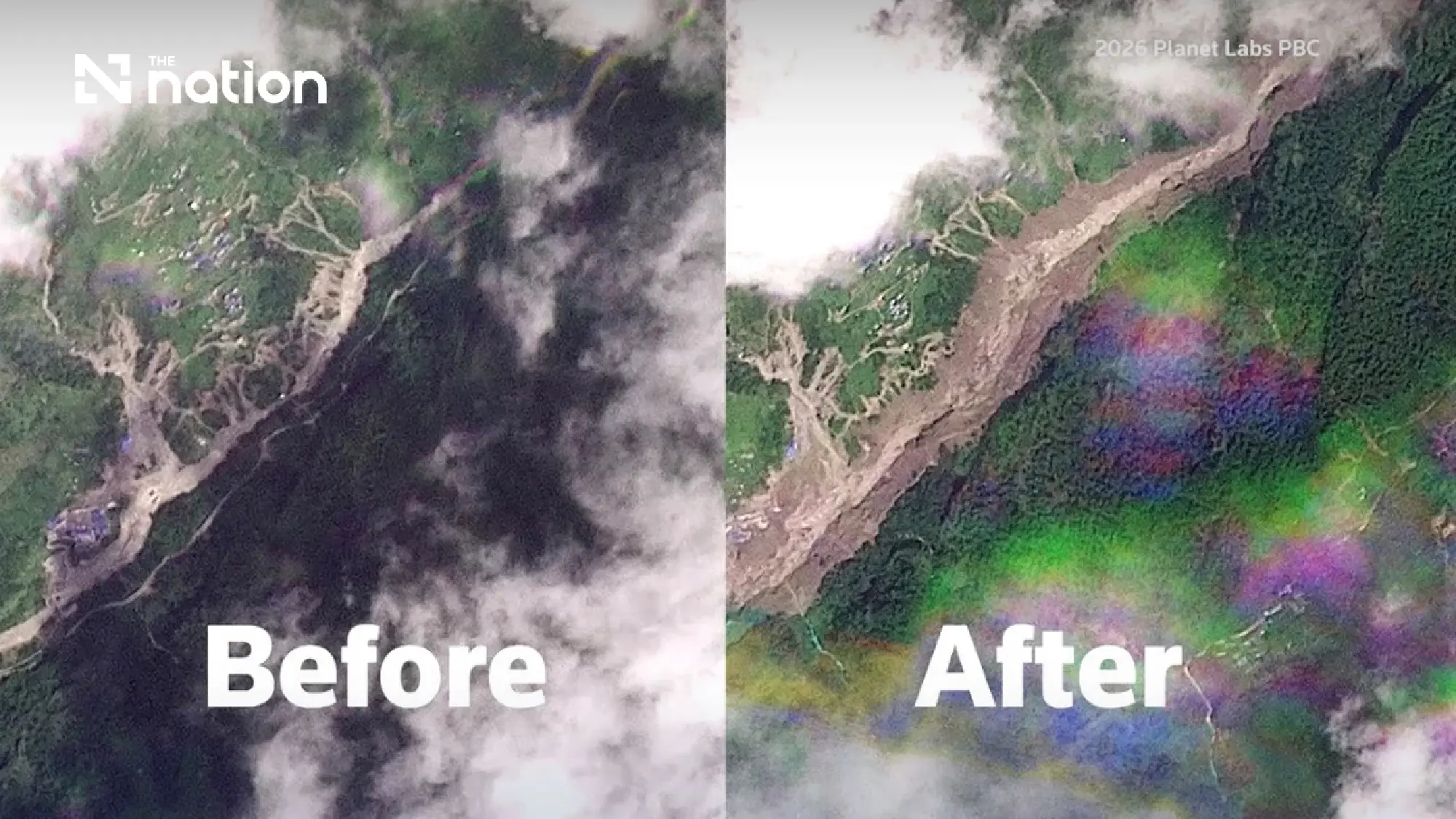
China separately warned that approximately three million cubic metres of water — equivalent to about 1,200 Olympic-sized swimming pools — was expected to flow into another debris-dammed lake on the Chinese side of the border over the following three days.
Authorities said the additional inflow created a high risk that the barrier holding back the lake could fail.
The volume of incoming water was expected to peak around September 1.
Chinese state broadcaster CGTN reported that a rescue team had recorded aerial footage of the newly formed lake on Thursday.
The images showed a large volume of brown water accumulating in a basin with no visible outlet. Some bushes and trees had already been submerged, while the water appeared to be pressing against a barrier made up of rocks and other debris.
Further rain could increase danger
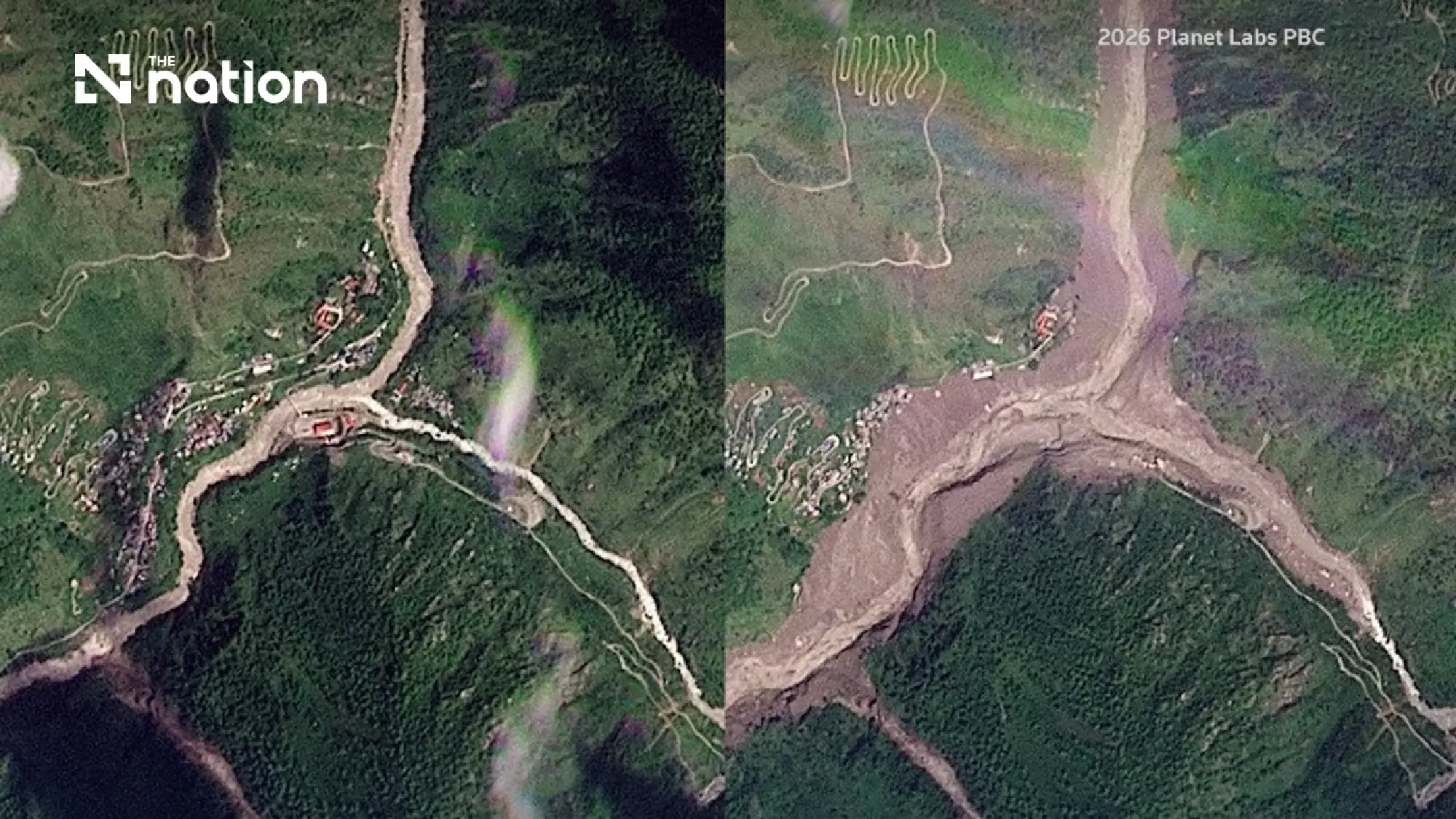
Chinese state media reported that rainfall forecast for the coming week could worsen the threat, citing information from the country’s Ministry of Water Resources.
Water levels were continuing to rise, increasing the possibility that the natural barrier could collapse and release another destructive surge downstream.
Following the warning, some rescue personnel in Nepal began moving to higher ground as a precaution.
