
Japan’s World Heritage sites increasingly chosen as wedding venues
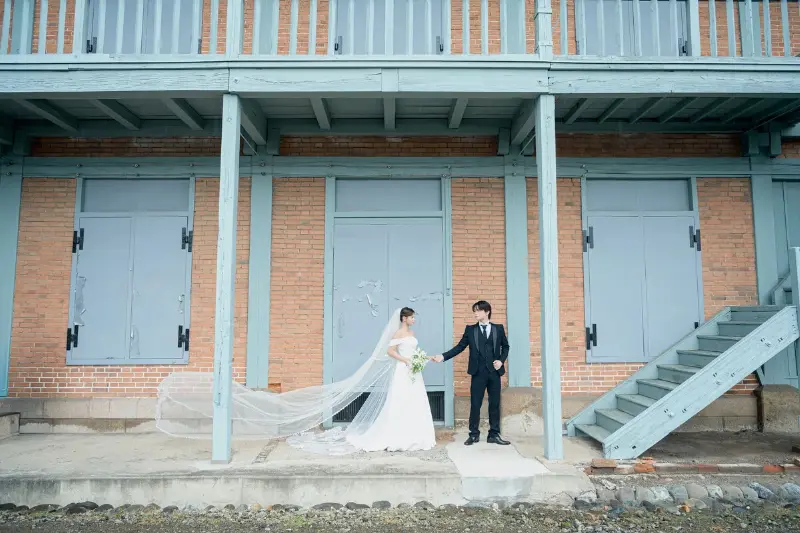


Wedding dates fill a year ahead at Itsukushima Shrine in western Japan, while Nikko Toshogu Shrine in the east has 45 ceremonies on its calendar for 2026.
- An increasing number of couples in Japan are choosing UNESCO World Heritage sites for their weddings, seeking a sense of permanence as many conventional venues close down.
- Local authorities support this trend, viewing it as a way to preserve cultural properties as "living heritage" by keeping them actively in use.
- Popular sites like the Tomioka Silk Mill and Itsukushima Shrine are in high demand, but require special protective measures such as banning open flames and limiting the number of ceremonies.
- The prestige of marrying at a globally recognized historic location is a significant draw for both Japanese couples and those traveling from overseas.
Couples can now book a wedding in a building designed to hold silkworm cocoons.
The West Cocoon Warehouse dates from 1872 and forms part of Tomioka Silk Mill in Tomioka, a city in eastern Japan’s Gunma Prefecture.
Weddings at the mill are expected to start around March 2027.
With many conventional wedding venues closing for financial reasons, more couples are choosing Japan’s UNESCO World Heritage sites.
For many, the appeal lies in making lifelong memories somewhere they believe will still be there years from now.
Some couples travel from overseas for their wedding.
Local authorities welcome weddings as a way to keep cultural properties in use while protecting them.
At the mill, which the city of Tomioka manages, the warehouse has national treasure status.
Its multipurpose hall has been available for public hire since 2022 and has hosted a concert.
Couples can use both the hall and the yard in front of the warehouse for their ceremony and reception.
A city official welcomed the plans, saying, “We hope many people will use the facility so that it can be preserved as a ‘living heritage.’”
“We have to be very careful with the preparations,” said Mizuki Tamura, an official at Memolead Corp.
Based in Maebashi, also in Gunma Prefecture, the company organises weddings and funerals and began taking bookings for the mill in October.
It plans to carry in all the equipment it needs by hand to protect the property.
A ban on open flames means guests will eat boxed lunches prepared off site.
For many couples who married at Itsukushima Shrine in western Japan, the chance to make their vows at a historic site recognised by UNESCO was what made the ceremony special, said wedding planner Maki Shinbara.
Relatives who attended were often deeply moved, she said.
At the shrine in Hatsukaichi, Hiroshima Prefecture, the blue of the sea and sky sets off the vermilion corridors.
Wedding dates fill a year ahead. The shrine now accepts at most two couples a day, having once taken bookings for about 400 weddings a year.
Harue Honda has seen a change at Nikko Toshogu Shrine in the eastern city of Nikko, Tochigi Prefecture.
The wedding planner said most couples once chose the shrine, known for its richly decorated buildings, specifically for its World Heritage status.
Since many venues shut during the Covid-19 pandemic, more couples have come because they want the setting of their wedding to endure.
The shrine has 45 weddings scheduled for 2026.
Tourists sometimes stop to watch, and Honda recalled how pleased one couple were when onlookers applauded and offered their congratulations.

[Copyright The Jiji Press, Ltd.]
