
Diplomacy in verse


Play
Russia’s envoy to Thailand Kirill Barsky talks about his passion for Asia and poetry
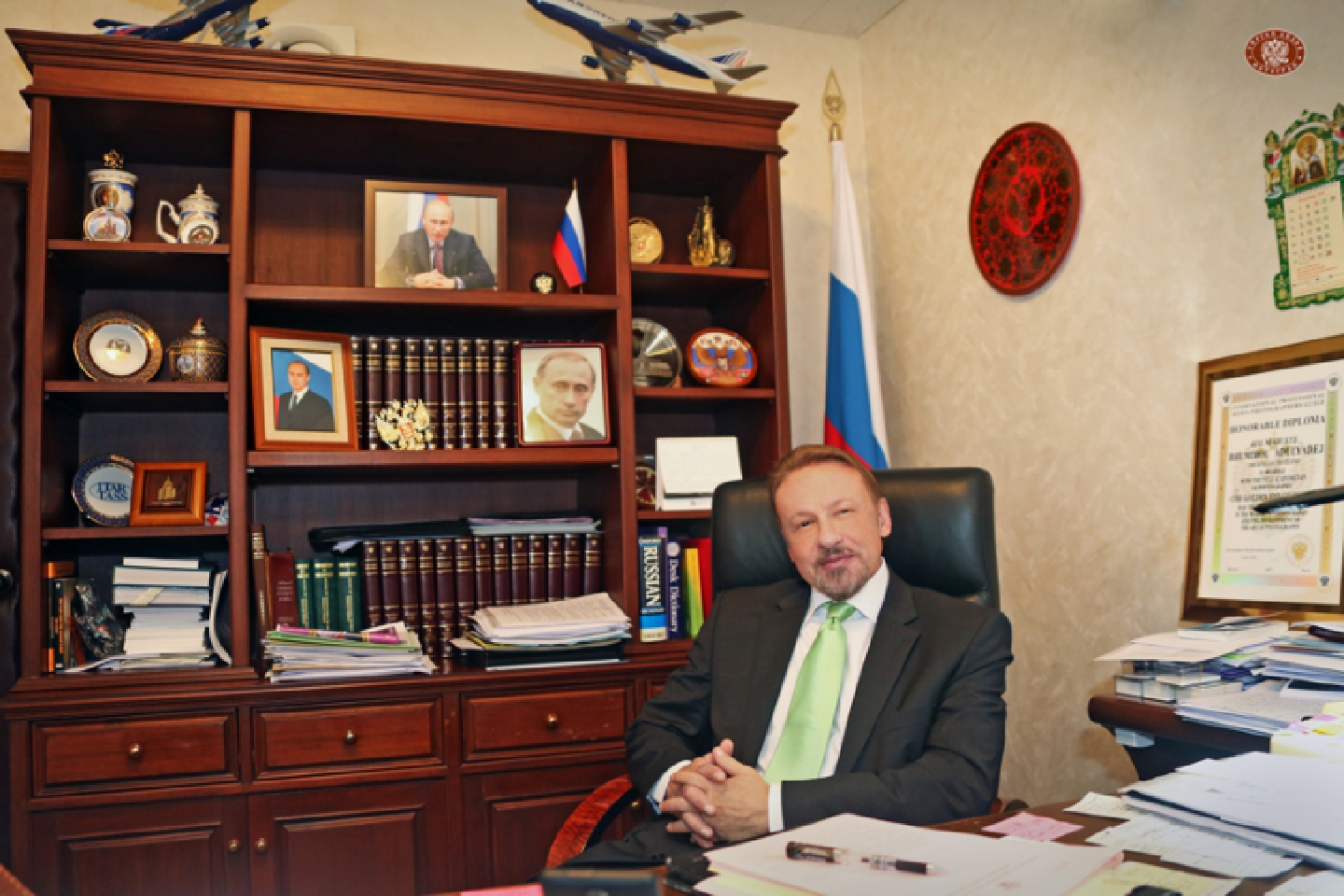
The Russian Federation’s Ambassador Extraordinary and Plenipotentiary and Permanent Representative to the United Nations Economic and Social Commission for Asia and the Pacific since October 2014, Kirill Barsky is also an accomplished poet. In a recent interview with Russia Beyond The Headlines, he explained how poetry helps diplomats meet their creative potential. Excerpts:
It is said that your interest in Asia goes well beyond the professional realm and that you are passionate about the diverse cultures of the continent. Would that be accurate?
Yes. I began learning Chinese when I was a student and later secured a one-year internship in China. Three years after returning from China, I was recruited by the Foreign Ministry and went to China as a diplomat, an employee of the Soviet Embassy. I worked there for almost six years. During that time I studied the culture, history and language, without which the understanding of the East is simply impossible.
My diplomatic career has also been, in one way or another, associated with the East: I worked in Indonesia, was the Special Envoy for the Shanghai Cooperation Organisation Affairs and now I am the Russian ambassador to Thailand.
This is not just a natural career development. This is destiny, if you like.
Why did you choose to specialise in Chinese and Oriental studies at university?
1982 was not the best year for Sino-Soviet relations. We had a big fight with China in the 1960s. In the 1970s, it almost came to a serious armed confrontation, and by the 1980 relations were absolutely at a zero level. More than that, the deployment of Soviet troops into Afghanistan negatively impacted the slow warming of Sino-Soviet ties, sending them to the abyss.
Against this backdrop, of course, my application to learn the Chinese language was widely perceived as a fad. I was discouraged and understood that this was probably a very unpopular decision. But it only encouraged me. The internship in China, which had just started opening to the outside world and restoring a normal life after the ‘Cultural Revolution,’ was special. It was an amazing time!
In 1983, an agreement was reached on the resumption of student exchanges between the USSR and China. It was one of the first signs of the normalisation of relations.
To what extent did your theoretical understanding of China coincide with the reality?
We were very savvy students, because we came after three years of study – we already knew a lot about China's history, culture, economy, literature and political system.
But the reality, of course, tweaked our understanding a lot. China turned out to be a country with a huge population, which was felt at every step – from the crowding of students living in the dormitory to the incredible hustle on the streets of Beijing.
China was a very poor country. You cannot imagine how difficult life was for the Chinese in those years. So today, watching their progress, one is struck by how much they were able to do in 30 years.
The language also turned out to be different from what we had imagined. It turned out that we absolutely did not know how to speak it.
Therefore, the greatest discovery was that spoken language was very different from the written language. We managed to overcome it all with the help of our Chinese teachers, classmates and friends, who involved us in both studies and cultural life.
Besides diplomacy, you are also engaged in poetry. You have a cycle of poems dedicated to China. Did you start to write them back in those student years?
Every person who writes poems comes to poetry in their own way. I began writing poems at a very early age. I never gave it much importance.
I began to write poems ‘on an industrial scale’ much later, when I realised that I just could not exist without it. I do not consider myself either a poet or prose writer. It's just a natural form of my existence in this world.
In those years, China made a very strong impression on me. And, I think, it has left an indelible mark on the formation of my character, on me as a person, on some of my spiritual and moral foundations.
In one of your collections of poems you were wondering whether to ditch everything and do what you love- that is poetry. How do you manage both diplomatic work and poetry?
This is an impossible dream. In my case, as in the case of most people, who are engaged in some serious craft, it is impossible, but it is very desirable, it is sometimes nice to daydream about.
I do not see any contradiction between what I do professionally and my poetic work. Russian Foreign Minister Sergei Lavrov wrote about it very convincingly in his preface to a collection of Russian translations of Chinese poems, which came out recently. He is a talented poet himself, so he knows what he is talking about.
Poetic background helps the diplomat to formulate his thoughts, which he expresses in his professional activity, correctly, gracefully and beautifully.
Love for poetry helps a diplomat to find the keys to the hearts and souls of people. Speaking at a reception on the occasion of, for example, Victory Day, I think there would be nothing wrong for the ambassador to read some poem. And this is a very powerful means for diplomacy to influence the audience that the diplomat addresses.
