
Indonesia and the South China Sea ‘White Hull race’
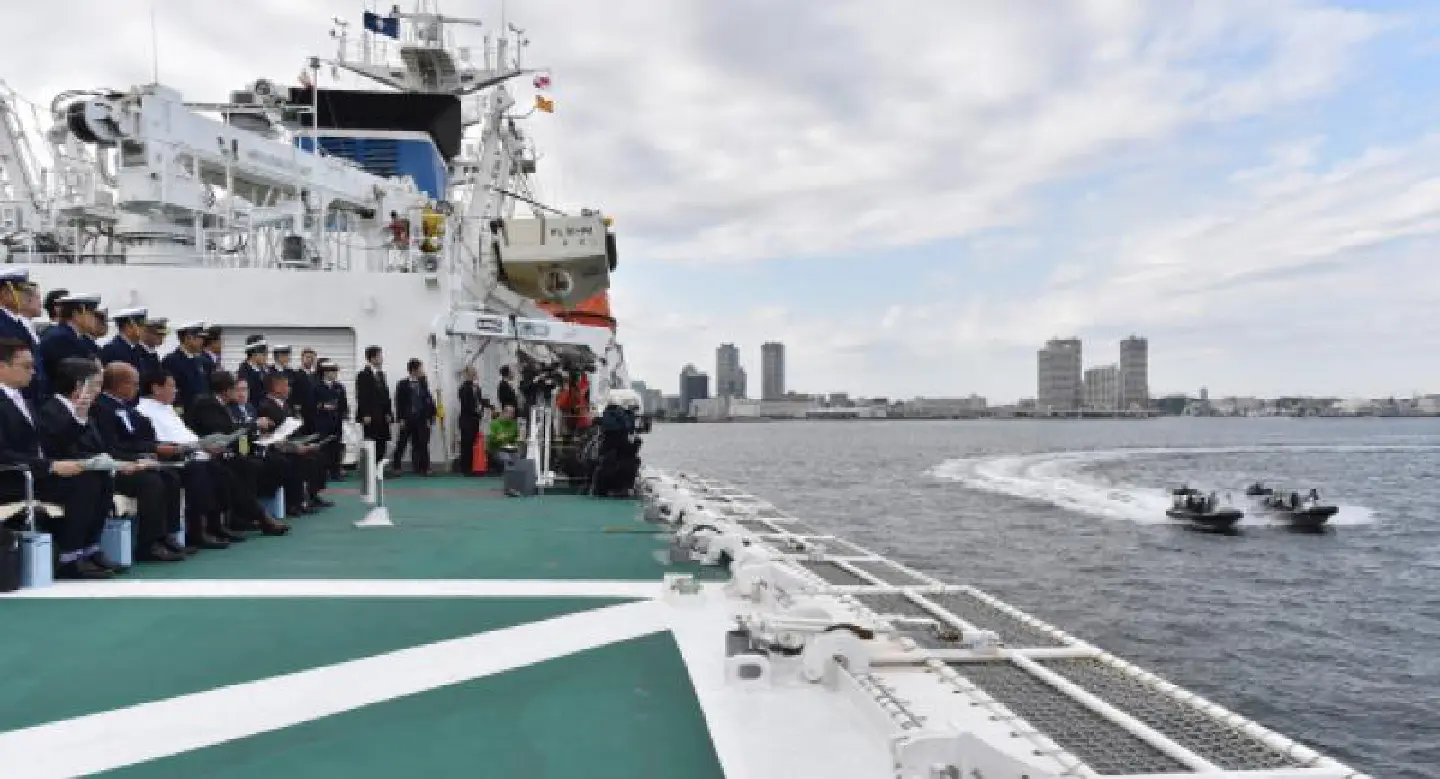


Indonesia’s show of military force in the South China Sea’s contested Natuna Islands last October, which included manoeuvres by the Air Force, sent a strong message.
President Joko “Jokowi” Widodo himself oversaw the exercise, which underlined to regional neighbours that Indonesia’s territorial integrity is in capable hands. Without a doubt, Indonesia’s military assets were shown to be ready for any future contingency.
At the same time, the election of Donald Trump as US president has brought new uncertainty to international relations and the balance of power – especially in the Asia-Pacific region.
With Philippine President Rodrigo Duterte cosying up to Beijing, the visit of a US warship to Vietnam’s Cam Ranh Bay naval base and China’s continuing assertion of territorial claims, it is clear that military power will continue to be a defining element of the South China Sea conflict.
But the question of what would be a possible trigger for an open conflict in the South China Sea should be the primary concern of all decision-makers. Is it likely that a military incident would trigger an unwanted clash? Or are there any overlooked non-military factors more likely to start one?
Coast-guard fleets
The question might have an answer in the development of “White Hull” armadas in the South China Sea. This idea was echoed by Singapore’s Defence Minister Ng Eng Hen on the sidelines of a meeting of Asean and US defence ministers in Hawaii recently. He mentioned that incidents might “have very little to do with military ships” and are more prone to be triggered by coast guards and fishing vessels asserting their country’s territorial claims.
The concern is backed by strong evidence that China is beefing up its coast guard’s capacity. Other primary players seemed already to be alarmed by the development, and the US has transferred three of its Hamilton-class coast-guard cutters to the Philippines. These events may signal the start of a “White Hull race” in the region.
Indonesia has already been drawn in. One of its frigates, the KRI Oswald Siahaan-354, encountered a Chinese Coast Guard vessel while it was arresting a Chinese fishing boat last May. Indonesian fishing authority vessels previously faced several run-ins with the Chinese Coast Guard while conducting their duties.
Indonesia’s Maritime Security Board (Bakamla) is currently boosting its capabilities with an Integrated Information System set to cover Indonesia’s vast waters.
However, the development of a functioning maritime security agency in Indonesia came with several challenges, since the military, police and other non-military institutions have overlapping jurisdictions.
Questions of effective coordination, information sharing and unity of command have yet to be resolved among maritime security stakeholders.
There are at least three important features of a “White Hull race” of which Indonesia should be aware. First, coast guards or other White Hull authorities are prone to become disguised paramilitary fleets.
Second, as coast guards are categorised as non-military, sending a White Hull fleet can also be a more gentle gesture in a conflict situation. Consequently, Indonesia’s White Hull authorities need to be equipped with crisis-handling capabilities to avoid sparking larger and more severe incidents.
Third, means of communication and protocols to avoid clashes between White Hull authorities need to be bolstered among the South China Sea stakeholders. China’s recent opposition to including White Hull fleets in the new Code for Unplanned Encounters at Sea (CUES) arrangement with Asean countries is worrying. Such an arrangement should be a priority, with channels of communication such as regular meetings between coast guards and maritime law enforcement agencies from each country, to ensure mutual confidence is built.
Jakarta cannot afford to be left behind in the South China Sea’s “White Hull race”, but it must also play a role in directing the participants towards a peaceful conclusion.
