
VMware executive ponders changing face of computer networking, virtualising software
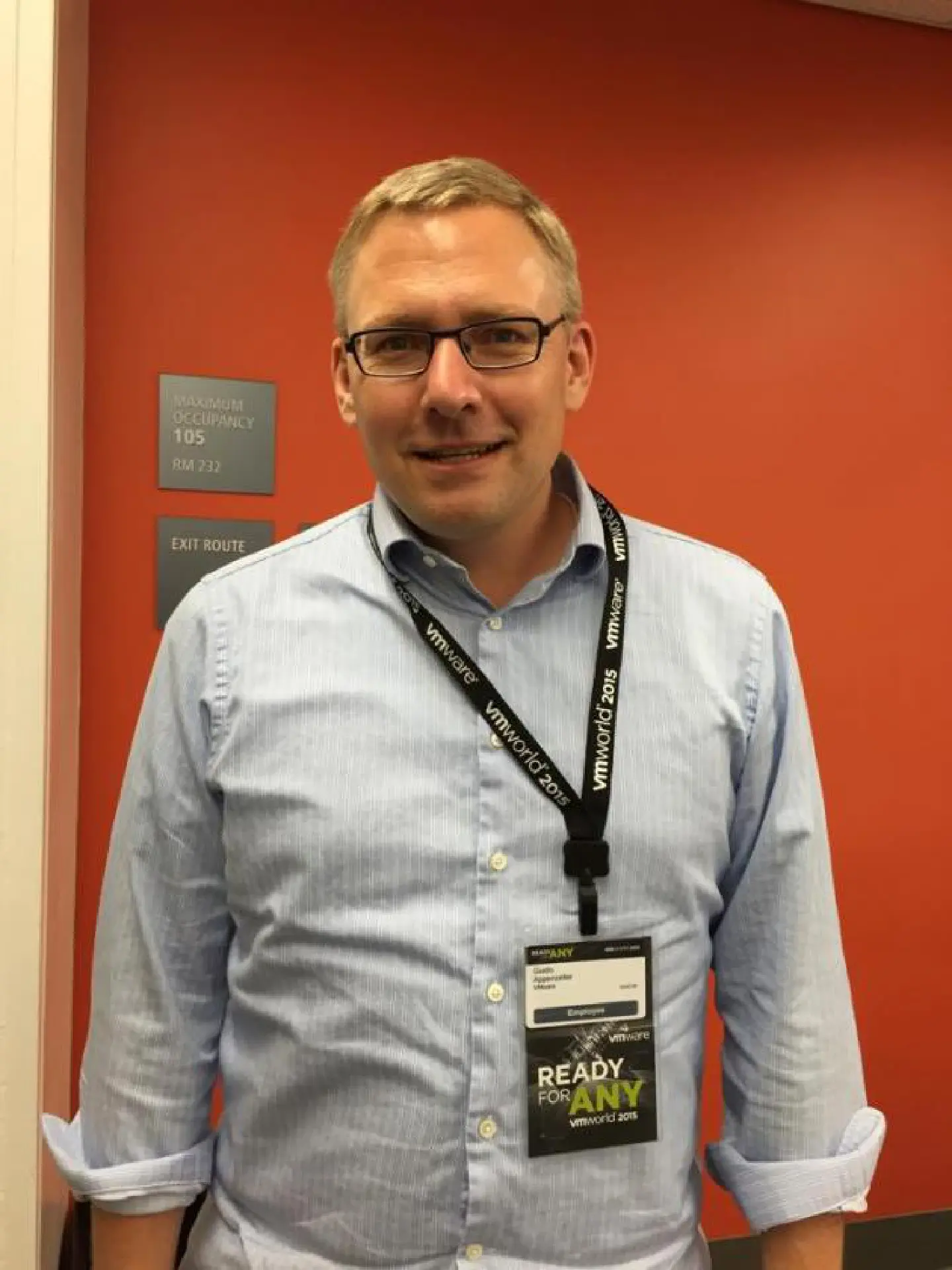


Guido Appenzeller, chief technology strategy officer in US-based software company VMware's networking and security unit, talks to The Nation's Jintana Panyaarvudh. They examine the way computer networking is changing and new announcements by VMware's s
What are the new announcements for VMware NSX at VMworld 2015 this
year and how will they benefit the industry?
We announced the new version of NSX or NSX 6.2 which has 20 new features. With NSX, it is possible to provide customers with an inherently secure infrastructure at a third of the cost of traditional approaches; to enable customers to use automation to help IT move at the speed of the business by reducing infrastructure provisioning times from months to minutes; to help customers improve application continuity and reduce recovery time objectives by 80 per cent.
It also adds better integration with physical infrastructure, enabling simplified and consistent operations for the entire data centre network and the extension of micro-segmentation to physical servers.
Which industries can adopt NSX?
At this point, it’s a very broad range. The first one will probably be large enterprises, financial institutions, banks, service providers, universities, travel and retailers. NSX is now being used by more than 700 customers, with over 100 cases in production deployments.
Can you give an example of a company’s usage of NSX?
Suppose you are a chief information officer (CIO) at a bank. While your IT budget is probably flat or not growing hugely any more, the number of applications you have to host is growing like crazy. Your developers are starting to become very impatient. I can go to Amazon with my credit card or I can use a server for two minutes and it doesn’t costs me much. But it will take two weeks for a CIO if I want a provision and it will cost me so much more. It’s a tough situation with a lot of pressure.
So they bring in NSX for a number purposes. The first is to basically be more agile, and respond more quickly to demands from their application teams.
Second, your problem is having more demands for applications but you can’t hire more people – so you need to get a high degree of automation. I need to automate, be able to offer self-service and at least give my IT team a tour so they can do twice as much than one at a time.
The next thing is security. Your CEO is coming and asking: how do we get our network more secure and what do we do for internal security? Honestly, not much but I say, okay just give me micro segmentation.
The other thing is you might be able to save capital expenditure by either extending the lifecycle of an existing network or building a cheaper physical network. Customers are still happy with the speed of our network but need additional features on the network so we have to buy new features. But we don’t need to do that because we can leave the network in place as it is by NSX.
So if you put all things together it is a very compelling business case.
What is your prediction for the way computer networking will be changed in five years from now?
The way computer networks work is fundamentally changing at the moment. For me, it’s a huge structure change if you look at how we administer servers. Software and hardware are separating and software is becoming a more prominent part of networking.
I think a couple of things will happen [with computer networking]. The first is a network can have 100 per cent sovereignty. That’s a big change from when VDO became a sovereignty industry and all blockbusters disappeared. That’s a big shift in terms of how the industry moves.
Secondly, networking will see a lot more connectivity, security, and access control.
Lastly, networking will get more integrated into the other parts of IT. It’s very classic for IT organisations that a server team, storage team, networking team, and security team hardly talk to each other – as if they did not like each other and were doing separate things.
But if you look at a modern bank, for example, the organising team is very different. They have a third-generation app cloud specialising in containers. They also have storage and network teams and computer experts. They work in teams. And they are getting organised a lot more by infrastructure that is supposed to be merely a function.
