
AI used to energise Japanese offices


TOKYO - This is the third and final installment of a series about Japan’s employment environment. When a team leader talks to staff more often, the organisation becomes more active.
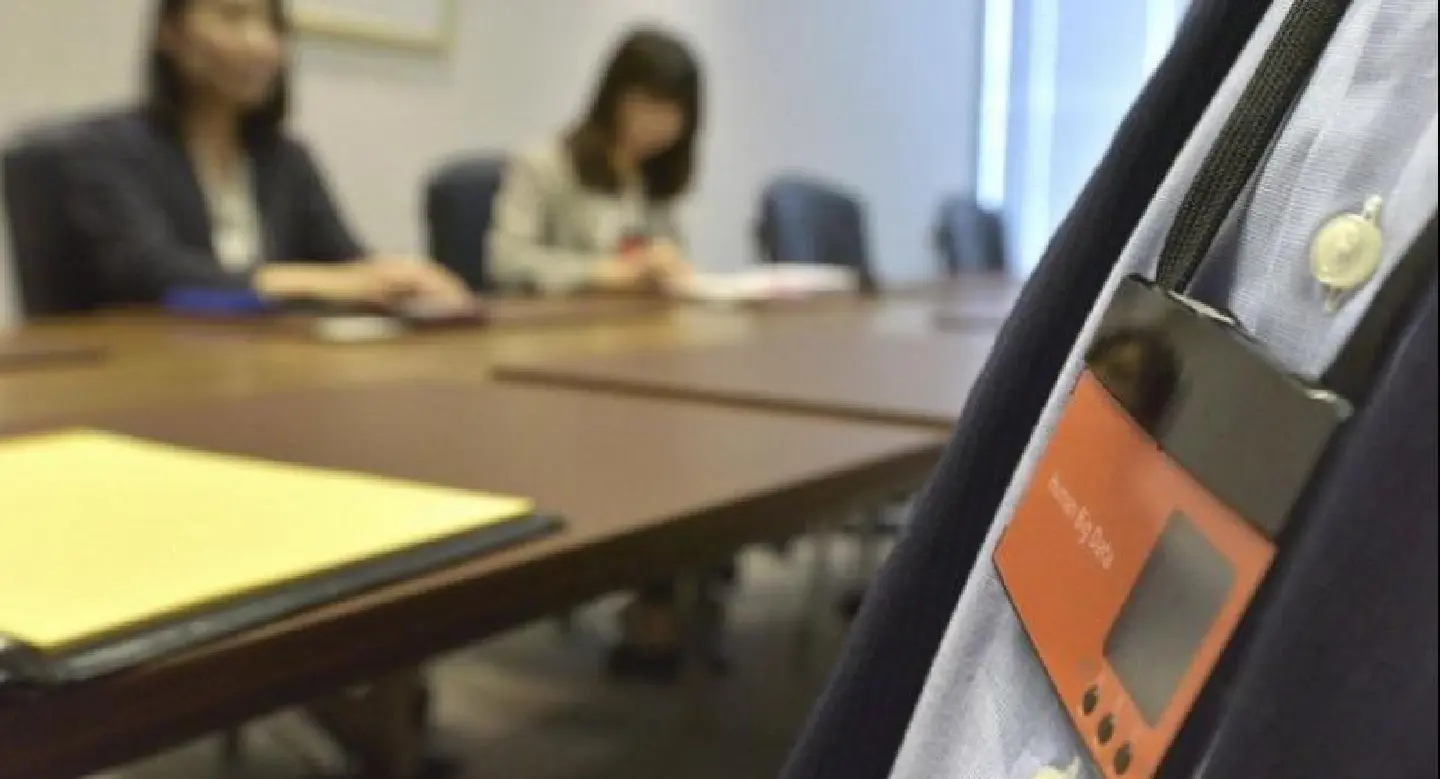
This is one measure that artificial intelligence devised to improve the working environment at the Bank of Tokyo-Mitsubishi UFJ Ltd., after collecting and analyzing data on the behavior of its employees at a call center for promoting asset management products.
AI also did trial calculations that implied the possibility of a 5 percent increase in the annual number of appointments for visits by customers, depending on the degree to which the organization was energized.
The analysis system was developed by Hitachi Ltd.
Employees are asked to wear a sensor in the shape of a name card around their necks, with the sensors accumulating such data as who talked to whom at what time and body movements. Based on the large amount of data, the system shows which actions by what person made someone happier and energized the workplace.
“With high satisfaction among employees, we can make our customers feel satisfied,” said manager Yuri Ajiki, 32.
Glasses developed by major eyeglasses chain Jins Inc. can monitor whether a worker is focused on their job. An electric bar installed in the nose pads detects blinks, viewing habits and other information. Receiving this data, a special app determines the condition of the worker and can also help determine when to take a break.
“[The glasses] help us work in more effective ways,” said Kazutaka Inoue, 33, who was involved in their development.
AI technologies and information technology are advancing remarkably. Some worry that AI may someday replace humans and do their jobs, but “humans can focus on jobs that create additional value” depending on how AI is used, said Takahide Kiuchi at Nomura Research Institute Ltd.
Daiwa House Industry Co. is working on introducing a program that deals with simple work via personal computers. The program, called “digital labor,” has automated such jobs as collecting data on the financial statements of group companies and checking data concerning staff’s working situation. It contributes to the improvement of long working hours.
“A friendly working environment helps make our company attractive when we look for employees,” said Yutaka Yamashita, the deputy general manager of the human resources department.
In staffing agency Neo Career Co.’s system, employees take photos of their smiles with a smartphone or tablet and AI analyzes them. If it detects something unusual, the company will interview the staffer or take other measures to help them deal with problems long before they become serious enough to be job-threatening.
“Our employees look glum when they feel pressed by work,” said Chiseko Takazawa, a managing director of Tokyo-based interior decorating company Marutaka Kogyo Co. “AI helps us with things that we can’t see well.”
Japan is entering an era where there will be a sharp drop in the working-age population.
Yoko Takeda at Mitsubishi Research Institute Inc., who served as a private-sector member of the government’s Council for the Realization of Work Style Reform, said: “We need to make efforts to realize various work styles. But utilizing technologies such as AI could change the industrial structure and likely boost growth potential.”
Companies are also being tested regarding their ability to cope with changes in the workplace.
