
Bangkok Moves to Plug Urban Property Loophole Used by Landowners to Avoid Taxes
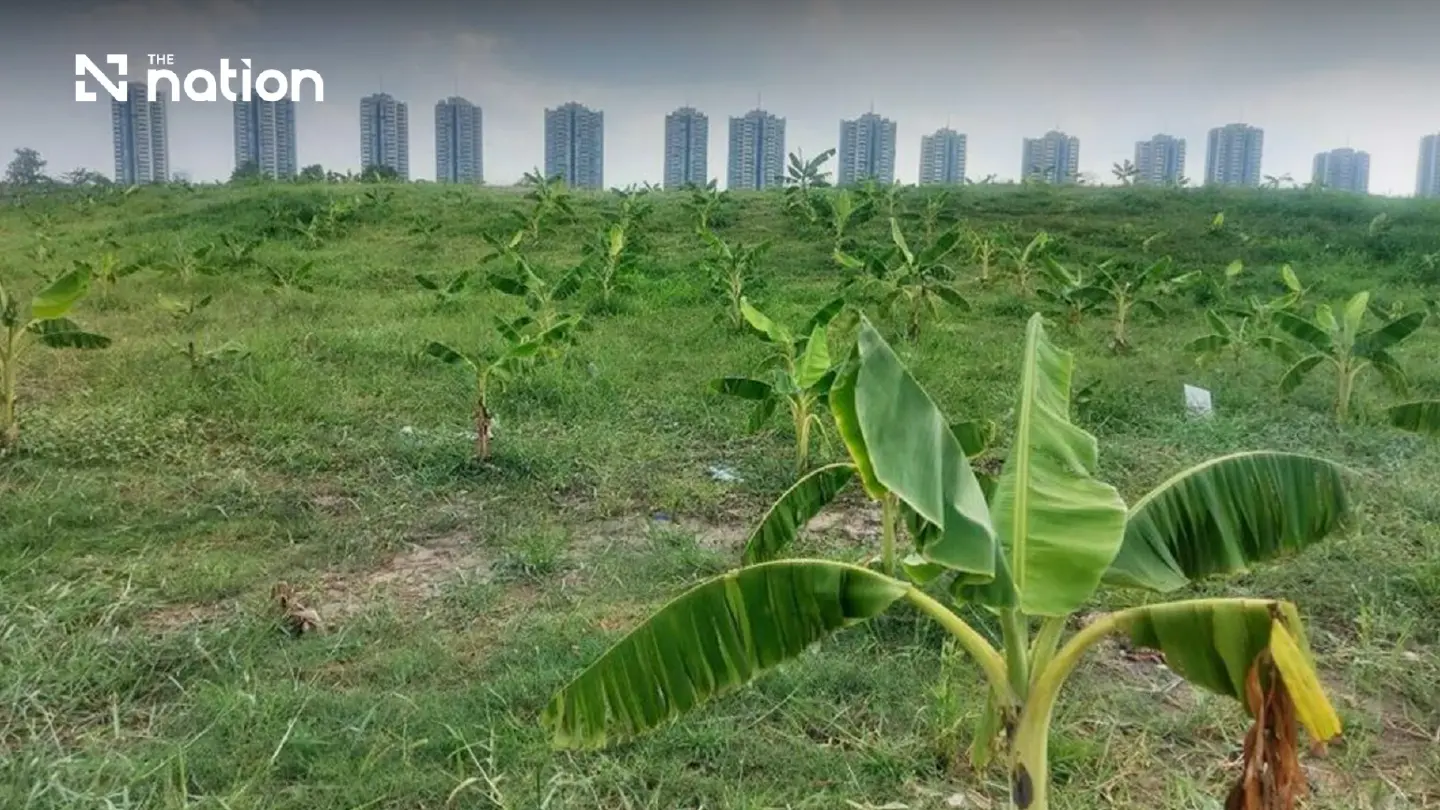


City Hall proposes raising agricultural land tax rates to discourage prime central site owners from planting token crops to evade higher liabilities
- Landowners in prime urban areas of Bangkok are planting minimal crops like bananas and limes on valuable plots to classify them as "agricultural land," which allows them to pay significantly lower property taxes than the rate for vacant land.
- To close this loophole, the Bangkok Metropolitan Administration (BMA) is proposing to raise the baseline agricultural land tax rate, potentially tripling it from 0.01% to 0.03%, to reduce the financial incentive for this practice.
- The proposed tax overhaul aims to restore tax equity, ensuring that owners holding idle, high-value land under an agricultural classification do not avoid taxes while commercial developers face higher burdens.
- An academic expert suggests that a flat rate increase is a superficial fix and recommends a more nuanced, zone-based tax system that aligns tax rates with the land's designated use in city planning laws.
City Hall proposes raising agricultural land tax rates to discourage prime central site owners from planting token crops to evade higher liabilities.
The Bangkok Metropolitan Administration (BMA) is preparing its first major overhaul of property tax collection in nearly seven years, aiming to close a loophole in the Land and Building Tax Act B.E. 2562 (2019) that has allowed prime urban plots to avoid vacant land levies.
Under current practice, owners of multi-million-baht plots in central Bangkok frequently cultivate small numbers of crops—such as bananas, limes, mangoes, or sugarcane—to reclassify their holdings as "agricultural land".
The tactic reduces their tax liabilities significantly compared to the rates levied on unutilised urban sites. Sources at Bangkok City Hall revealed that executive officials are drafting revised tax mechanisms to submit to Bangkok Governor Chadchart Sittipunt.
The proposal will require approvals from the Bangkok Metropolitan Council, the Ministry of Interior, and the Ministry of Finance to amend relevant ordinances.
Closing the "Pretend Farming" Discrepancy
A key proposal involves raising the baseline agricultural tax rate from the current 0.01%–0.10% range to 0.03%–0.12%. This triples the starting base rate from 100 baht to 300 baht per million baht of assessed land value.
While the numeric increase appears modest, the financial burden rises substantially for owners of central Bangkok plots valued in the hundreds of millions or billions of baht, reducing the financial incentive to maintain token urban crops solely for tax arbitrage.
Under current statutory rates, agricultural land attracts a 0.01%–0.10% tax rate, whereas vacant or unutilised land is taxed between 0.3% and 0.7%. Unused land left undeveloped for more than three consecutive years incurs an additional 0.3% surcharge every three years, up to the legal ceiling.
Ministry guidelines stipulate density requirements—such as a minimum of 200 banana trees or 20 mango trees per rai (1,600 square metres)—to qualify for agricultural classification. However, local authorities face practical enforcement challenges when inspecting large urban plots maintained purely for tax preservation.
City officials emphasise that the overhaul aims to restore tax equity, as active commercial developers currently bear significantly higher tax burdens than owners holding idle, high-value land under agricultural status.
Academic Perspective: Zoning-Based Taxing Over Flat Rate Increases
In a report published by Thansettakij, Assistant Professor Saharat Augnistasat from the Faculty of Law at Thammasat University observed that while reviewing agricultural tax rates is timely, relying solely on a flat rate increase addresses symptoms rather than root causes.
Asst Prof. Saharat pointed out that setting a single citywide tax increase could trigger unintended consequences, such as landowners clearing green spaces or selling off suburban plots to minimise tax liabilities.
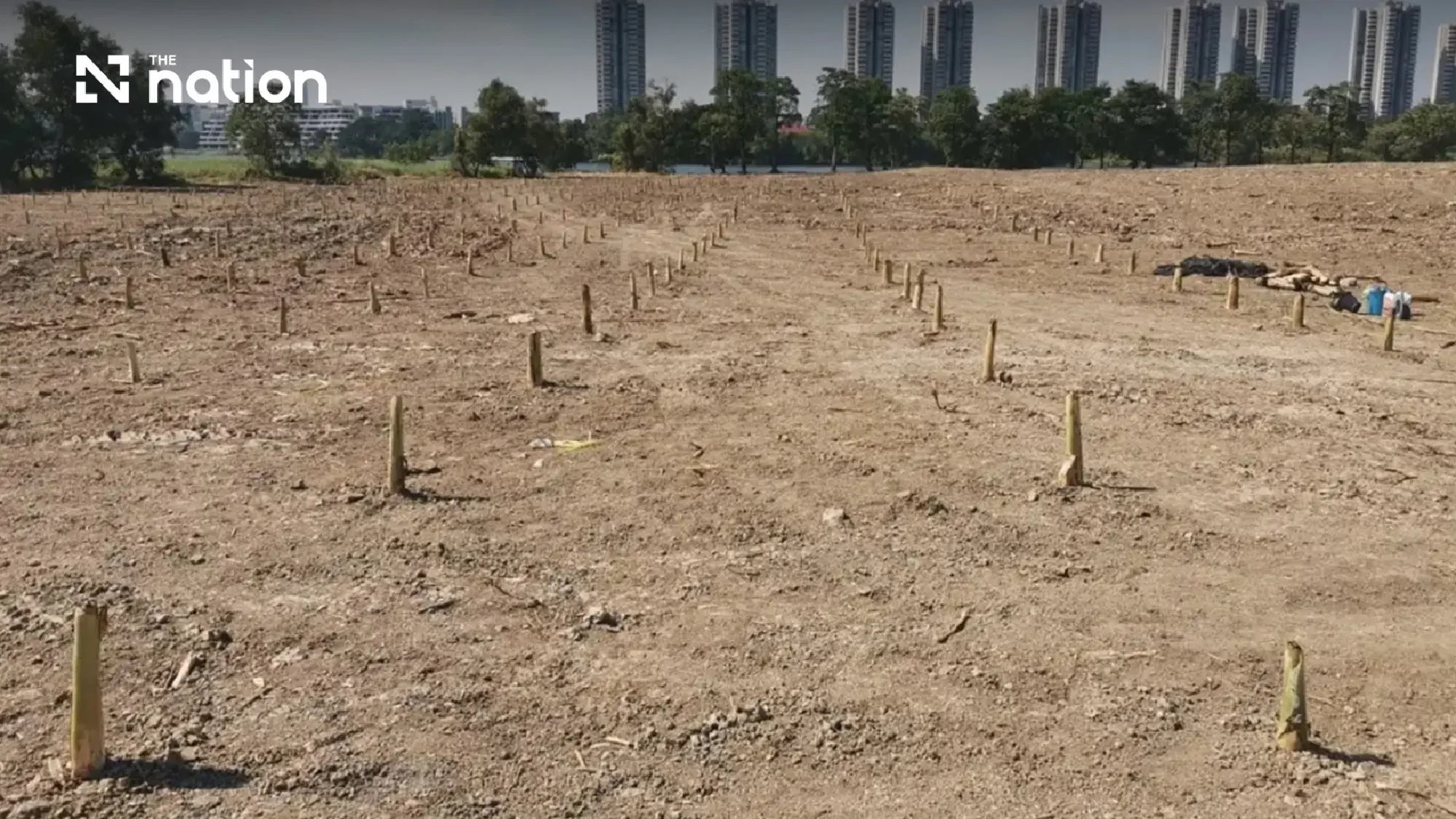
He noted that agricultural activity in outlying districts like Nong Chok carries a vastly different urban planning context than farming in central business districts like Silom or Bang Rak.
He recommended that the BMA utilise its statutory flexibility under the Land and Building Tax Act to align tax rates directly with land-use categories defined by city planning laws.
In the longer term, he advocated amending the primary legislation to explicitly support zone-based tax structures tied to urban planning.
Furthermore, regarding proposals to lower the tax exemption threshold for agricultural land from 50 million baht to 20 million baht, Asst Prof. Saharat noted that tax mechanisms must be integrated with broader land management strategies—including environmental protection, social equity, and housing affordability—rather than being used strictly as revenue-raising tools.
