
Bridging the Tech Rift: How Southeast Asia’s Giants are Forcing an AI Talent Revolution
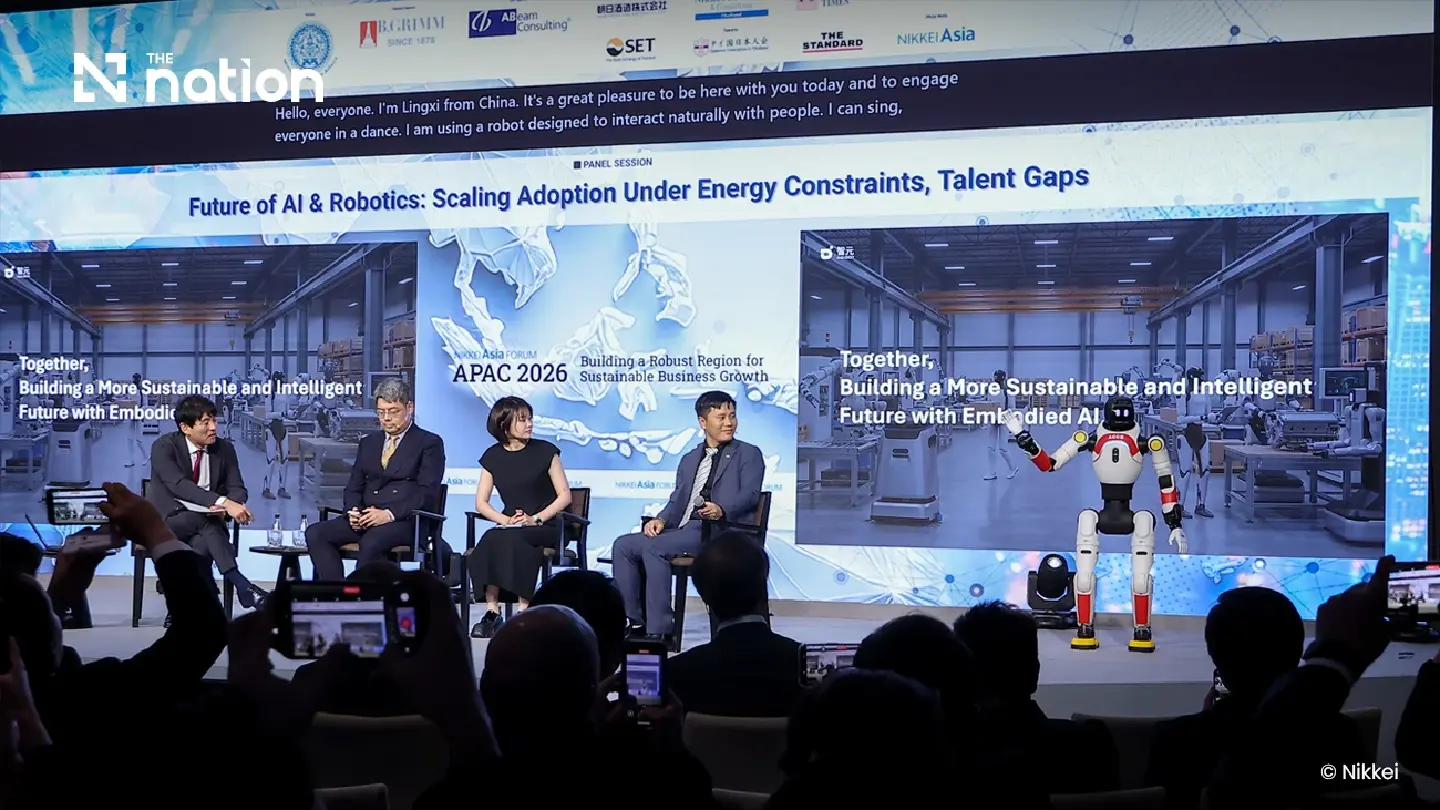


Facing severe engineering deficits, tech leaders at the Nikkei Asia Forum outline massive upskilling strategies while positioning ASEAN as a neutral zone
- Southeast Asian tech giants are tackling a severe shortage of AI talent by initiating massive internal upskilling programs, retraining their existing workforces into AI specialists.
- The talent revolution focuses on practical application, training engineers to deploy "embodied AI" like humanoid robots in real-world manufacturing and logistics settings.
- The region is strategically positioning itself as a neutral "digital sanctuary" by pragmatically combining the best of US and Chinese technologies to bypass geopolitical friction.
Facing severe engineering deficits, tech leaders at the Nikkei Asia Forum outline massive upskilling strategies while positioning ASEAN as a neutral zone.
An absolute consensus has emerged among Southeast Asia's premier technology pioneers: the greatest threat to the region's hypergrowth digital economy is no longer hardware or capital but an acute, systemic shortage of technical human capital.
As billions of dollars in foreign direct investment flood into the regional data infrastructure, the capacity to deploy artificial intelligence and advanced robotics is hitting a structural wall due to gaping talent deficits.
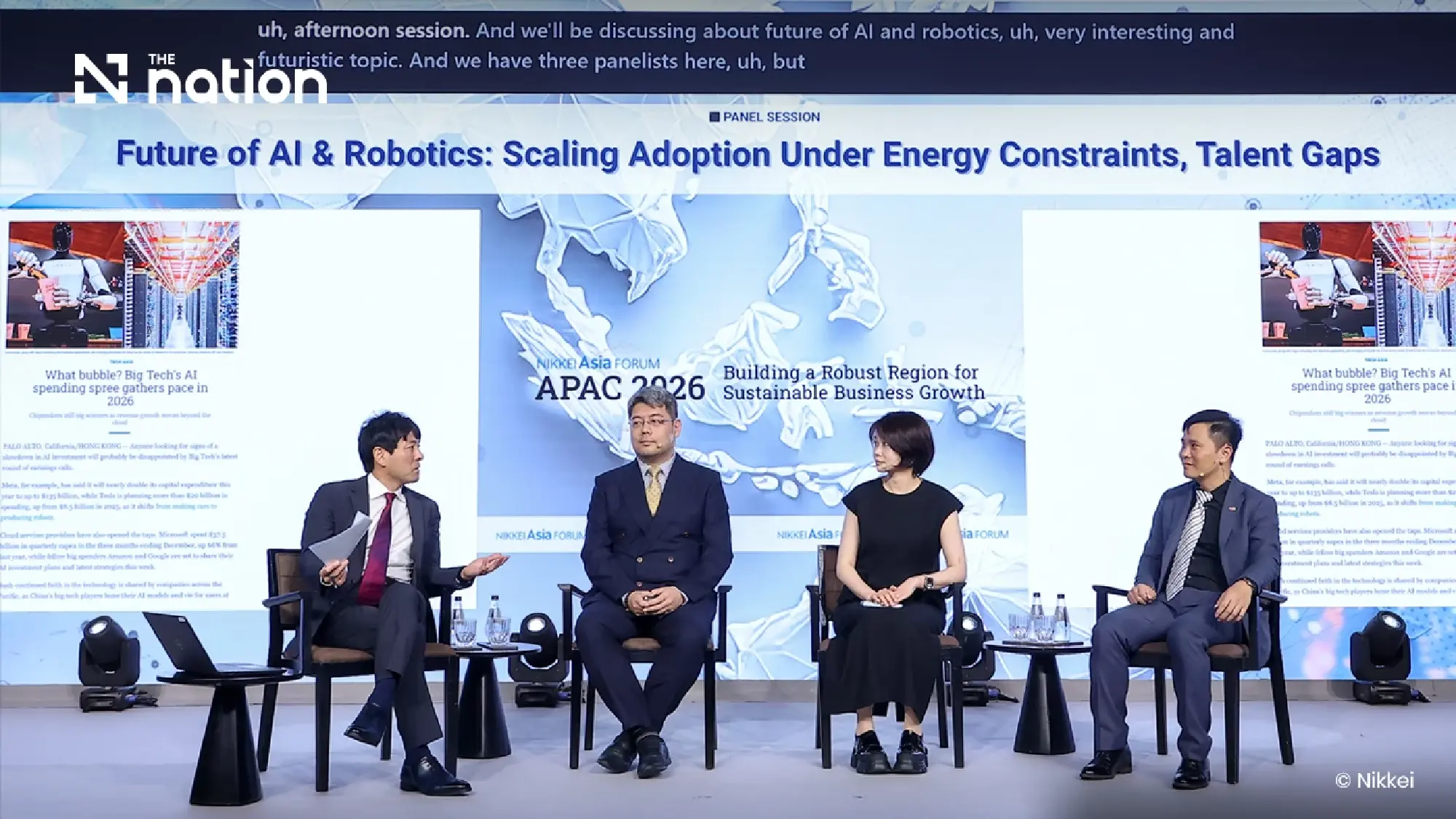
Speaking on a high-level panel at the Nikkei Asia Forum 2026 in Bangkok on Thursday, top executives from regional tech heavyweights, global hardware manufacturers, and robotics firms outlined a unified warning.
Independent studies validate this corporate anxiety: the Economic Research Institute for ASEAN and East Asia (ERIA) 2025/2026 digital briefs confirm that severe talent shortages and workforce mismatches are actively slowing AI adoption across the bloc.
Rather than waiting for state education systems to catch up, regional corporate leaders are taking matters into their own hands, initiating aggressive internal retraining models, structural automation, and a highly pragmatic geopolitical strategy that positions the Association of Southeast Asian Nations (ASEAN) as a unique, non-aligned digital sanctuary.
The Corporate Upskilling Counter-Offensive
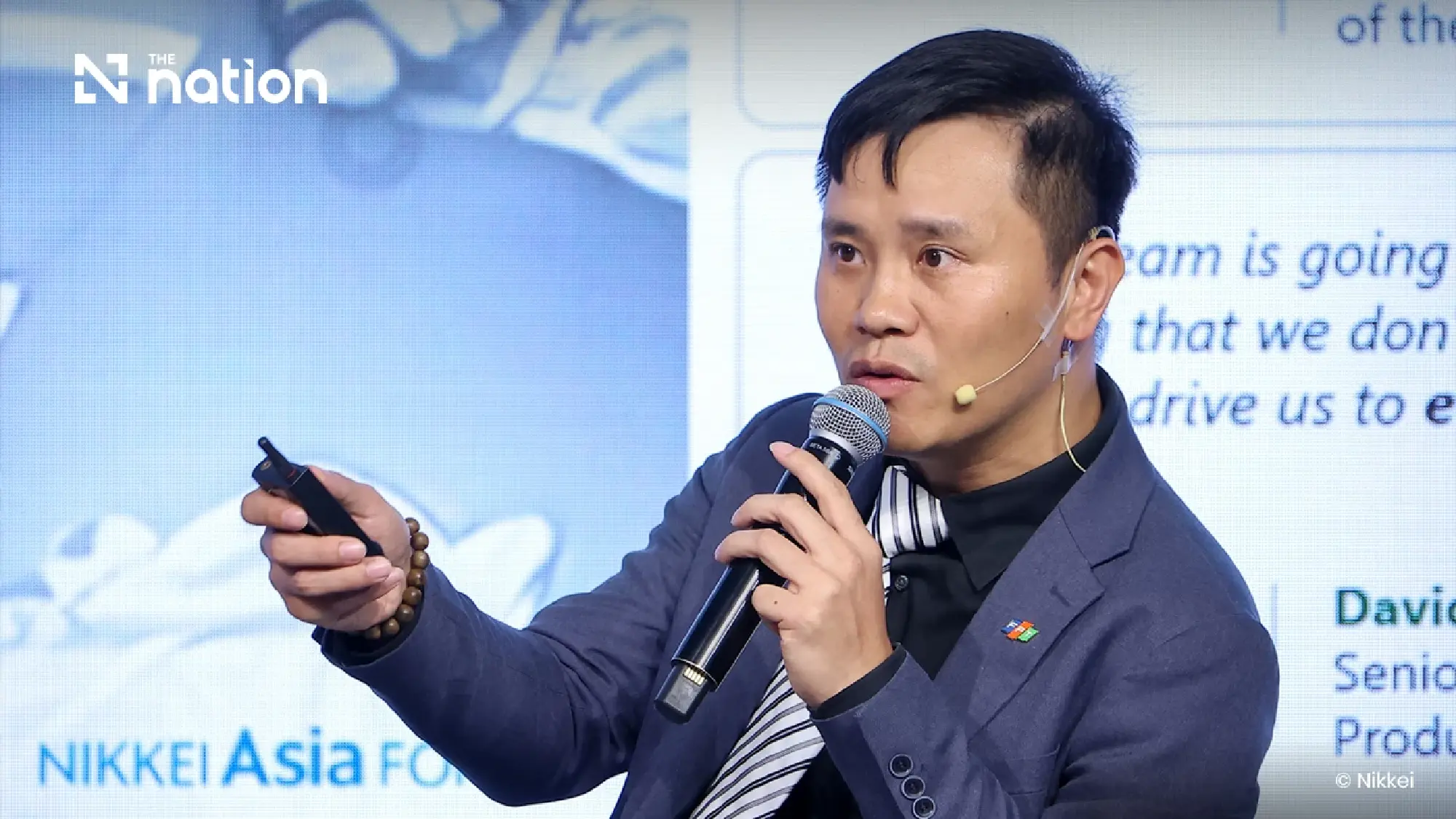
The strategy to overcome the engineering drought requires a radical corporate pivot from hiring to manufacturing talent. Leading this charge is FPT Corporation, the largest IT services provider in Southeast Asia.
Rather than competing in an over-saturated global market for finite pre-trained geniuses, the firm has instituted a massive internal factory model to systematically upgrade its existing workforce.
Levi Nguyen, chief executive of FPT Thailand and FPT Taiwan, revealed that the company has successfully transitioned a staggering 30,000 traditional software engineers into "AI-augmented" tech talent.
Under this internal transformation framework, software developers are systematically upskilled into AI architecture specialists, and traditional project managers are systematically upgraded to AI product owners.
"The second point that we want to discuss maybe is how we have enough people to run the game and also how to let the people to be using the AI for improving the activity," Nguyen stated during the panel. "So education and up-skill people is very important... We have a heavy dedication to that besides this we partner with some of the highest level of provider to train our model."
To future-proof the pipeline, Nguyen detailed FPT's multi-tiered educational ecosystem, which currently boasts 170,000 students across various university and training frameworks. This includes comprehensive joint-curriculum partnerships with international tech giants like Microsoft to embed standardised AI modules directly into higher education.
"In FPT we run parallel AI transformation and people transformation," Nguyen explained. "So we need to make sure that we have the good change management for our people to adopt... the AI will improve their productivity and they get better paid."

Deployable AI vs. Theoretical Genius
For the robotics and physical AI sectors, the strategy to overcome the talent vacuum involves narrowing the scope of what an engineer needs to do.
Aimi Komatsu, director of Agibot Innovation (Shanghai) Technology, argued that the region does not immediately require abstract data scientists, but rather operational engineers capable of deploying "embodied AI" onto real-world factory floors and logistics hubs.
"Right now what we can see is we need more talented engineers," Komatsu observed. "Talent. Not only like the genius talent engineer but also the engineers who can really do the deployment and who can make the application work functionally."
Komatsu highlighted that the severe regional labour shortage in physical manufacturing is driving the demand for humanoid robotics, such as Agibot's own Lingxi X2 model, which can seamlessly navigate human-designed environments.
By relying on edge computing rather than constant cloud connectivity, operators can significantly lower the technical complexity required for field deployment.
"When you collect data, if the humanoid looks like a dog shape or a cat shape, actually human cannot really collect their exact shape," Komatsu explained, noting why human-shaped robots accelerate deployment. "But ahumans,n, we share the same place of the eyes, camera become eyes, right? And the two hands, two arms – they can work."
The Hybrid Advantage: ASEAN's Neutral Ground
As Western and Chinese technology ecosystems continue their aggressive macroeconomic decoupling, Southeast Asia is transforming its lack of monolithic domestic tech powers into a significant competitive benefit: the hybrid advantage.
By remaining strictly pragmatic and ideologically neutral, ASEAN companies are uniquely positioned to combine the premier elements of both American and Chinese innovations.
Wenchuan Liu, general manager of the Global Consumer Group at iFlytek, revealed that his company explicitly adopts this hybrid approach when launching hardware devices globally.
While the firm utilises its own proprietary large language models (LLMs) within China, it actively integrates alternative Western frameworks into its international office hardware, translation devices, and electronic smart notebooks to give consumers the most seamless local experience.
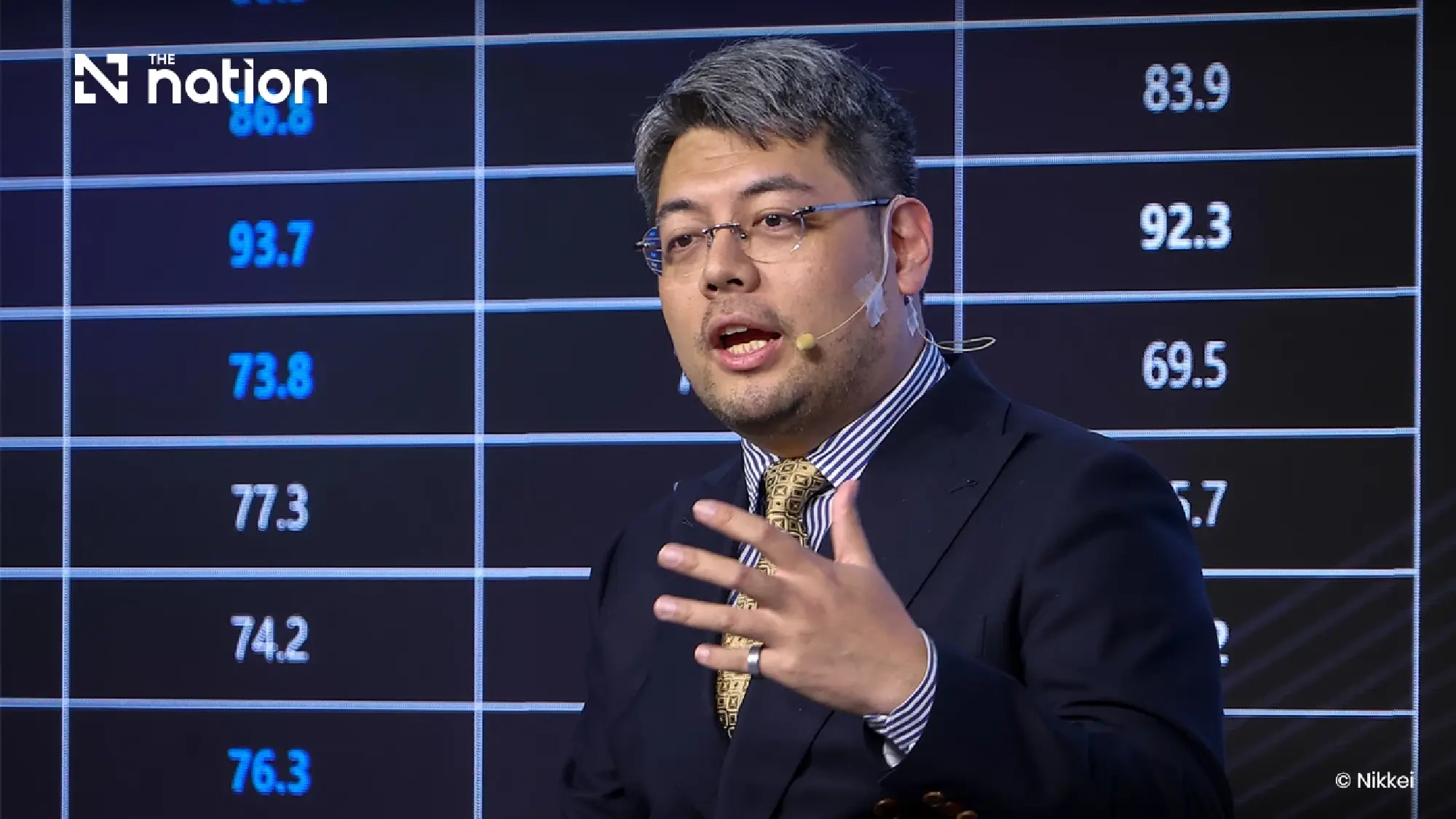
"So we had our own large language model, but we didn't use our large language model for every of our device," Liu stated. "Especially the global side, we are selecting the certain global large language model to feed the machine to provide the end user the experience... We just select the most fit one. Whatever is from China or from US."
Liu emphasised that creating hardware-plus-AI solutions focused purely on commercial productivity allows enterprises to bypass the broader political friction inherent in software applications.
"Most people, I think you are in touch with it and you are using it, but maybe 90 per cent of person still just use that as a big Google," Liu argued. "But actually the AI can do much more than that... We need to be more open to AI and utilise the AI and make it more efficient."
Ultimately, the panel concluded that Southeast Asia's strategy to navigate the impending tech rift is defined by a ruthless commitment to commercial utility.
By aggressively upskilling thousands of standard developers internally and remaining completely agnostic toward the source of the foundational models, ASEAN is successfully carving out a highly resilient niche as the global tech industry's most essential, pragmatic neutral ground.
