
WHA Group expands WeCYCLE initiative towards a low-carbon society
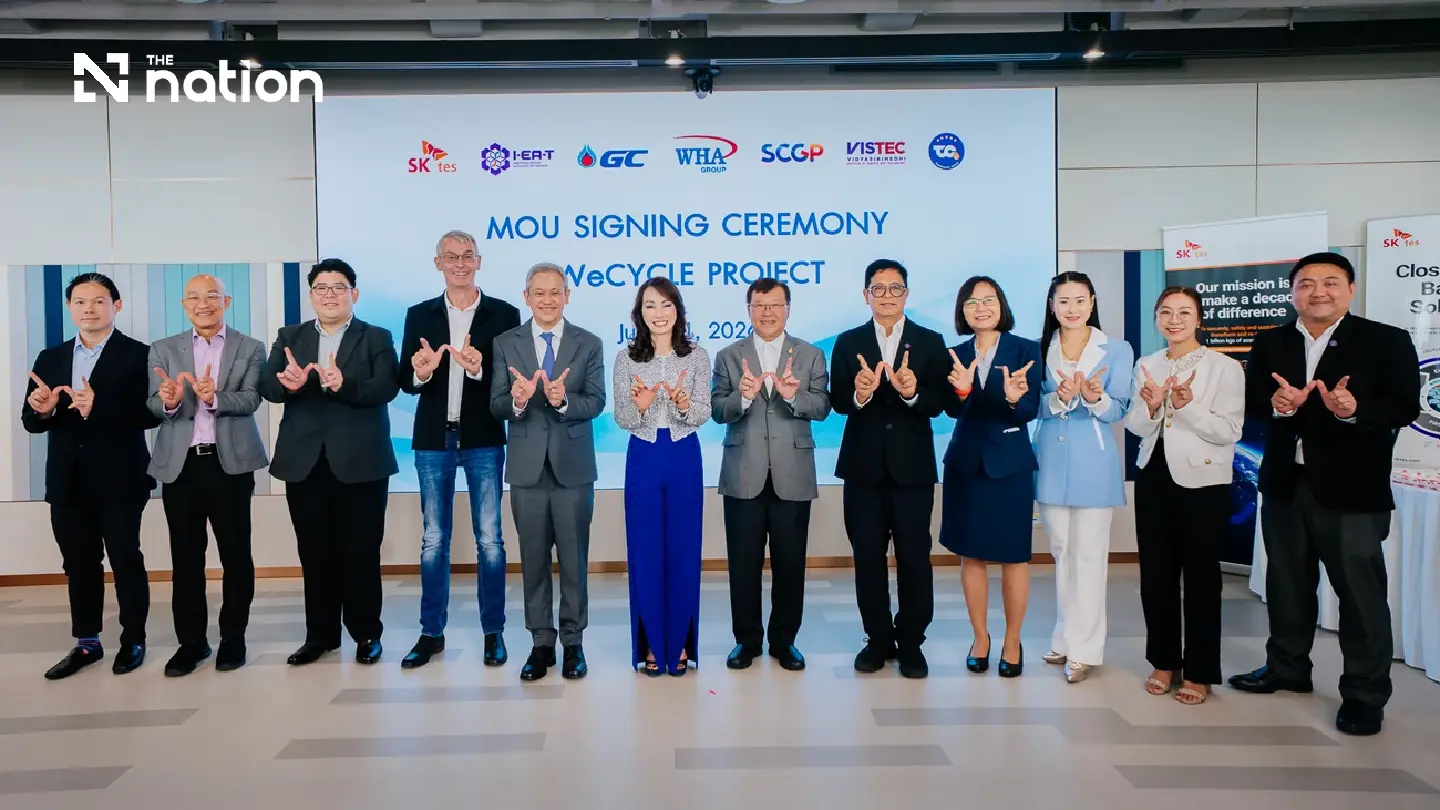


WHA Group expands WeCYCLE with six partners to manage plastics, paper, used cooking oil, food waste and e-waste as part of Thailand’s circular economy push.
- WHA Group has expanded its WeCYCLE initiative by signing an MOU with six partners, including two new ones (VISTEC and SK tes), to strengthen its end-to-end waste management network.
- The expansion broadens the project's scope to manage a wider range of materials, including plastics, paper, cooking oil, organic waste, food scraps, and electronic waste.
- The initiative supports Thailand's transition to a low-carbon society by applying circular economy principles, having already managed over 235 tonnes of waste and reduced greenhouse gas emissions by 527 tCO₂e.
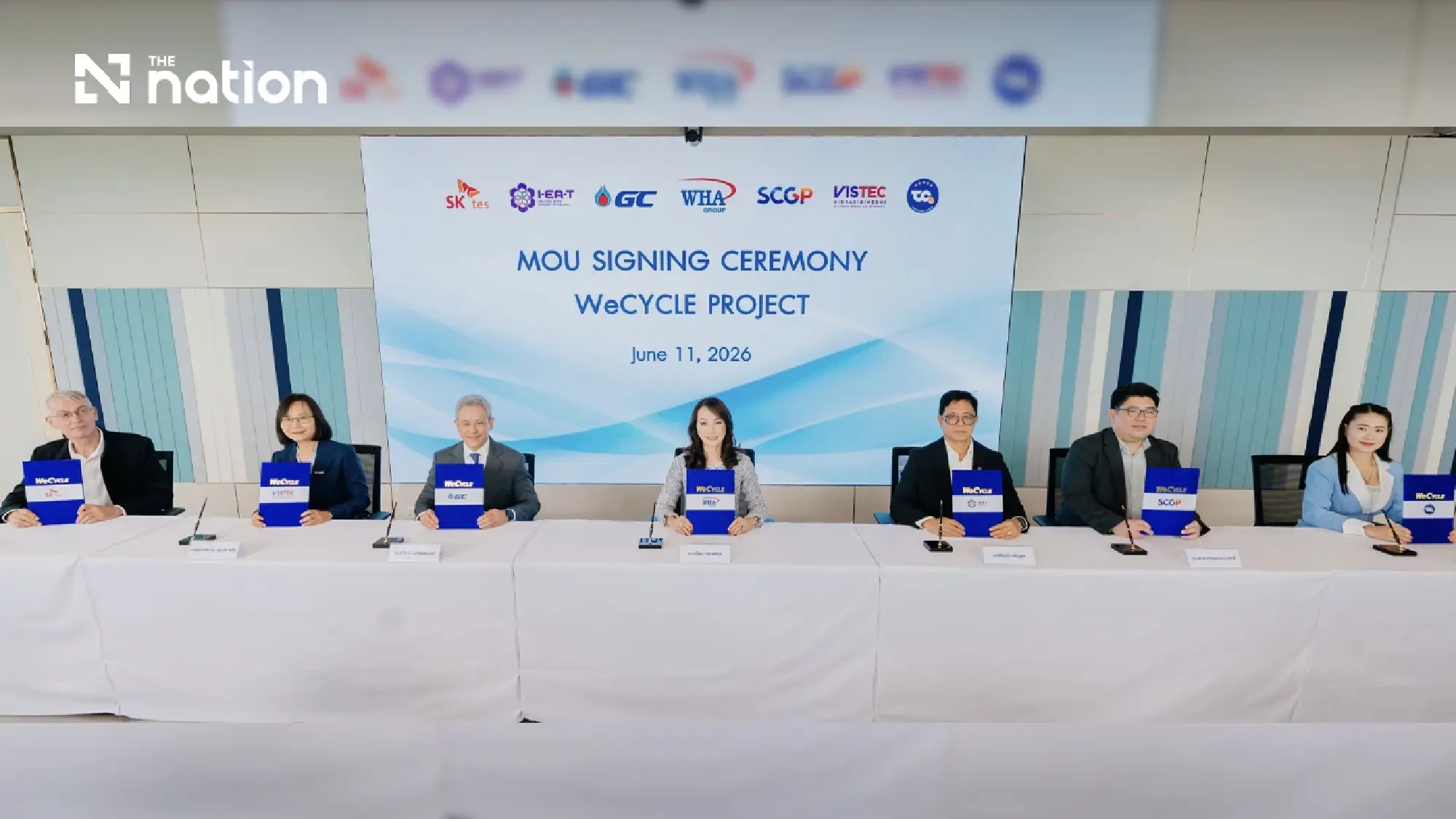
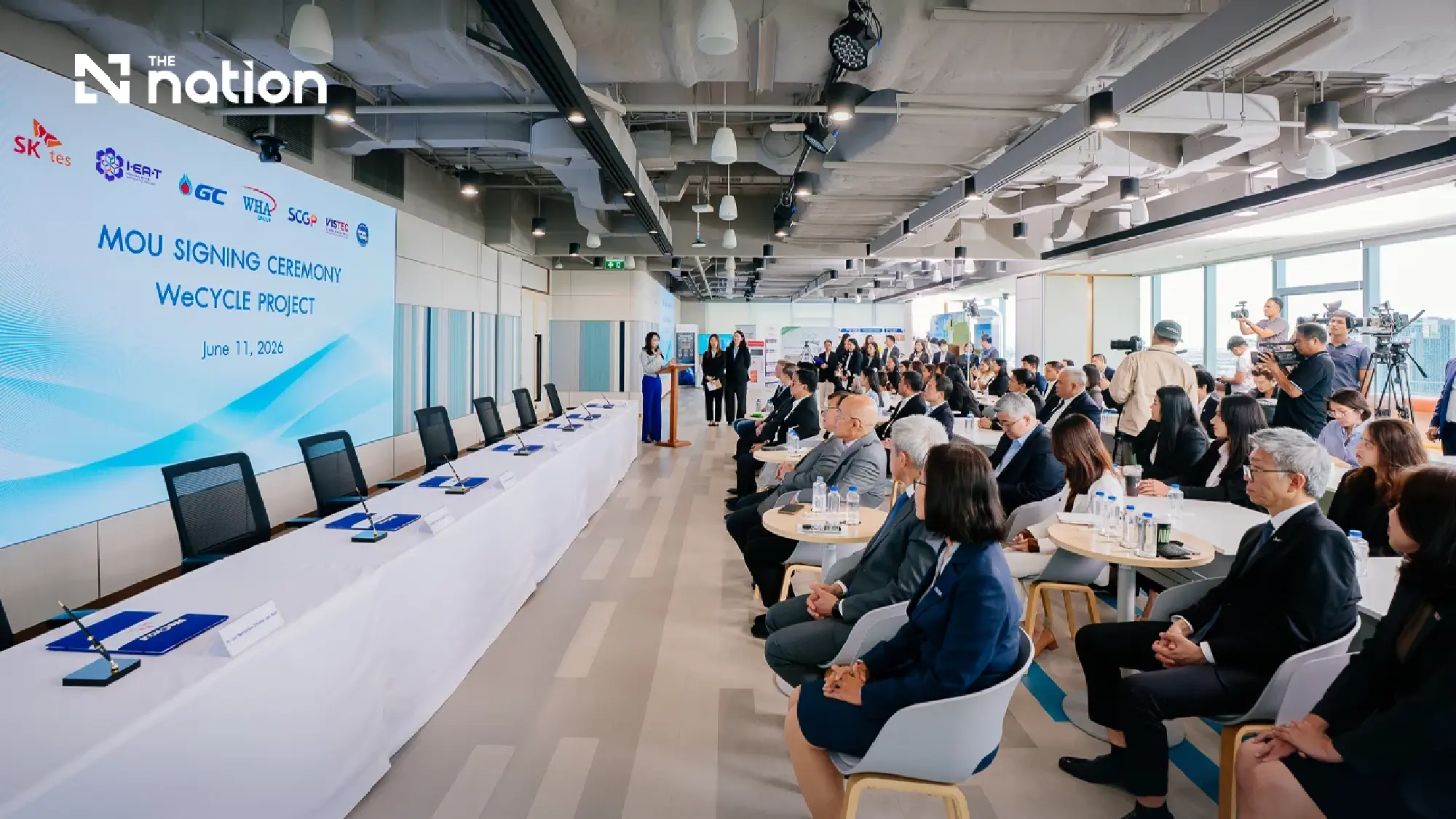
WHA Corporation Plc (WHA Group) has marked the fifth year of its WeCYCLE initiative by signing a memorandum of understanding with six partner organisations, strengthening its end-to-end waste management network and supporting Thailand’s transition towards a low-carbon society.
The signing ceremony took place at WHA Tower in Samut Prakan on Thursday (June 11), with WHA Group announcing two new partners: Vidyasirimedhi Institute of Science and Technology (VISTEC) and Total Environmental Solutions Co Ltd (SK tes).
The two organisations join the project’s existing core partners: the Industrial Estate Authority of Thailand (IEAT), PTT Global Chemical Plc (GC), SCG Packaging Plc (SCGP), and Thanachok Oil Light Co Ltd.
Wider waste recovery network
The expanded partnership is expected to strengthen WeCYCLE’s ability to manage resources under circular economy principles in a more comprehensive way.
The project now covers a wider range of materials and waste streams, including used plastics, paper, cooking oil, organic waste, food scraps and electronic equipment. The aim is to ensure these materials can be recovered efficiently and used to maximise their value.
Over four years of operation, WeCYCLE has managed more than 235 tonnes of waste and reduced greenhouse gas emissions by up to 527 tCO₂e. More than 140 operators from industrial estates, warehouse facilities and local communities have joined the initiative.
WHA sees waste as a resource
Jareeporn Jarukornsakul, chairman of the executive committee and group chief executive officer of WHA Group, described the fifth year of WeCYCLE and the addition of VISTEC and SK tes as an important step under the group’s “WHA: SHAPE THE FUTURE FOR THAILAND” commitment.
She noted that waste and used materials should no longer be viewed as discards, but as valuable resources when properly managed.
“This strengthened collaboration brings together the capabilities of industry leaders, resource management specialists, and leading research institutions to build a powerful and complete ecosystem — supporting the transition towards a green economy, addressing net-zero greenhouse gas emissions targets, and enabling genuine economic growth alongside environmental stewardship for Thailand,” she said.
IEAT backs eco-industrial estate model
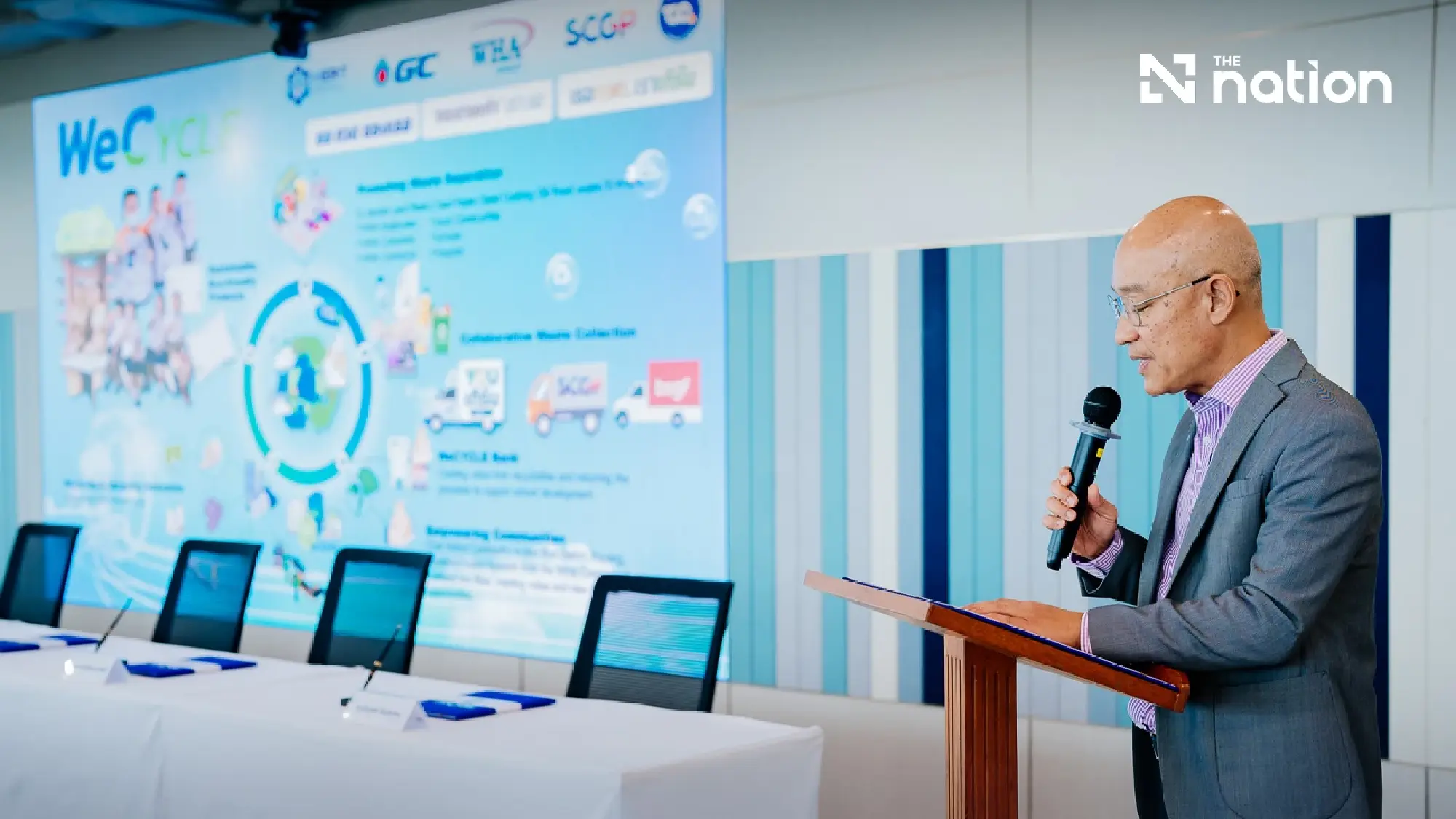
Sumet Tangprasert, governor of IEAT, welcomed the signing and described WeCYCLE as a model project that reflects collaboration between the public sector, private sector and communities in advancing eco-industrial estates in a systematic and sustainable way.
He commended the network partners for their continued commitment across the full process, from sorting, collection, recycling and resource recovery to knowledge-building activities that raise awareness among communities and business operators.
“This not only reduces environmental impact, minimises waste, and cuts greenhouse gas emissions, but also plays a pivotal role in advancing the circular economy concept — aligned with sustainable development goals and the journey towards net zero,” he added.
Sumet reaffirmed IEAT’s readiness to support all sectors in promoting efficient resource use, improving quality of life and the environment, and helping Thai society move towards balanced growth as a low-carbon society.
“We extend our deepest gratitude to all partners for making this project a tangible success, and we sincerely hope this valued collaboration will continue to grow sustainably,” he said.
GC expands used-plastics circular network
Saroj Putthammawong, chief operating officer – value-added products at GC, highlighted the importance of building a circular economy through multi-sector cooperation.
He noted that, over more than four years as part of WeCYCLE, GC has collected more than 80 tonnes of used plastics through GC YOUTURN, its end-to-end used plastics management platform. The amount is equivalent to more than 4.8 million plastic bottles and was collected from more than 113 member companies across WHA industrial estates.
Saroj described the latest MOU as an important step in moving beyond used-plastics collection towards a circular economy ecosystem that connects industry, communities and end users.
The work includes expanding plastics collection networks, developing Community Waste Hub prototypes, channelling used plastics into high-quality recycling processes, and advancing upcycled products and post-consumer recycled pellets for industrial use.
The goal, he added, is to maximise resource value, reduce environmental impact and help create a sustainable future for Thai society.
SCGP turns used paper into community benefits
Thatnate Suwannawarasit, director of packaging materials recycling at SCGP, noted that SCGP places strong emphasis on driving the circular economy in practical ways across the entire value chain, from design and production to consumption and the recovery of used materials.
He said the WeCYCLE “Bring Your Old Paper” activity represents a collaboration between SCGP and industry, channelling used paper from WHA through a systematic process of collection, sorting and delivery into SCGP’s recycling operations.
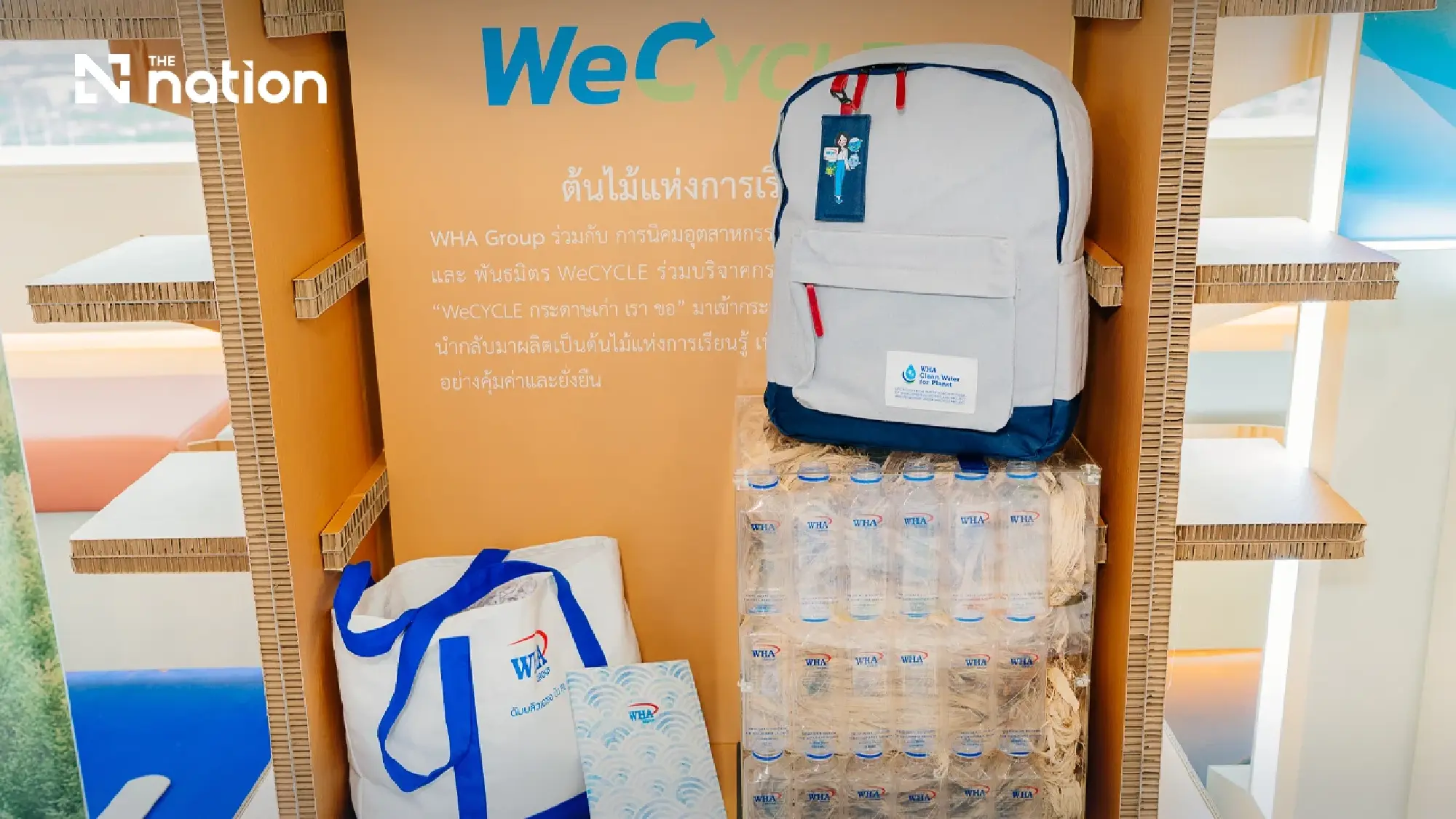
The recovered paper is processed using efficient manufacturing technology based on circular economy principles and transformed into various upcycled products made from recycled paper. These products are then donated to schools in communities surrounding WHA industrial estates.
SCGP has also extended the concept to other sectors by developing model communities for resource and zero-waste management, while promoting knowledge on proper material recovery to reduce waste volumes, minimise the use of virgin resources and lower greenhouse gas emissions.
“Collaboration across all sectors is the cornerstone of making the circular economy a reality and the driving force towards a shared sustainable future,” he said.
Thanachok channels used cooking oil into bioenergy
Panjarat Inprakong, managing director of Thanachok Oil Light Co Ltd, stated that Thanachok Group places great importance on transforming used cooking oil into value-added energy products, including bioenergy and Sustainable Aviation Fuel, in line with the circular economy concept.
“We reaffirm our commitment to efficient resource management to help reduce greenhouse gas emissions and support Thailand’s net-zero targets,” she said.
VISTEC applies innovation to organic waste
Dr Pailin Chuchottaworn, chairperson of VISTEC, said the institute was pleased to take part in WeCYCLE by bringing scientific knowledge and innovation to support sustainable organic waste and food scrap management.
The institute will contribute GREENGEN Biodigester technology, which transforms waste into valuable resources.
“This collaboration reflects the role of research in creating circular innovation and making a low-carbon society a tangible reality at the community and industrial levels,” he said.
SK tes joins to manage e-waste
Luc Bernardus Scholte van Mast, managing director of SK tes, said the company was honoured to join WeCYCLE as a specialist in sustainable electronic waste management.
He noted that, amid digital transformation, proper e-waste management has become an urgent issue for both the environment and the business sector.
Under the collaboration, SK tes will apply innovation and advanced technology to support safe and efficient resource recovery, turning e-waste back into valuable materials within the circular system.
The company also aims to raise public awareness that used materials are not simply waste, but the starting point of new resources.
“The robust WeCYCLE ecosystem will help advance SK tes’s sustainability goals by contributing to Thailand’s transition towards a low-carbon society and balanced economic growth in a concrete and meaningful way,” he said.
Model for sustainable industrial growth
The collaboration under the WeCYCLE MOU represents an important step for Thailand’s industrial sector as it moves towards sustainability through action that is real, measurable and replicable.
The project also serves as a model for cooperation among the public sector, private sector and academic institutions, helping to establish a lasting balance between economic growth and environmental stewardship.
WHA Group said the initiative reflects its continued commitment under “WHA: SHAPE THE FUTURE FOR THAILAND” as a driving force and co-creator of a sustainable future for Thailand’s economy, society and environment.
