
Thai plum snack brand finds health appeal in China
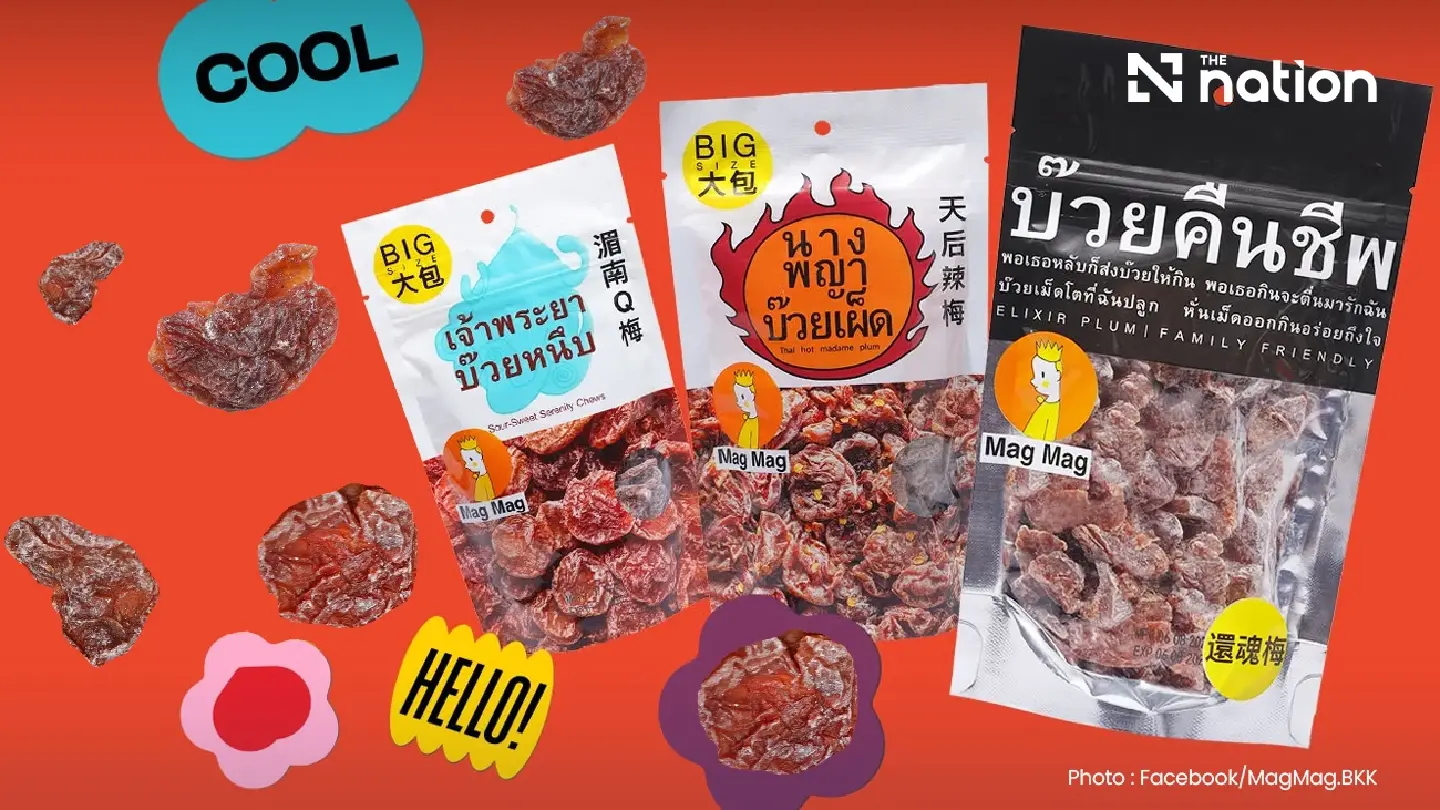


Mag Mag’s Buay Kuen Cheep shows how a Thai processed-fruit brand turned a local snack into a health-led product for Chinese consumers
A Thai processed-fruit brand has found a powerful opening in China by turning what many Thais see as an everyday snack into a product Chinese consumers associate with health and longevity.
“Thai people see preserved plum as a snack, but Chinese people see it as something that supports good health and a long life,” said Nontakoch Panyapat, managing director of WAYDHANAR Company Limited, the owner of Mag Mag and producer of “Buay Kuen Cheep”, or “revival plum”.

The business journey behind the brand has taken more than 19 years, growing from a small interest in Thai sweets and processed fruit into one of the Thai plum brands to have successfully entered the Chinese market.
Nontakoch did not begin his career in food. His family originally ran a business renting out film production equipment, including cameras, lighting and other production tools. That background led him to study advertising at the Faculty of Communication Arts, Chulalongkorn University, with the intention of eventually returning to the family business.
Yet even while growing up around the creative industry, he never lost interest in food, particularly Thai desserts and local fruit. He often asked why high-quality Thai ingredients could not be elevated into premium products in the same way as many foreign goods.
That question eventually pushed him to start a small side business with just 600 baht in capital. While still working in advertising, he began selling sago with young coconut in Bangkok’s Bang Khun Non area. The business was not open every day, but customers kept asking when the product would return.
What began as supplementary income gradually became a more serious venture. After discussing the idea with his family, he improved the shopfront, developed the product and expanded distribution channels.
From sago with young coconut, the business moved into dried fruit, processed fruit and a wider range of snacks. One of those products was preserved plum.
Nontakoch said Thai plum has roots in highland development projects initiated under the royal guidance of His Majesty King Bhumibol Adulyadej The Great, which encouraged highland farmers to grow plum as an economic crop and an alternative source of income to shifting cultivation.
That development created an important raw-material supply chain that remains significant today. Most of the plums used by the company come from Chiang Rai, where the crop is grown in areas closer to managed plum forests than industrial plantations. The trees rely heavily on weather and natural conditions, with little use of chemicals.
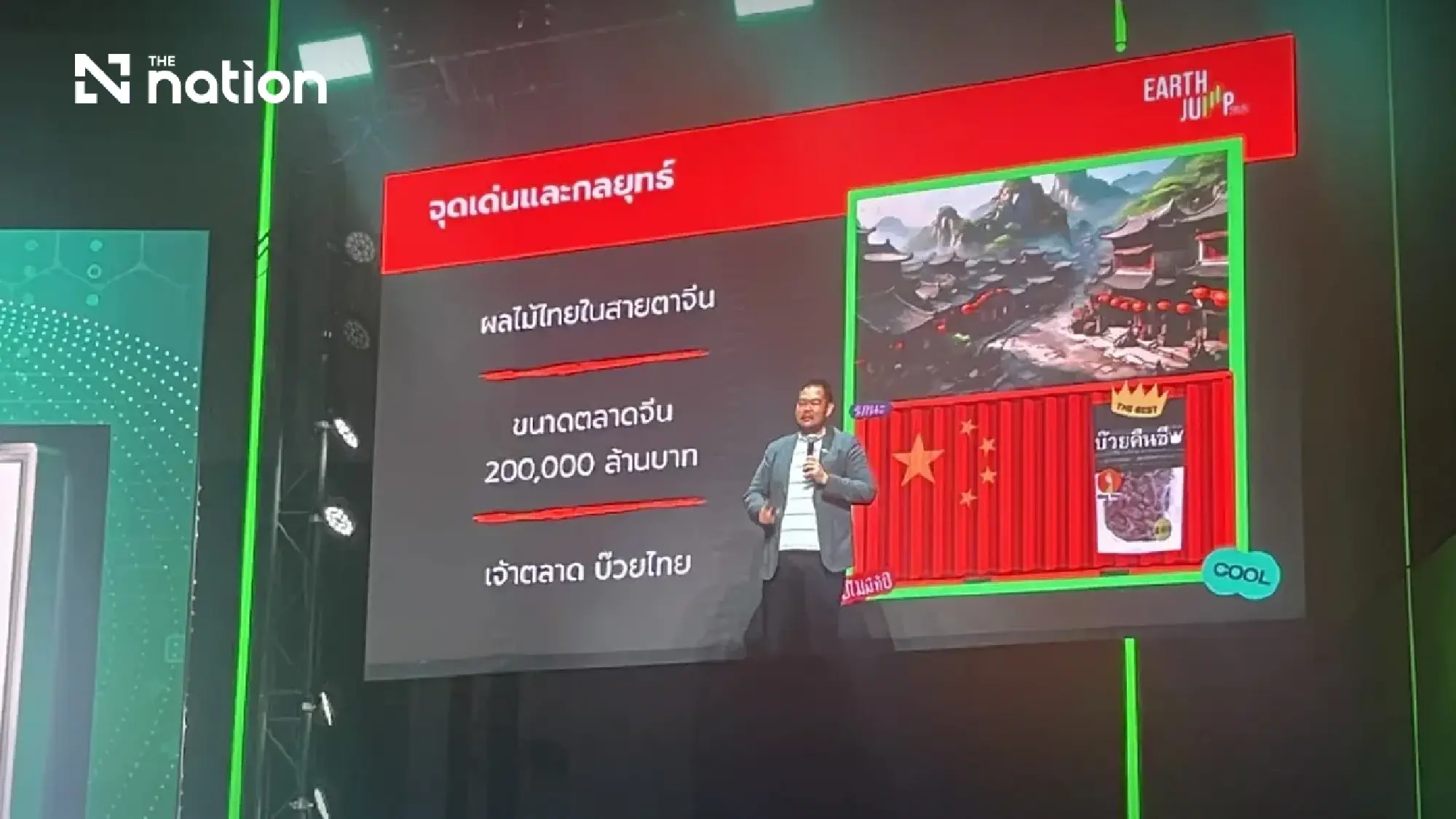
Nontakoch said the decision to look overseas, especially to China, came from seeing a clear market opportunity. China is a large market where consumers are already familiar with plum.
Unlike some Thai fruits, which require more explanation before foreign consumers understand them, plum has been part of Chinese culture and everyday life for thousands of years.
“If we want to take Thai products overseas, we have to choose something they already know,” he said.
The company now sends more than 90% of its products to China across all distribution channels. Nontakoch said the brand has gradually worked its way into the Chinese market, where Thai fruit is widely viewed as high-quality, good-tasting and well accepted.
Plum is part of that opportunity. The Chinese plum market is worth more than 21 billion baht for plum products alone, excluding other confectionery and snack categories.
“Today, we are one of the leaders in the Thai plum market in China. When people talk about Thai plum in China, many think of our brand among the first names,” he said.
Plum is also distinctive as a crop. Nontakoch described it as almost a “forest managed by people”, with cultivation that uses very few chemicals and depends mainly on natural weather conditions.
In years when the climate is favourable, the yield is strong and the fruit quality is high. If domestic supply is insufficient, however, the company may import raw materials from overseas for processing in Thailand.
He said the product’s strength lies in the quality of the raw material, which in some ways can be seen as even more natural than certain organic products because the crop relies so little on chemical inputs.
In Chinese culture, plum is also associated with health and longevity. Nontakochsaid it is linked to traditional medicinal ideas, meaning Chinese consumers around the world tend to view plum as a health product rather than merely a snack.
“Chinese people believe that eating it is good for health, helps digestion, supports the skin and slows ageing. That is one of the strengths of our product,” he said.
The unusual name “Buay Kuen Cheep”, meaning “revival plum”, was chosen because Nontakoch wanted the brand to feel fun and memorable.
The name also draws on the image of plum trees in winter. While many plants wither or lose their flowers in the cold, plum trees bloom beautifully, suggesting vitality and the return of energy.
That idea was used to shape the product name, which was designed to convey freshness, liveliness and renewed energy. What once sounded unusual has since become one of the company’s best-known products.
The company is now looking to build on the strength of Buay Kuen Cheep by developing new products, including drinks and health-related goods, while also exploring ways to create value from by-products in the manufacturing process.
One example is plum seeds left over from processing. The company has worked with academic institutions to study whether the seeds could be used to produce biochar or extract useful compounds.
Preliminary research has found that plum seed extract may have properties that help reduce melasma, leading to the idea of developing cosmetic products in the future.
However, Nontakoch acknowledged that these areas are not yet the company’s core expertise. Its foundation remains in snacks, meaning expansion into new categories will require careful adaptation.
The shift is not only about business survival. It is also linked to rapidly changing global environmental policies.
Although China does not apply exactly the same standards as Western countries, Chinese consumers are placing greater importance on environmentally friendly production. At the same time, Chinese authorities can introduce new policies quickly.
Nontakoch pointed to mandatory waste separation in several major Chinese cities as an example. He said he could not predict whether new environmental requirements for agricultural or imported food products would emerge in the future, making early preparation essential.
Beyond market expansion, the company wants to build an ecosystem of new products by using its strong distribution channels, both online and offline, in China.
The challenge is moving into businesses outside its direct expertise, whether drinks, cosmetics or other snack categories.
Nontakoch cited Xiaomi as an example of an ecosystem model. Although the Chinese company began with electronic devices, it expanded into a wide range of products through joint ventures and partnerships, bringing them together under one brand.
That raises an important question for WAYDHANAR: what kind of investment structure and joint-venture model would allow the company to extend its brand and create sustainable growth in new business areas?
