
World Bank flags Thailand data centre cost risk if digital economy lags
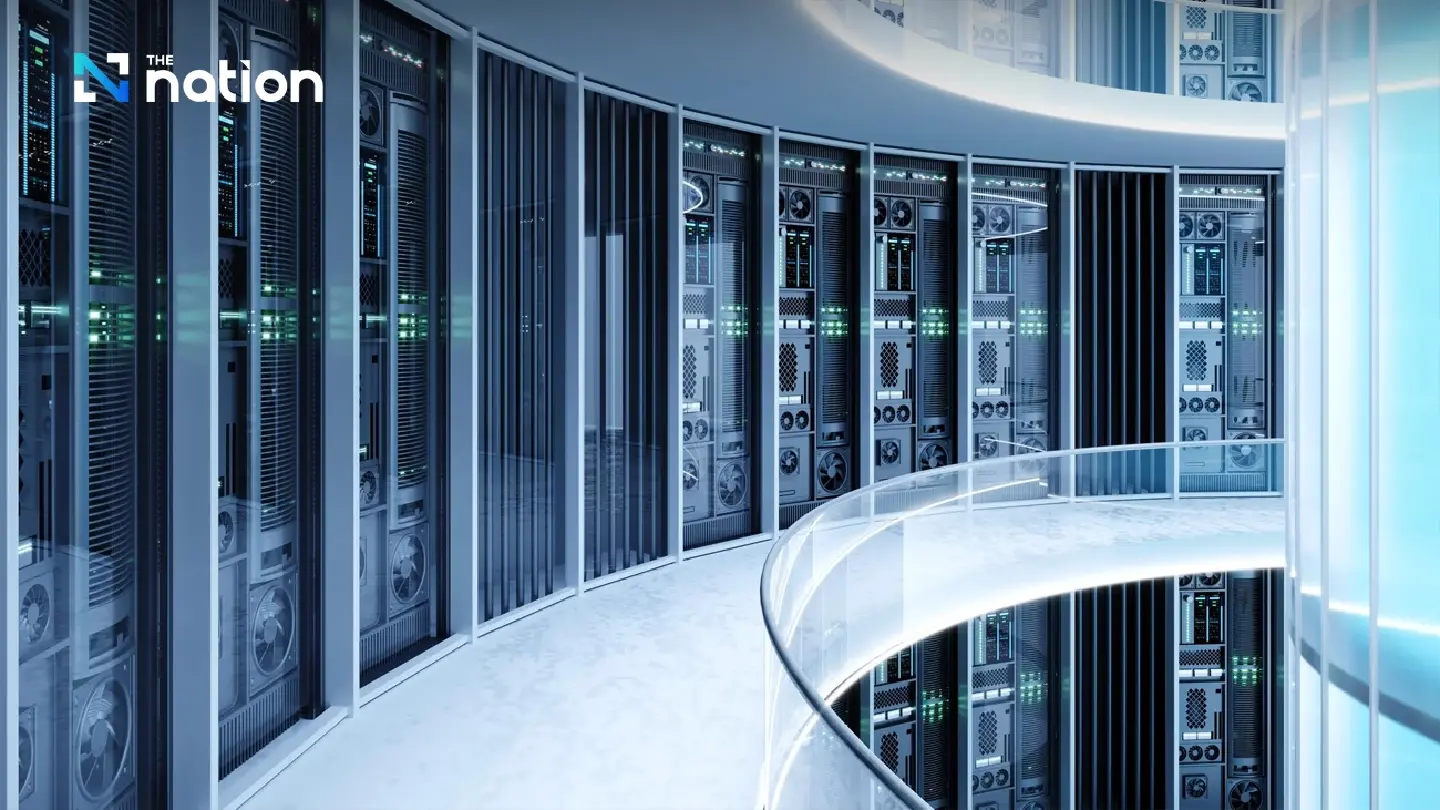


Water and power demand from data centres must be weighed against spillovers, with Thailand yet to draw full economic value, Kwanpadh says.
- The World Bank warns that data centers pose a significant cost risk to Thailand due to their high consumption of water and electricity.
- This risk is amplified because Thailand's digital economy is not yet mature enough to generate the widespread "spillover" benefits needed to justify these resource costs.
- A key challenge is the lack of a mechanism to properly price resources like water for industrial use, making it difficult to balance costs against economic returns.
- The bank suggests accelerating the expansion of the digital economy to ensure the returns from data center investments are distributed more widely and justify their expense.

Kwanpadh Suddhi-Dhamakit, Senior Country Officer for World Bank Thailand, told Thansettakij that the issue of water resources and data centre investment in Thailand was a major global challenge, as data centres require large amounts of both water and electricity, a challenge almost every country is facing.
From a water management perspective, he said, the question was how to deal with periods when large volumes of water arrive, or how to secure enough water when supply is insufficient.

Putting floodwater to use
However, in the case of Hat Yai, which floods regularly, if water management could be arranged so that water is stored at places where data centres should be located, this would bring two perspectives into comparison.
If considered separately, water management would be viewed in one direction and data centre investment in another.
Ultimately, however, investment such as data centres has yet to deliver full economic benefits.
On electricity, many countries have begun to look at the fact that data centres should not only consume power, but should also have technology to generate electricity and sell it back.
The United States, for example, has faced this issue and has begun considering such an approach.
From the water perspective, however, if water is brought into use, what value should be placed on its cost? Thailand currently has no such mechanism.
Water that has long been used free of charge in agriculture may not be available to users, but if it is used for data centres, how much should be charged, and should the economic benefit be taken into account?
These factors need to be combined into one equation.
Thailand has yet to make full use of data centres
On the question of whether it would be appropriate to charge data centres more for electricity than the general public, it should be said that data centres currently use resources.
The major question, therefore, is how data centres will help Thailand adjust its economy towards one driven by digital technology, with the internet, data and innovation at the core of business, production, services and daily life, the digital economy, or whether such investment will bring added benefits to other parts of the economy.
If that element exists, data centre investment can be seen as beneficial to the economy as a whole.
The costs that must be paid can then be spread to create a spillover effect.
At present, however, Thailand may still be unable to make full use of the economic benefits from data centres.
Those considering the cost of providing energy must therefore take this issue into account, because spillover benefits in the economy cannot be brought into that equation.
Kwanpadh said the situation, therefore, pointed to possible solutions, such as accelerating the expansion of the digital economy so that the benefits from the returns generated are distributed more widely and do not accrue only to one group.
In calculating energy costs, consideration must be given to the fact that Thailand is still unable to fully draw spillover benefits into the economic equation.
