
Thailand urged to close trade loopholes as US tariff talks intensify
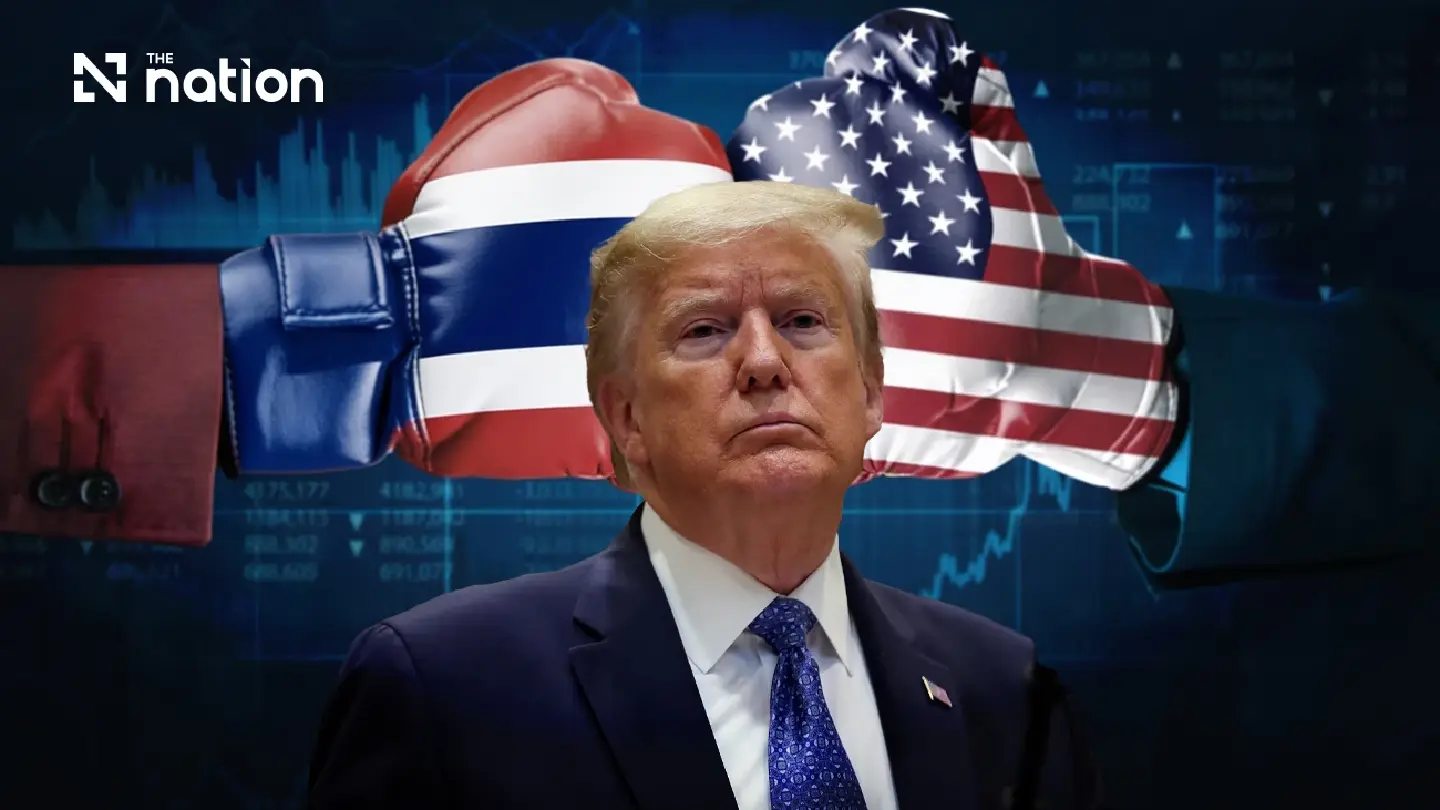


Thailand is urged to close trade loopholes and revamp industry policy as US tariff talks intensify amid geopolitical risks and slowing growth.
Thailand is urged to close legal loopholes and revise its import strategies as the country seeks to secure a lower tariff rate under Section 301 in negotiations with the United States.
Along with 46 countries, including China, Thailand would face a higher tariff rate of 12.5%, while another 14 economies, including Malaysia, Indonesia, and Taiwan, would be subject to a lower tariff rate of 10%.
Professor Pavida Pananond of Thammasat Business School pointed out that the United States is targeting economies that serve as "connectors" for China, making it critical for Thailand to close legal loopholes related to transshipment amid growing geo-economic complexities.
“Thailand should close the loophole on trans-shipment in terms of the local content that goes into production in Thailand, which would be very important. And I also think that this should be a key moment for Thailand to look at our industrial policy,” she said.
Excess capacity in the automotive sector, coupled with large imports of electric vehicles, has raised concerns in the eyes of the US, according to Pavida, who added that domestic industries are also being affected.
“Thailand allows more imports of EVs from China, but domestic demand is low. So the US suspects that we are using the policy to create more capacity for exports. We also allow more imports of Chinese auto parts. That certainly hurts the existing capacity of domestic car companies, which are mainly in the Japanese internal combustion engine automotive sector,” she said.
Pavida also warned that Thailand is entering a challenging period marked by slowing exports, geopolitical uncertainties, and rising energy costs.
“I think we are in a difficult situation for several reasons. Although exports performed quite well last year, there are concerns that part of that growth was due to front-loading by importing countries ahead of anticipated trade restrictions,” she said.
She added that Thailand's tourism sector could also face pressure from geopolitical tensions in the Gulf region, while higher energy prices may increase production costs across industries and contribute to inflationary pressures.
Beyond the direct impact of tariffs, Pavida emphasised that a higher Section 301 tariff rate could have broader implications for Thailand's position in global supply chains and its attractiveness as a manufacturing hub.
She explained that sectors under investigation, including electronics assemblies and rubber automotive parts, account for nearly half of Thailand's exports to the United States.
While higher tariffs would directly affect those industries, multinational corporations may also reconsider their investment strategies in Thailand.
“Thailand is an important production base for many sectors, such as electronics and automotive manufacturing. If higher tariffs are imposed, multinational companies may have to rethink their global value-chain configurations,” she said.
Pavida noted that many firms are already reassessing their supply chains due to geopolitical risks, disruptions, and the desire to locate production closer to major consumer markets.
To strengthen Thailand's resilience, Pavida stressed that concluding tariff negotiations with Washington should remain a priority.
“The uncertainty surrounding tariff rates is more dangerous to businesses than a fixed higher rate. If companies know what the rates are, that would help in terms of risk assessment and create greater certainty,” she noted.
However, she cautioned that securing a lower tariff rate should not be viewed as a standalone solution.
“We should not simply react to one measure after another. This is a crucial moment for Thailand to address structural weaknesses and ensure that our policies are aligned with the realities of geoeconomic fragmentation,” she said.
Pavida argued that Thailand must adopt a more coordinated industrial strategy, ensuring that investment promotion, trade policy, and domestic industrial development work in tandem rather than in isolation.
As Thailand is not only facing risks related to tariffs but is also grappling with a rapidly evolving geopolitical landscape, Pavida suggested that the government needs to undertake comprehensive economic restructuring across multiple sectors if it hopes to ensure that Thailand remains on the radar of foreign investors.
