
Thailand assesses economic impacts of US-Iran 60-day peace talks
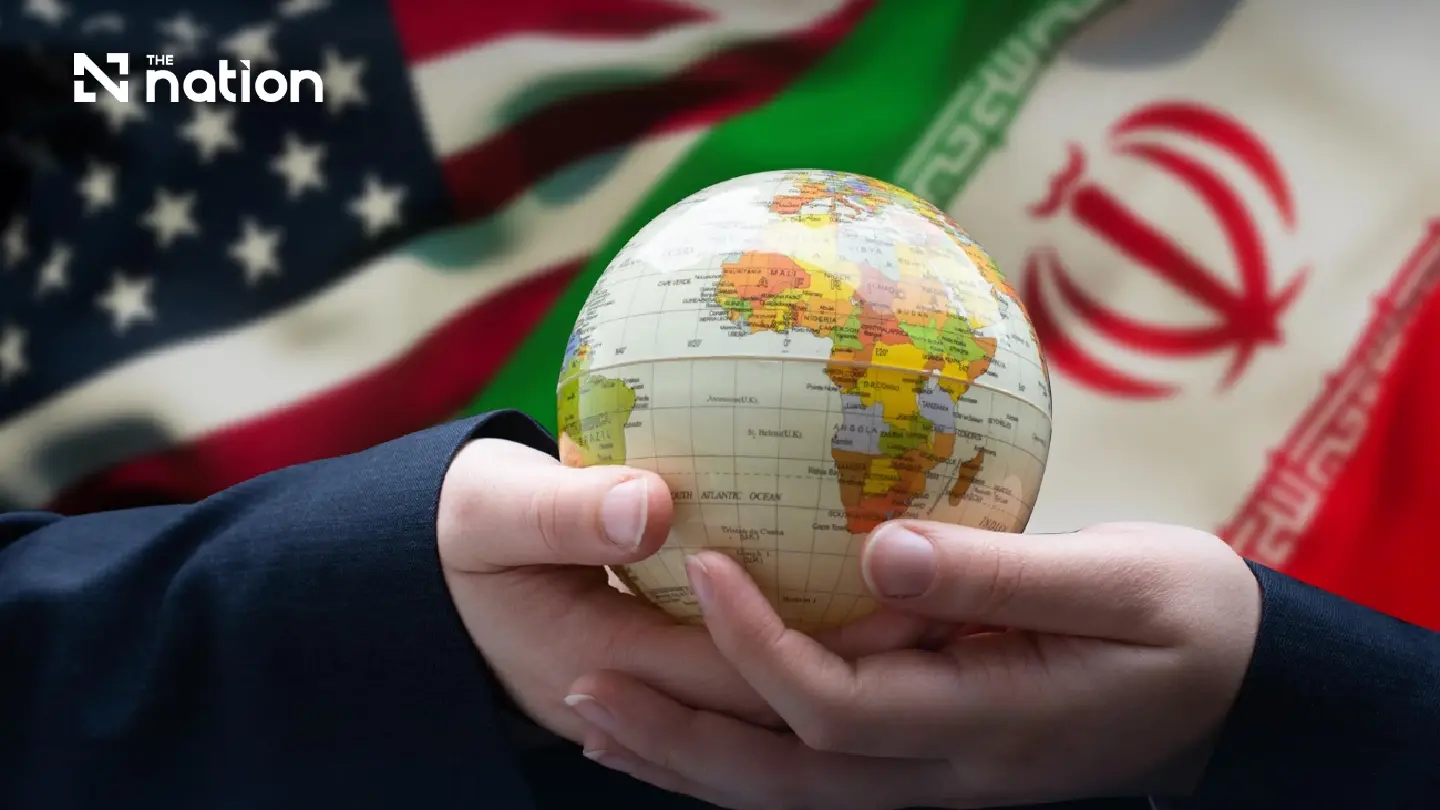


US and Iranian presidents have signed an MOU with immediate effect, launching a 60-day negotiation period for a peace agreement. Analysts note Iran holds the upper hand.
- Thai officials are closely monitoring the 60-day negotiation period, acknowledging it provides short-term relief but carries high uncertainty for the volatile global economy.
- A successful peace agreement is expected to improve Thailand's investment climate, though the national economic council's GDP forecast remains cautious pending the outcome.
- A key economic concern is the impact on oil prices, which may drop in the short term but are not expected to return to pre-war levels due to damaged energy infrastructure.
- The de-escalation has led Thai economic agencies to assess that the risk of stagflation for the country is now diminishing.
The wait is over as the US and Iranian presidents signed a memorandum of understanding, which both sides announced takes immediate effect.
They now have 60 days to negotiate a peace agreement.
Analysts view Iran as holding the upper hand, while the US has not achieved the goals it declared before the strikes.
CNBC reported that US President Donald Trump and Iranian President Masoud Pezeshkian signed the memorandum of understanding (MOU) digitally on Wednesday (June 17, 2026).
The document aims to lead to a permanent peace agreement to end the war between the two nations.
The signing occurred three days after US Vice President JD Vance and Iranian Parliament Speaker Mohammad Baqer Qalibaf signed the same document digitally.
Trump signed the MOU before a dinner at the Palace of Versailles with French President Emmanuel Macron.
The 14-point MOU includes an immediate cessation of military operations on all fronts, encompassing Israeli military operations in Lebanon.
It also stipulates the opening of the Strait of Hormuz, with Iran waiving transit fees for at least 60 days, and the immediate lifting of US sanctions on Iranian oil.
Nuclear issues and additional financial benefits Iran might receive will be subject to further negotiation.
However, reactions in the US were filled with criticism from Trump's allies.
"History teaches that giving hundreds of billions of dollars to religious fanatics who want to kill us is not a good idea," said Senator Ted Cruz, a Republican from Texas.
Iran holds the upper hand over the US
The MOU is seen as buying time, as the more difficult issue of Iran's nuclear programme will be negotiated within 60 days.
Analysts view Iran as holding the upper hand in the talks for a final agreement.
Amin Saikal, a senior researcher at the S. Rajaratnam School of International Studies in Singapore, told Channel NewsAsia (CNA) that Iran was under severe domestic economic pressure but managed to withstand and retaliate against US military operations.
"And they know that President Trump faces immense pressure both domestically and internationally, as the cost of the war and oil prices in the US have increased."
Academic expects no agreement within 60 days
Steven David of Johns Hopkins University opined that the US and Iran are unlikely to reach a comprehensive agreement within the 60-day timeframe.
Trump is under pressure to end the conflict, which has caused economic damage in the US, before the midterm elections in November.
"It is clear that President Trump is concerned about the American public's dissatisfaction with this war. He is under heavy pressure to make a deal with Iran that allows the US to claim victory and stop the conflict," David said.
He also warned that this agreement could further escalate tensions between the US and Israel.
Israel wants Iran to have a new government and to halt its nuclear programme.
"But neither of those things happened. Iran has not only survived but emerged stronger. It is America that has weakened significantly. What has this war achieved? It seems to have created more problems than benefits."
Thailand monitors the 60-day negotiation outcome
Commerce Minister Supajee Sutumpun said that although the agreement provides more comfort that the situation will not escalate during this period, it remains to be seen whether both sides will fully comply with the agreement over the next 60 days.
Meanwhile, the Commerce Ministry is preparing to handle potential future situations by continuing measures to oversee products, maintain price stability, and assist farmers and SME operators.
Despite viewing the situation as easing in the short term, relevant agencies have not lowered their guard and continue to closely monitor developments throughout the 60 days.
Boosting investment climate
Finance Minister Ekniti Nitithanprapas revealed that the situation must be closely monitored because global economic volatility remains and can fluctuate at any time.
"If the war ends, at least the economic investment climate will improve. However, energy infrastructure in the Middle East has been heavily destroyed, so the fundamental impacts must be closely monitored," Ekniti said.
As for oil prices, they may drop in the short term but will not fall as much as before because significant oil and natural gas infrastructure has been destroyed and will take time to recover.
Therefore, it requires close observation of how the situation will unfold.
If no violence in 60 days, the world will stabilise'
Danucha Pichayanan, Secretary-General of the National Economic and Social Development Council (NESDC), spoke on the trend of the Thai economy after the US and Iran signed the peace agreement.
The NESDC has revised its economic scenarios for the second half of the year to align with the Middle East situation and global oil prices, which have begun to decline.
Initially, the GDP growth is expected to remain within the original forecast under the best-case scenario, which is a 1.4-2.0% expansion.
However, there is high uncertainty because the US-Iran agreement entails a crucial 60-day monitoring period.
If no violent incidents occur during these two months, the global economic situation is likely to become clearer and more stable.
Meanwhile, global oil prices must be closely monitored to see how much they will drop, as oil infrastructure and facilities suffered significant damage during the fighting in the Middle East.
"The risk factor that must be carefully monitored is the regional conflict situation, particularly the movements of Israel and the US. If unexpected events occur, it could cause oil prices to rebound to previous highs, prompting the NESDC to periodically assess and revise the situation."
Regarding stagflation, the assessment found that the risk has begun to diminish.
Although the Middle East situation still has some economic impacts, the current overall situation is not considered a direct problem that severely affects the Thai economic system to the point of causing stagflation.
